Author: Logan Metesh

  • Yugo M57 Pistols Are Sub-$300 Surplus Option

    Yugo M57 Pistols Are Sub-$300 Surplus Option

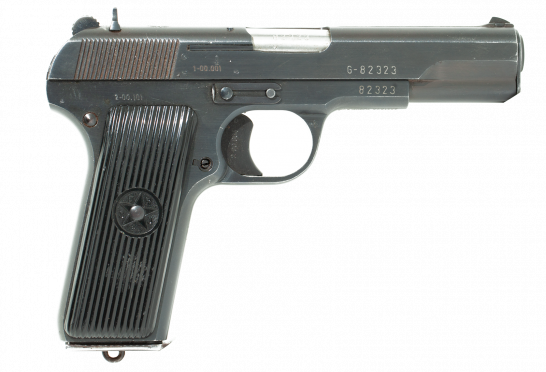
    Surplus Yugoslavian M57 Tokarev pistols for $269.99 give collectors yet another option below the $300 mark. The Zastava-made handguns remained in stock online when checked on October 24.

    The listing reinforces a point from our recent coverage of surplus Beretta 84 BB and M1934 pistols: affordable surplus still exists. The familiar bargains have changed, but collectors can still find historically interesting firearms without spending four figures. Looking beyond the Mosins and SKSs of earlier surplus waves opens other possibilities.

    The M57 offers a distinctly Yugoslav chapter in the Tokarev story. Zastava based the pistol on the Soviet TT design, incorporating changes that included a longer grip and nine-round magazine. The model served with Yugoslavia’s army and police, giving it a place in Cold War small-arms history.
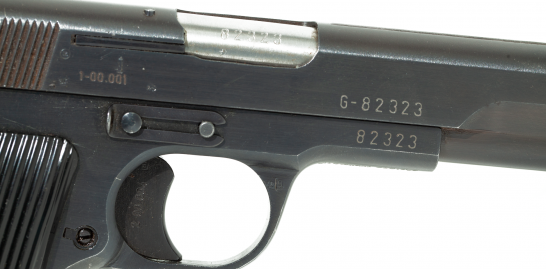
    Yugo M57 serial number
    Yugo M57 serial numbers

    Chambered for the 7.62x25mm Tokarev cartridge and featuring steel frames, fixed sights, and 4.6-inch barrels, each gun includes one nine-round magazine.

    These pistols are sold as-is, with varying wear from use and storage. Some have polished parts; most retain bluing with wear marks. The listing photograph represents the lot’s average condition.

    That variation creates opportunities for study. Collectors can examine markings, serial numbers, finish, and evidence of refurbishment when documenting an individual example. An M57 could anchor a Yugoslav collection or join a broader comparison of Tokarev variants.

    Our earlier coverage of postwar Walther P38 surplus pistols explored another Cold War collecting opportunity. Those pistols carried a $549.99 price when we covered them. The M57 listing illustrates how much entry prices can differ across surplus handgun categories.
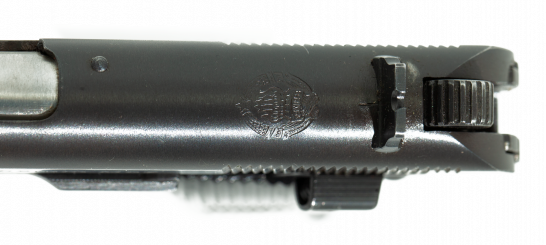
    Yugo M57 crest
    Yugoslavian crest on top of slide

    An important note is that these guns will not ship this item to C&R license holders.

    The collecting appeal extends beyond the price tag. These pistols offer an accessible starting point for researching a country’s service arms and their place within a larger design family. Affordable surplus collecting still has room for curiosity.

    Get yours here.
  • Fleischer’s Firearms Debut Brings Nearly $1 Million

    Fleischer’s Firearms Debut Brings Nearly $1 Million

    Fleischer’s Auctions reported nearly $1 million in combined gross sales from its inaugural firearms auctions October 20–21, 2026. Scarce military rifles, early American martial pistols, and a police-marked revolver delivered several standout results.

    The sales launched the firm’s firearms department under Director of Firearms Tim Prince. Prince also appears as an arms and militaria appraiser on PBS’s Antiques Roadshow.

    The October 20 auction offered Part 1 of the Firearms Collection of Alejandro “Alex” de Quesada, Jr. Buyers purchased all 205 lots, giving the sale a 100% sell-through rate.

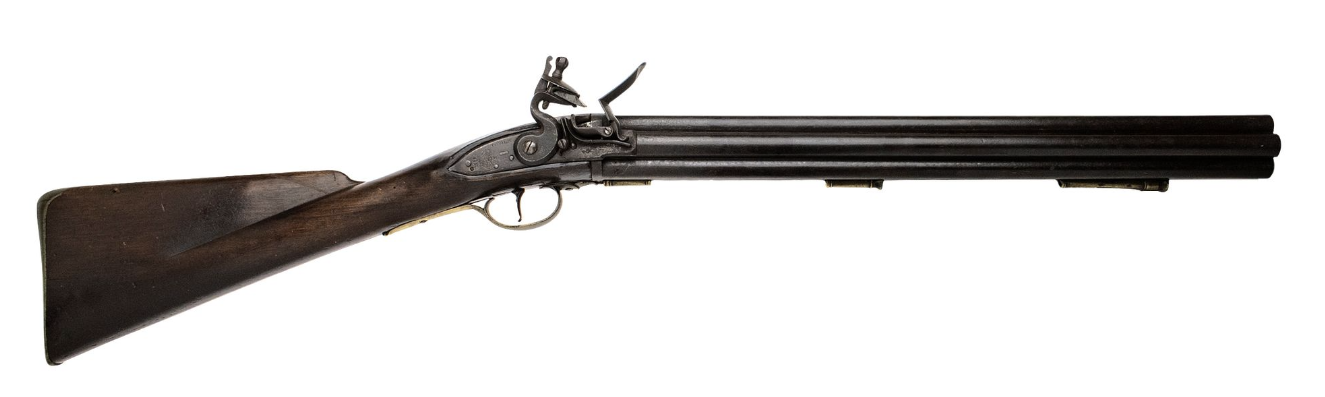
    A British Military Type I Seven-Barrel Nock Volley Gun led the day at $26,400 (shown in top featured photo). A Mauser G.41M semiautomatic rifle and an Ohio Ordnance Works M240-SLR semiautomatic rifle each brought $12,000.

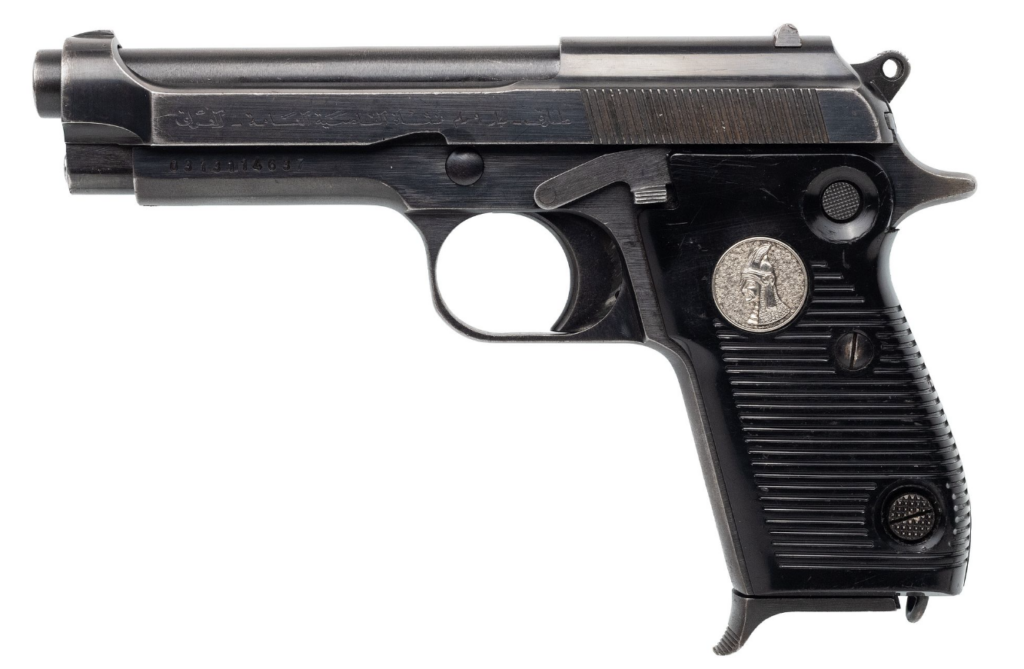
    tariq pistol
    Tariq pistol

    Several less familiar military arms attracted strong bidding. A Mondragon Model 1908 rifle brought $12,000 against a $4,000–$6,000 estimate. An Iraqi Tariq pistol reached $5,700 against expectations of $1,500–$2,500. More unusual military arms, including an MG42 and developmental Colt firearms, will appear in Poulin’s November auction.

    The October 21 multiple-consignor auction achieved a 98% sell-through rate. Two early American martial pistols from the Paul Doyle Collection produced the day’s highest reported prices.

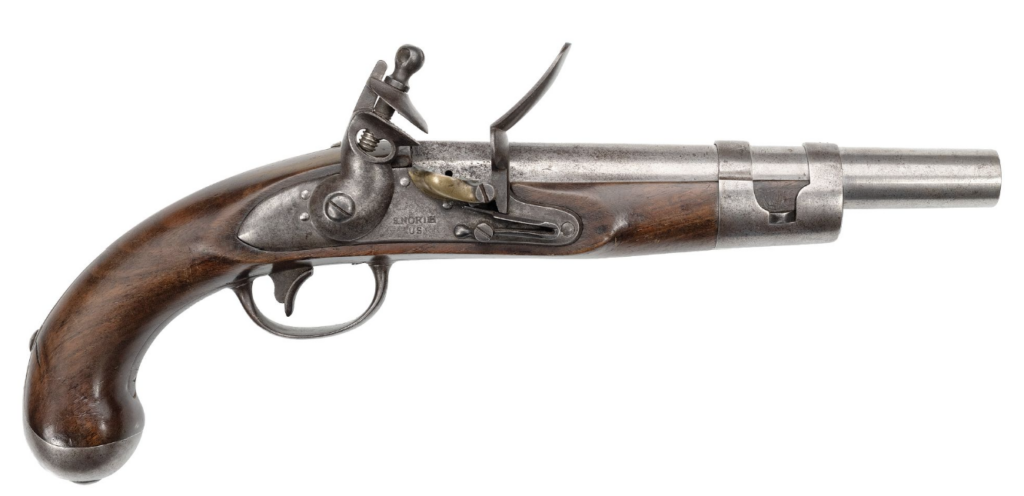
    A U.S. Model 1813 Navy flintlock pistol by North led at $15,600, against a $4,000–$6,000 estimate. A Harpers Ferry U.S. Model 1805 flintlock pistol, dated 1807, followed at $11,400. Its estimate stood at $7,000–$10,000.

    1813 navy flintlock
    Model 1813 Navy pistol

    Collectors of American martial pistols can also follow the Palmetto Armory Model 1842 in Alderfer’s October 27 auction.

    A British Military Adams Mk III revolver in .450 centerfire supplied another notable result. Marked to the Northwest Mounted Police, it brought $4,500 against a $1,000–$1,500 estimate.

    For collectors, the results offer fresh comparisons across several specialized fields. The North, Mondragon, and police-marked Adams particularly merit attention when researching similar examples. Comparisons should account for each gun’s condition, originality, and documented markings. Several scarce military arms also exceeded estimates at Morphy’s $6.4 million September firearms sale, adding to this fall’s results for collectors to study.

    Fleischer’s has scheduled its next major firearms auctions for April 27–28, 2027. The first day will feature Part 2 of the de Quesada firearms collection. The second will offer historical, military, and collectible firearms from multiple consignors, including early twentieth-century English shotguns.

    The firm is accepting consignments for the April sales. Interested owners can contact Tim Prince at tim.prince@fleischersauctions.com or firearms@fleischersauctions.com.

  • Rock Island Arsenal Museum Vault Program on Oct 28

    Rock Island Arsenal Museum Vault Program on Oct 28

    Rock Island Arsenal Museum will highlight rarely seen knives during a free public program on October 28, 2026. “From the Vault: Knives, Knives, Knives!” runs Wednesday from noon to 1 p.m. Central in Rock Island, Illinois.

    Even though the program’s focus is on knives, the rest of the museum is worth seeing while you’re there as the Arsenal’s history with firearms production cannot be overstated.

    Curators will share objects from the museum’s knife collection and explain their connections to the Arsenal’s history. The program gives military arms collectors an opportunity to learn about artifacts they might not encounter during a typical visit. It continues the museum’s “From the Vault” series, which explores the installation’s history through collection objects and their stories.

    The museum opened July 4, 1905, making it the U.S. Army’s second-oldest museum, behind West Point. Its history and collections reflect the Arsenal’s longstanding role in military manufacturing. Firearms collectors will recognize two products manufactured there: Model 1903 rifles and Browning machine guns.

    Permanent exhibits trace the island’s history from 1805 to the present. They combine more than 250 artifacts with photographs and interactive displays.

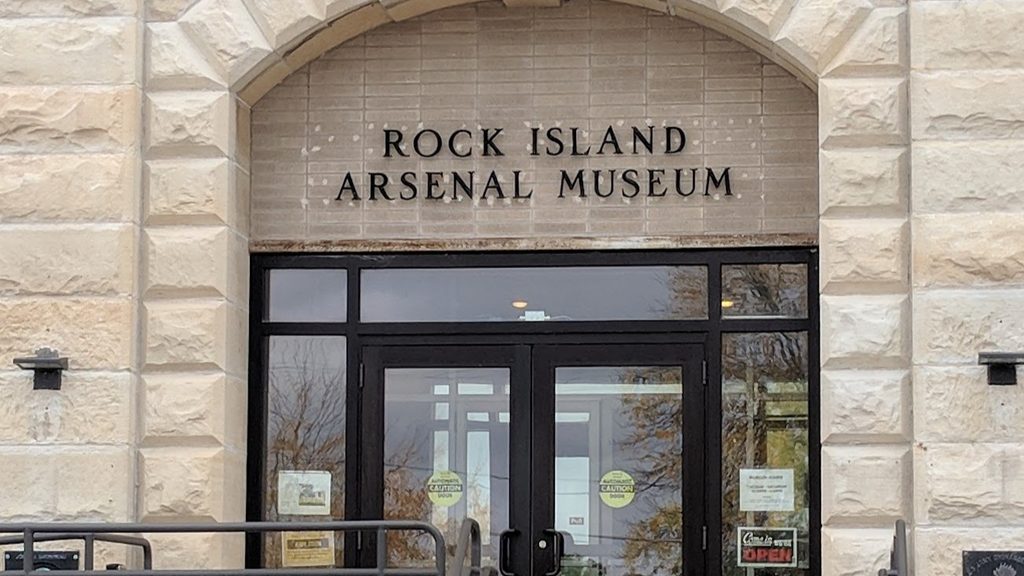
    Rock Island Arsenal Museum

    The museum reopened in June 2023 following an extensive renovation focused on the Arsenal’s people, work, and impact. If you’ve been before but you haven’t been back since the reopening, be prepared to see a dramatically different museum.

    Visitors will find the museum in Building 60 at 3500 North Avenue. Regular hours are Tuesday through Saturday, 10 a.m. to 4 p.m. Admission to both the museum and the October 28 program is free. The museum closes Sundays, Mondays, federal holidays, and the day after Thanksgiving.

    Because Rock Island Arsenal remains an active military installation, visitors should allow time for entry procedures. Approach through the Moline Gate. First-time visitors must stop at the Visitor Welcome Center, located outside that gate at 23 Prospect Drive, Moline. The center operates daily from 7 a.m. to 3 p.m.

    Adults seeking unescorted access without approved DoD or federal credentials need a visitor pass and a favorable criminal background check. This requirement applies to each visitor age 18 or older in the vehicle. Bring a physical REAL ID or U.S. passport. A noncompliant state ID requires an approved secondary document listed in the Army’s visitor guidance. Digital IDs are not accepted.

    Drivers must carry a current license, vehicle registration, and proof of insurance. The Army estimates processing at five to eight minutes per person, so arrive early. Personal firearms are prohibited. Foreign nationals may enter only for official business. Direct access questions to the Visitor Welcome Center at 309-782-1337.

    For museum or program information, call 309-782-5021.

  • CMP Changes 1911 Purchase Limits Again

    CMP Changes 1911 Purchase Limits Again

    Collectors interested in purchasing surplus military M1911 and M1911A1 pistols through the Civilian Marksmanship Program (CMP) will face another change in purchasing limits beginning January 1, 2027.

    The CMP’s updated sales information states that customers will be limited to two surplus 1911 pistols per calendar year starting in 2027. The change follows an earlier expansion that increased the lifetime purchase limit from two pistols to four in May 2025.

    The distinction between lifetime and annual limits is important.

    When CMP resumed surplus 1911 sales in January 2025, customers could purchase a maximum of two pistols over their lifetime. That restriction had previously limited collectors who wanted examples from multiple manufacturers or production periods.

    In May 2025, the Department of the Army authorized an increase to four pistols per customer over their lifetime. The decision gave collectors additional opportunities to acquire these historic military sidearms.

    cmp 1911 sales header

    Under the newly announced policy, the limit changes again. Beginning in January 2027, customers may purchase two pistols annually rather than operating under the previously announced four-pistol lifetime maximum.

    For collectors, the annual limit could represent a significant long-term improvement. Those interested in building representative collections of U.S. military 1911 pistols would no longer face the same lifetime restriction, assuming the new policy replaces that cap as written.

    On the other hand, we could witness the “Gun Show Garand” problem all over again. That is, some people will go through the extra steps to buy their annual limit (in this case, 12 Garand rifles) and then mark them up significantly on the secondary market for those who do not want to deal with the CMP purchase process.

    The marked up prices don’t necessarily sell, but it does create frustration for those in the market for a Garand online or at a local gun show.

    Since the limit is so much lower for the 1911 pistols, it may not be an issue. Only time will tell.

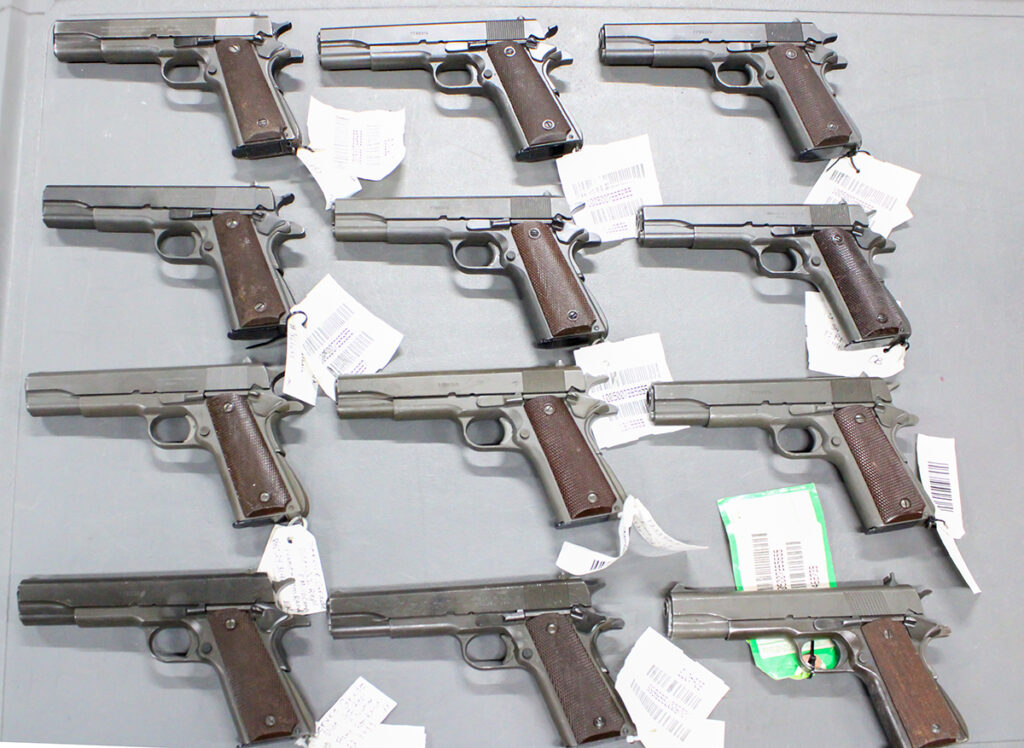
    cmp 1911s on table

    The CMP currently lists Service Grade pistols at $1,300, Field Grade at $1,200, and Rack Grade at $1,100. Pistols are inspected and test-fired before sale.

    The program offers collectors access to genuine U.S. military-issued firearms, although the CMP notes that approximately 98% of the pistols received from the Army contain mixed components.

  • Jamestown Research Helps Identify Early Firearms Artifacts

    Jamestown Research Helps Identify Early Firearms Artifacts

    Jamestown Rediscovery is building reference collections that help researchers identify the surviving fragments of early firearms and their accessories.

    A September 22, 2026, update highlights curator Janene Johnston’s research into material from seventeenth-century James Fort. Her recent presentations covered matchlocks, musket rests, and musketeer accessories. She shared that work at the Arsenals of History symposium in Cody, Wyoming, and the Fields of Conflict conference in Glasgow. [Ed. note: Arsenals of History is an exceptional symposium; I have presented there multiple times.]

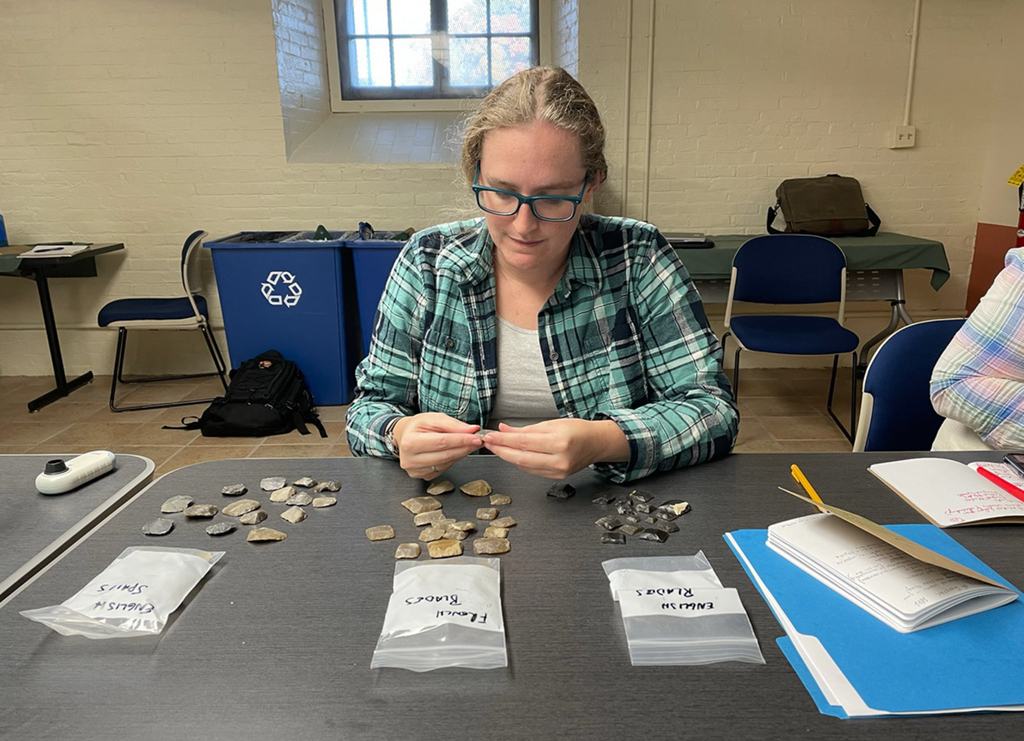
    Janene Johnston at a table
    Assistant Curator Janene Johnston inspects different types of gunflints at the 2022 Archeology of Firearms conference.

    Reference collections bring representative and unusual examples together for comparison. Jamestown organizes these physical study collections for staff and outside researchers. They provide a way to compare incomplete objects with examples that retain more recognizable features.

    The project’s July update offers a glimpse of that selection process. Johnston chose bullet-mold examples based on caliber, completeness, and head shape. Conservators also treated bandolier chargers she selected for their reference collection.

    Musket rests offer another useful example. Jamestown holds approximately 50 components of these supports for heavy muskets. Surviving pieces include U-shaped iron yokes with curled ends, sockets, and fittings from the bases of wooden staffs. Some sockets even preserve mineralized traces of the vanished wood.

    These distinctive features provide evidence for identification when much of an object has disappeared. Period illustrations offer another comparison. Jamestown’s published description points to musket rests depicted in Jacob de Gheyn II’s early-seventeenth-century military manual.

    Earlier Jamestown research also demonstrates why old identifications deserve review. A 1902 excavation report described one object as a small lead or pewter candlestick or sconce. In a 2018 update, researchers identified that same object as a bandolier cap dating to approximately 1615. The cap belonged to a container for a measured powder charge.

    Excavation records provide another essential check. The September update explains how plowing and twentieth-century utility work mixed material from different periods. An artifact found near an early feature may have moved from elsewhere. Proximity alone cannot establish its original association.

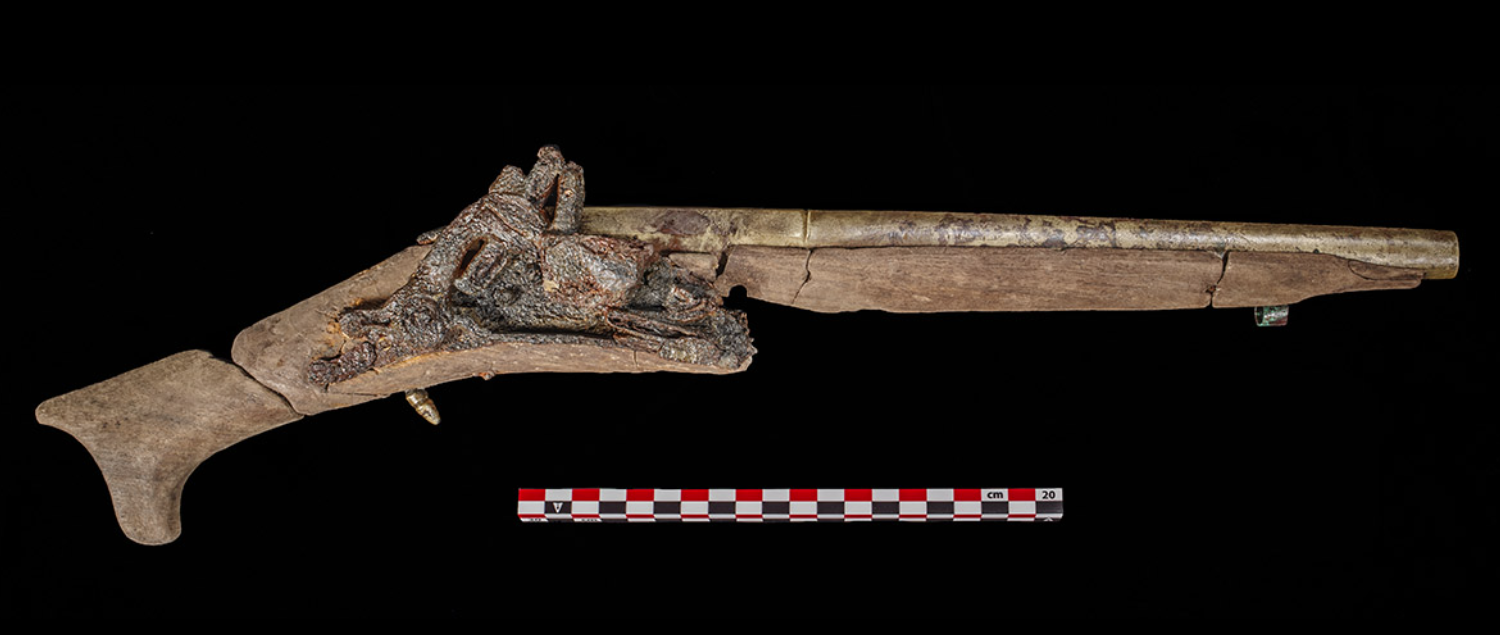
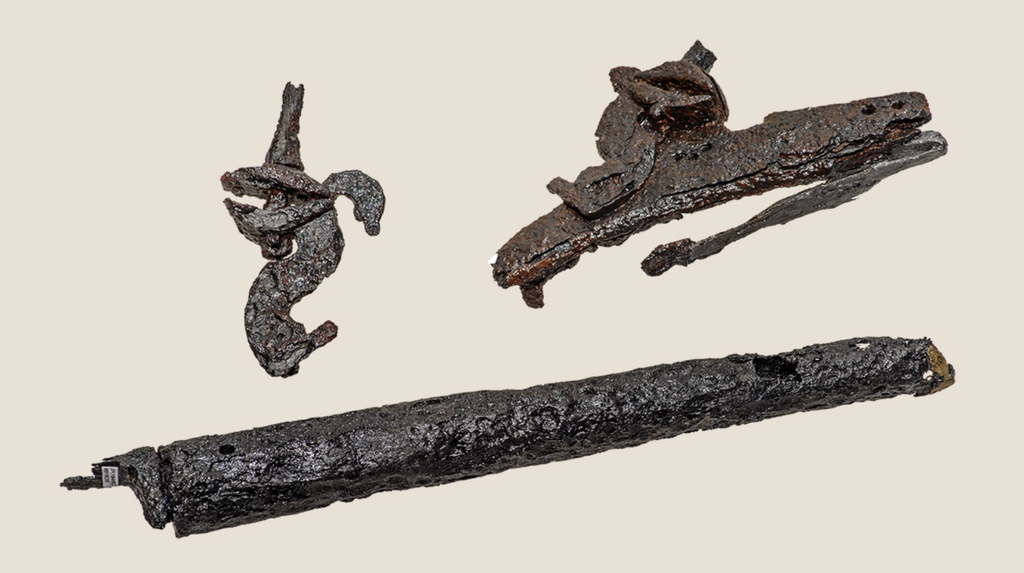
    snaphaunce lock and barrel
    Snaphaunce cock, lock, and barrel

    For collectors studying early arms and excavated material, these examples suggest a practical standard for evaluating an attribution. Look for distinctive physical features, documented recovery information, and convincing comparisons. Record uncertainty when the evidence leaves several possibilities open.

    Johnston’s reference collections give researchers a stronger foundation for making those comparisons – and revisiting conclusions as new evidence emerges.

    [Ed. note: A few years ago, I interviewed Janene Johnston, as well as Director of Collections and Conservation Michael Lavin, and Conservator Dr. Chris Wilkins. You can check it out below.]

  • Fort Ticonderoga’s Hold the Line for Liberty Set for October 24–25

    Fort Ticonderoga’s Hold the Line for Liberty Set for October 24–25

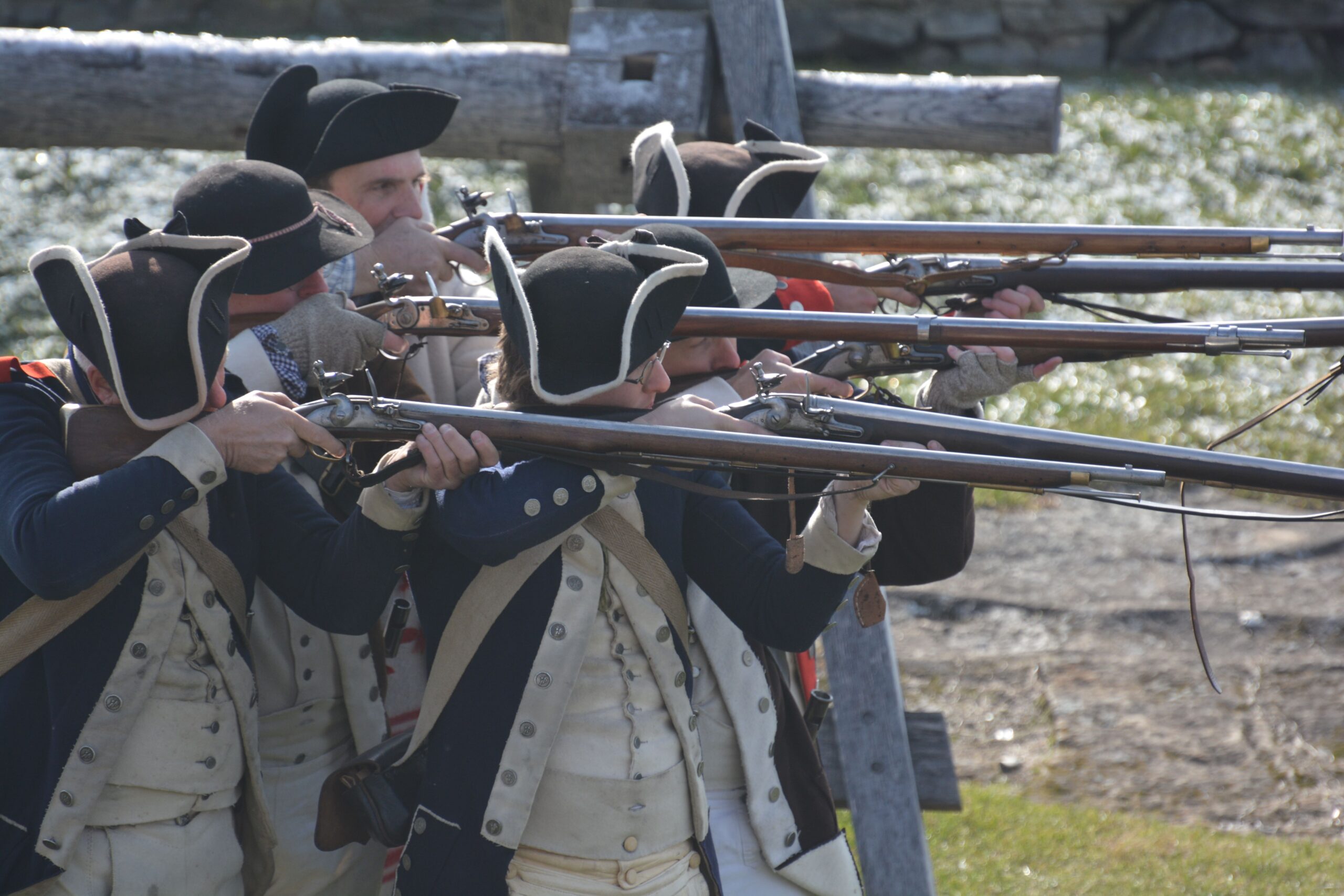
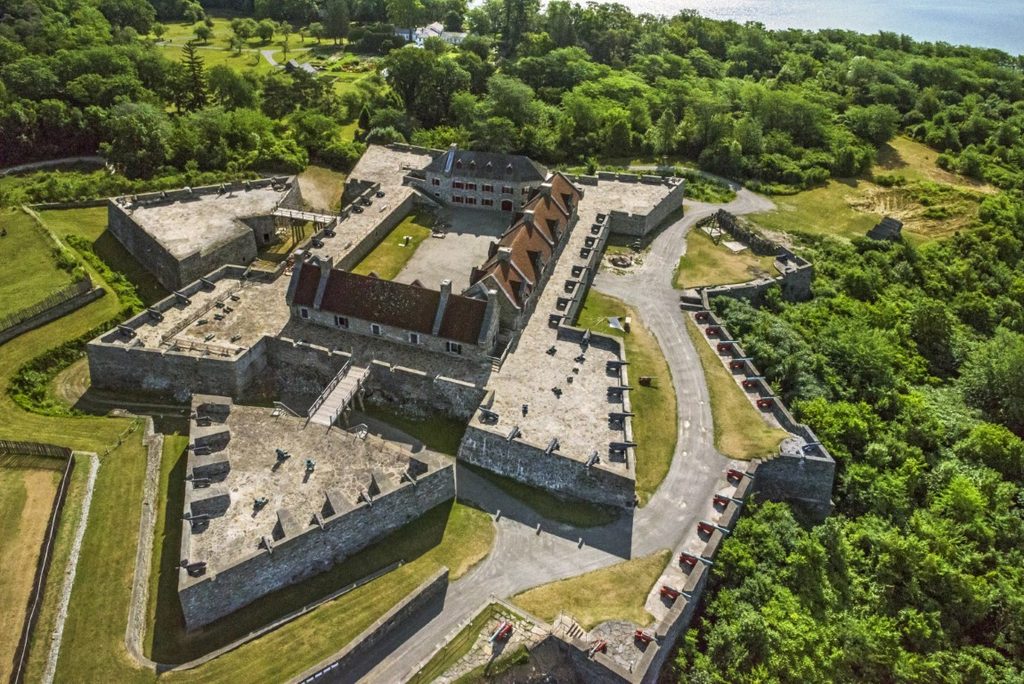
    Fort Ticonderoga will revisit the American defense that helped halt Britain’s 1776 advance during Hold the Line for Liberty, October 24–25.

    The two-day event in Ticonderoga, New York, combines reenactments, weapons interpretation, and museum tours during the campaign’s 250th anniversary. Programming will feature muskets, cannon, and gunboats.

    The event commemorates the American stand of October 28, 1776. Nearly 13,000 Continental soldiers and militia defended Ticonderoga and Mount Independence after months of preparation. They constructed fortifications and mounted cannon to protect the Lake Champlain corridor. Following the fighting at Valcour Island, British forces confronted those defenses and an approaching winter. They ultimately withdrew north to Canada.

    For collectors, the fort’s published equipment guidelines provide a useful look at how researchers reconstruct that army.

    For example, the artillery guide favors older British, commercially made, and American-made muskets, alongside New England fowling pieces. It also lists acceptable alternatives and excludes later French musket models.

    Fort Ticonderoga

    Historical documentation appears alongside those modern participation standards. The guide cites Captain Ebenezer Stevens’s March 1776 request for four carbines for his officers. It describes his company’s broader assortment of arms and accoutrements as likely resembling those carried by Massachusetts soldiers. That distinction separates a documented request from an inference about equipment.

    Visitors can also examine physical evidence from the campaign. The exhibition Run Aground: Remnants from the Royal Savage features an original cannon carriage recovered from the American schooner’s wreck. Located in the Mars Education Center, the display connects visitors with a surviving object from the Battle of Valcour Island.

    The Bullets & Blades exhibition offers a broader look at the museum’s firearms and edged weapons. Its displays explore their development and regional variations across the colonial and Revolutionary periods. Together, these collections give visitors opportunities to compare reconstructed equipment with original objects.

    Saturday’s schedule includes an alarm scenario at 11 a.m. and an artillery-and-gunboat reenactment at 2 p.m. Sunday features a Lake Champlain channel reenactment at 11 a.m., followed by a British withdrawal scenario at 1 p.m.

    Museum tours run at 11:30 a.m. and 2:30 p.m. both days. The fort opens from 9:30 a.m. to 5 p.m.; all times are Eastern.

    Event programming is included with general admission, and tickets remain valid for two consecutive days.

  • Two Firearms History Books Coming in November

    Two Firearms History Books Coming in November

    Two new books arriving in November 2026 promise fresh perspectives on American firearms history. One examines Confederate gunpowder production during the Civil War. The other documents New Hampshire’s gunsmiths and firearms retailers across two centuries.

    Both titles offer collectors and historians opportunities to explore lesser-known aspects of American arms development.

    The Indispensable Man: George Washington Rains, the Confederate Powder Works, and the Civil War You Never Knew

    The Indispensable Man: George Washington Rains

    Historian Theodore P. Savas examines the extraordinary career of George Washington Rains, whose work helped sustain the Confederate war effort.

    A West Point graduate, Rains served as an engineer, inventor, educator, and military officer. His most significant contribution came through his efforts to secure gunpowder for the Confederacy.

    In 1861, Confederate leaders faced an enormous challenge. Their armies needed ammunition, but the South lacked the manufacturing infrastructure necessary to support a prolonged war.

    Rains helped address that shortage through industrial development, procurement, and the establishment of Confederate powder production capabilities.

    Savas also examines Rains’s lesser-known activities in the Western Theater during the war’s opening year. His research draws on nearly four decades of work with primary sources, including previously unpublished material.

    The 768-page volume includes 55 images, additional photographs, and 13 maps. The book promises to connect firearms manufacturing, military logistics, and broader Confederate strategy in a single narrative.

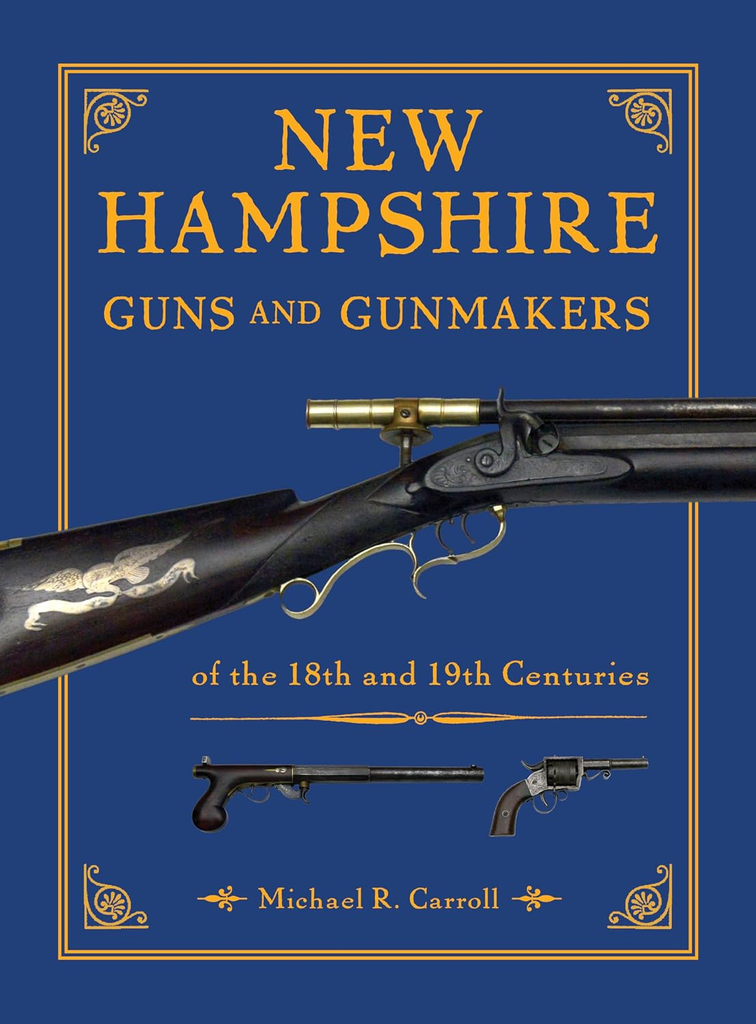
    New Hampshire Guns and Gunmakers: Of the 18th and 19th Centuries

    New Hampshire guns and gunmakers

    Author Michael R. Carroll explores the gunsmiths, manufacturers, and retailers who shaped New Hampshire’s firearms history.

    The book covers the period surrounding the American Revolution through the aftermath of the Civil War.

    Unlike larger manufacturers, many New Hampshire gunmakers operated small shops employing only a handful of workers. Their businesses often combined firearms production with unrelated trades and services.

    Among the craftsmen featured is David Hall Hilliard, who reportedly produced approximately 3,000 firearms over 35 years. Hilliard also manufactured cabinets and stoves, repaired carriages, and operated other businesses from his family farm.

    Carroll organizes his research alphabetically by gunsmith and retailer. Individual entries combine biographical information, historical context, and descriptions of surviving firearms.

    The 384-page reference features approximately 950 photographs, including detailed images of more than 100 antique pistols and long guns.

    Carroll brings more than 50 years of antique firearms collecting experience to the project. He has also contributed research to the journal of the American Society of Arms Collectors.

    For collectors specializing in regional American arms, the book promises an especially useful reference for identifying makers and researching surviving examples.

    New, well-written gun books are always a welcome addition to the library, even if the bookshelves are straining under the weight.

    The Indispensible Man and New Hampshire Guns and Gunmakers are currently available for preorder by clicking their titles above, with publication scheduled for November 26 and November 28, respectively.

  • Rare Palmetto Armory Pistol Highlights Alderfer’s October Firearms Auction

    Rare Palmetto Armory Pistol Highlights Alderfer’s October Firearms Auction

    Alderfer Auction will offer a diverse selection of antique and modern firearms during its October 27 online auction. The sale includes several notable 19th-century military arms, including a scarce Palmetto Armory Model 1842 percussion pistol.

    The Hatfield, Pennsylvania, auction house opened bidding on October 9. Online bidding closes on October 27, beginning at 10 a.m. Eastern.

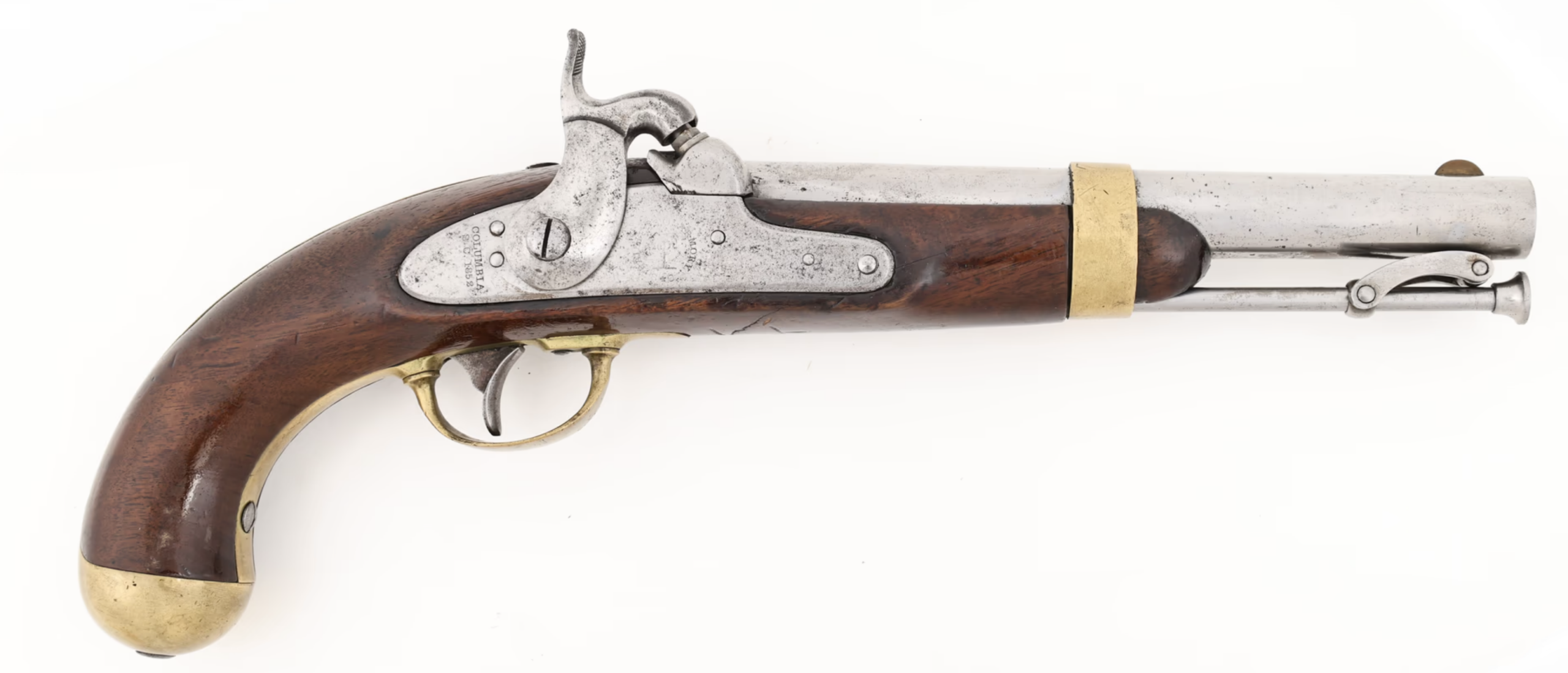
    Among the historical highlights is a Model 1842 percussion pistol manufactured by William Glaze’s Palmetto Armory in South Carolina. These pistols represent an unusual chapter in American military arms production before the Civil War.

    William Glaze operated the Palmetto Armory in Columbia, South Carolina, during the early 1850s. His operation produced military firearms under a contract with the state, including percussion pistols and muskets.

    The Palmetto Armory pistol attracts particular interest because of its limited production and distinctive place in American firearms history. Its historical significance also makes surviving examples desirable among collectors of antebellum military arms. This particular example has been heavily cleaned, but it’s still worth noting due to the model’s rarity.

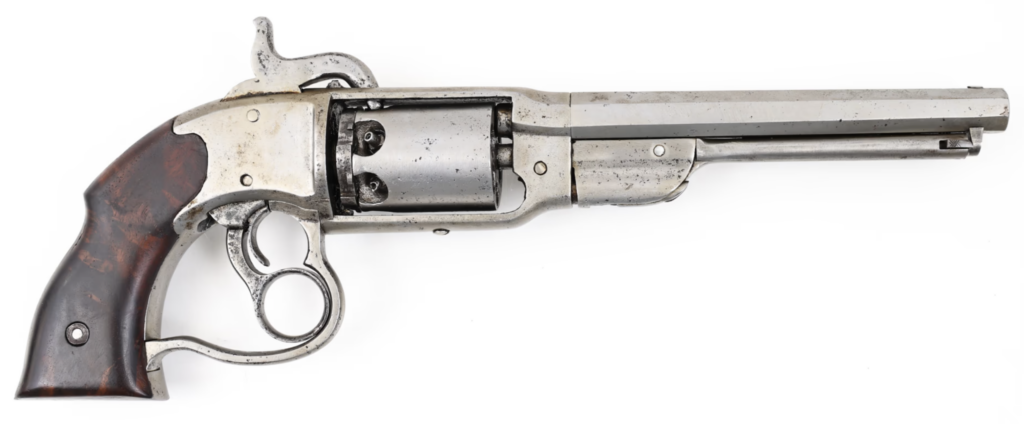
    savage pistol

    Another featured lot is an antique Savage Revolving Firearms Company Navy percussion revolver. Savage produced these distinctive revolvers during the Civil War era. This is example is well-worn, but it’s an honest gun.

    The revolver’s unconventional design distinguishes it from contemporary Colt and Remington revolvers. Its unusual operating mechanism gives collectors an interesting alternative to more familiar Civil War handguns.

    The auction also includes a Richardson & Overman Gallager carbine. It represents the transition toward breechloading military firearms during the American Civil War.

    Collectors can review the online catalog and place bids through Alderfer’s website.

    The October sale offers opportunities across several collecting specialties, from early military percussion arms to modern sporting firearms.

  • CMP to Receive 2,000+ Military Shotguns

    CMP to Receive 2,000+ Military Shotguns

    The Civilian Marksmanship Program (CMP) is preparing to receive 2,027 surplus military shotguns from the U.S. Army, including hundreds of historic Winchester Model 1897s.

    The transfer follows passage of the Fiscal Year 2026 National Defense Authorization Act (NDAA). The legislation expanded the CMP’s authority to receive and sell surplus military pump-action shotguns to eligible civilians.

    cmp logos

    According to the CMP, the Army has identified 1,589 Mossberg Model 500 pump-action shotguns and 438 Winchester Model 1897 pump-action shotguns for transfer.

    The Winchester Model 1897 will likely generate considerable interest among military firearms collectors. Designed by John Moses Browning, the shotgun gained fame during World War I. Military versions, particularly trench guns, have become highly desirable collectibles – though the extent of their actual use in the trenches has come under scrutiny in recent years.

    The Mossberg 500 represents a more modern chapter in American military shotgun history. Introduced in 1961, the design has served in various military and security roles for decades. All told, more than 12 million have been produced; obviously, most have been for the civilian market.

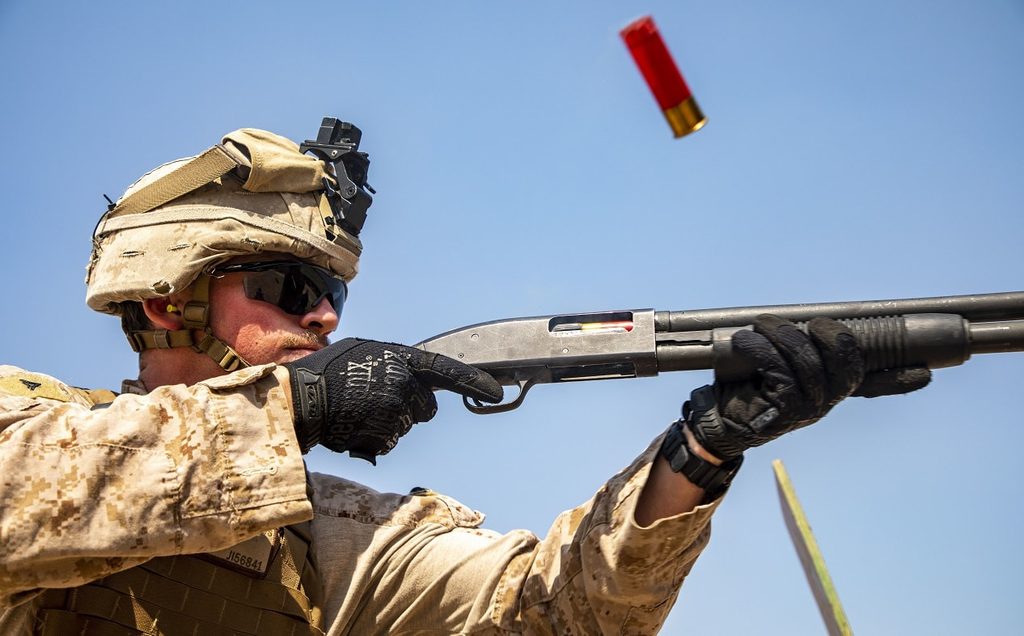
    USMC firing Mossberg 500
    A U.S. Marine with 2nd Battalion, 7th Marines, assigned to the Special Purpose Marine Air-Ground Task Force-Crisis Response-Central Command (SPMAGTF-CR-CC) 19.2, cycles a Mossberg shotgun at the Baghdad Embassy Compound in Iraq, May 8, 2020. (U.S. Marine Corps Photo by Cpl. Brendan Custer)

    The CMP is coordinating with Army officials to finalize transfer requirements and establish inspection, restoration, and sales procedures. Pricing, individual firearm conditions, and specific sales dates have not yet been announced.

    However, prospective buyers should temper their expectations.

    The legislation authorizes only a one-time transfer of surplus shotguns from the Army, Navy, and Air Force. It does not establish an ongoing supply of military shotguns for future CMP sales.

    Additionally, the 438 Winchester Model 1897 shotguns represent a relatively small quantity compared to anticipated collector demand.

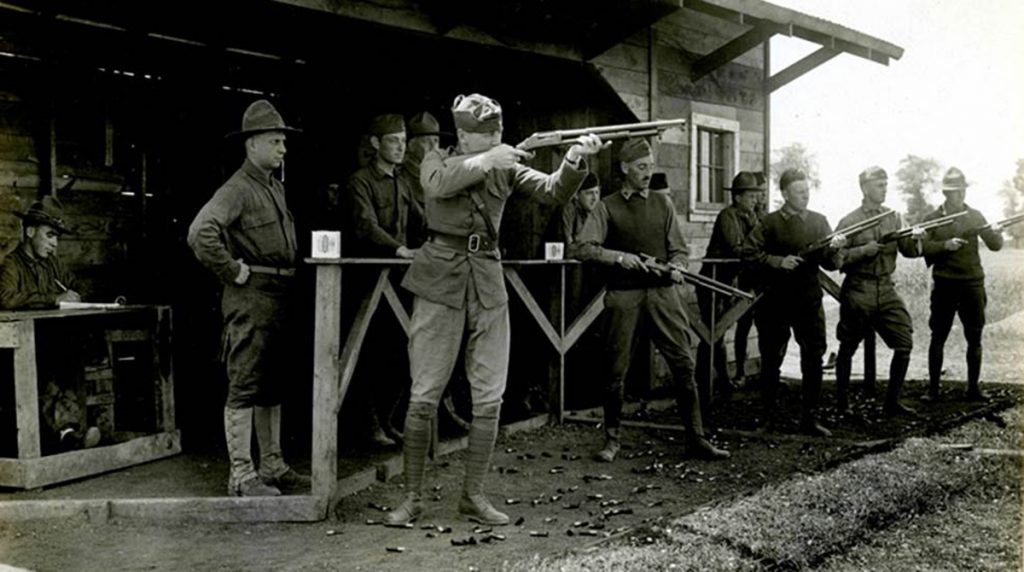
    WWI soldiers firing shotguns
    Soldiers practicing with Winchester Model 1897 shotguns during World War I.

    Individual configurations, originality, markings, and overall condition will play important roles in determining collector interest and potential market values.

    For collectors, the announcement represents a rare opportunity to acquire historic military shotguns through the CMP. It also raises questions about how these firearms will be graded, priced, and distributed once sales begin.

  • Ruger’s Production Halt and Collectors

    Ruger’s Production Halt and Collectors

    Ruger has announced sweeping changes to its firearms lineup, suspending or ending production of numerous longstanding models. The decision affects some of the company’s most recognizable revolvers, pistols, and rifles.

    While the changes reflect Ruger’s evolving business strategy, they also carry significant implications for firearms collectors and the secondary market.

    Ruger immediately suspended production of its LCR, SP101, GP100, and Bearcat revolvers.

    Additional models will complete their final production runs by the end of 2026. These include the Blackhawk, Super Blackhawk, Vaquero, Redhawk, Super Redhawk, and Single-Series revolvers. The SR1911 pistol, No. 1 single-shot rifle, 77-Series rifles, Hawkeye, Ruger Precision Rifle, and several pistol-caliber carbines also face production changes.

    Ruger emphasized that these decisions do not necessarily represent permanent discontinuations. The company may eventually reintroduce some product families with updated designs and manufacturing methods.

    For collectors, the most significant developments involve Ruger’s traditional revolvers and sporting rifles.

    The Blackhawk, introduced in 1955, helped establish Ruger’s reputation for durable, affordable single-action revolvers in centerfire calibers. The No. 1, introduced in the 1960s, developed a dedicated following among enthusiasts of traditional single-shot rifles.

    ruger logo

    Both platforms have extensive histories spanning numerous configurations, calibers, and special editions.

    Their removal from regular production could generate renewed interest in discontinued variations, particularly those already considered scarce or desirable.

    However, discontinuation alone does not guarantee increased collector value.

    Production numbers, condition, originality, configuration, and existing collector demand remain the primary factors determining market prices.

    Common examples produced in large quantities may see little appreciation. For example, more than two million Blackhawk revolvers have been made in the last seven decades.

    Limited-production variations, unusual chamberings, and exceptionally preserved examples could attract greater attention.

    The distinction between discontinued designs and discontinued generations also matters. Ruger has explicitly left the door open for future versions of these firearms.

    If updated models eventually return, collectors may distinguish original-production examples from their modern replacements.

    Ruger’s decision also creates an opportunity to examine the company’s place in the collector market.

    For decades, Ruger firearms have occupied an interesting position between practical sporting guns and dedicated collectibles.

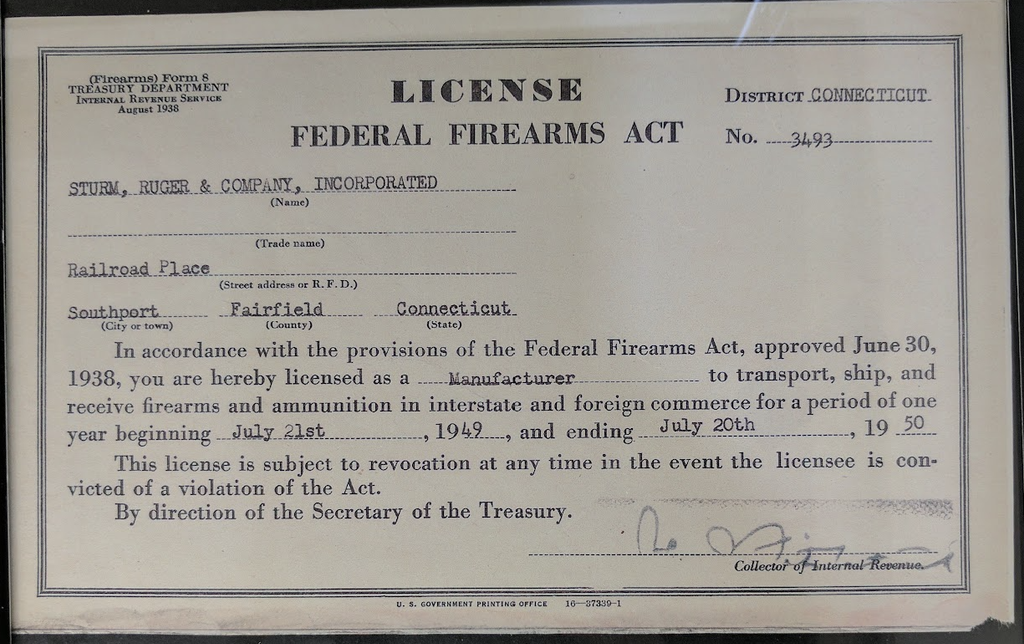
    ruger's first ffl
    Ruger’s first FFL, issued July 21, 1949

    Models like the Bearcat, Blackhawk, and No. 1 have established collector followings. Meanwhile, special editions, limited chamberings, and distributor exclusives have created specialized collecting niches.

    The latest announcement could expand interest in these areas as enthusiasts reconsider the historical significance of the outgoing models.

    Collectors should document serial numbers, original configurations, factory packaging, and accompanying paperwork. Such details can prove especially important when distinguishing uncommon variations from standard-production firearms.

    Ultimately, Ruger’s announcement represents a significant turning point in the company’s manufacturing history. While nothing has been said officially, plenty of speculation as to why this is happening how seems to coincide with Beretta’s interest in acquiring 25% of the company.

    Whether it also becomes a turning point in Ruger collecting will depend on future production decisions and the secondary market’s response.

    For now, collectors have a new reason to watch Ruger prices, production announcements, and upcoming auctions closely.