Author: Logan Metesh

  • CMP Launches Paid Membership Program, Sparking Debate Over M14 Purchase Limits

    CMP Launches Paid Membership Program, Sparking Debate Over M14 Purchase Limits

    New membership tiers support CMP scholarships and offer priority M14 processing, but collectors are divided over whether the benefits come at the expense of wider access.

    The Civilian Marksmanship Program (CMP) announced a new paid membership program on November 9, 2026, giving collectors, competitors, and other supporters an opportunity to contribute directly to the organization while receiving exclusive benefits. Although the program directs all membership revenue toward scholarships, its purchasing privileges have already generated controversy among the CMP’s supporters.

    The new membership program also comes as the CMP continues to adjust its sales policies for surplus firearms, including recent changes to its 1911 pistol purchase limits that The Collector’s Wire previously covered.

    The new program introduces Bronze, Silver, and Gold memberships, with annual contributions ranging from $100 to $500. Introductory pricing is available through December 31, 2026, reducing first-year costs to $65, $150, and $300, respectively.

    All three membership levels include priority processing for eligible orders of the CMP’s forthcoming semi-automatic M14 rifles, as well as commemorative hats and patches. Silver members may purchase up to three M14s annually, while Gold members may purchase up to four, compared with the standard limit of two.

    Importantly, higher membership levels do not confer greater processing priority. According to the CMP’s published membership FAQ, all three tiers receive the same priority status over nonmembers, subject to availability and eligibility requirements.

    A New Way to Qualify for CMP Purchases

    One of the program’s more significant changes is that direct CMP membership will satisfy the affiliated-club membership requirement for purchasing firearms and other eligible products.

    Historically, customers have generally met this requirement through organizations such as the Garand Collectors Association or other CMP-affiliated clubs. Those memberships will remain valid, and customers are not required to join the new program to continue making qualifying purchases.

    CMP membership also does not eliminate other purchasing requirements, including citizenship verification, applicable marksmanship qualifications, and background checks.

    Members must complete a CMP safety video and short quiz before their membership benefits can be activated.

    Additional benefits are planned, including discounts on competitions, classes, and selected products, early registration opportunities, and dedicated member services. However, these are future offerings rather than guaranteed benefits available at launch.

    Supporting the Next Generation

    According to the CMP, 100 percent of membership contributions will go directly to its Scholarship Fund, with the organization absorbing processing and handling fees.

    The scholarship program provides up to $1 million annually to qualifying students, with awards ranging from $1,000 to $40,000. Beginning with the 2026–2027 scholarship cycle, the program is also expanding to include current college students who continue participating in competitive marksmanship.

    For supporters who value the CMP’s educational mission, this provides a direct way to fund the next generation of shooters.
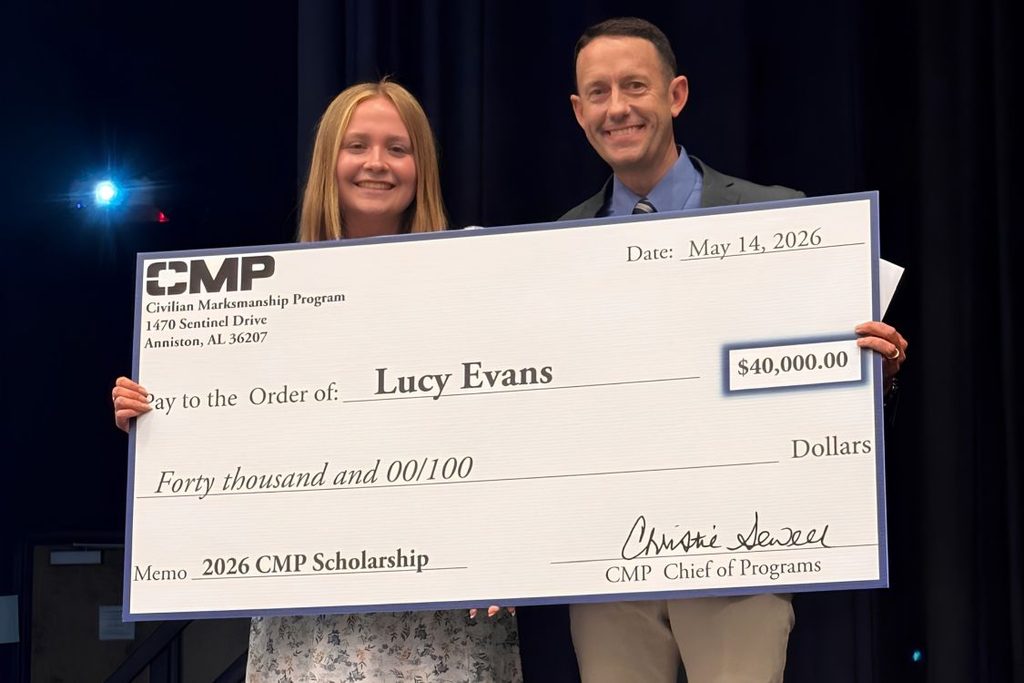
    cmp scholarship

    Supporters Welcome the Opportunity

    Initial reactions to the announcement included considerable enthusiasm, particularly from longtime CMP participants and military veterans.

    Many people expressed their approval and intention to support the new program.

    One man, whose involvement with the CMP and its predecessor dates to 1976, emphasized the organization’s role in teaching firearms safety, responsibility, discipline, and confidence to young shooters.

    Others welcomed the opportunity to contribute more directly to scholarship funding or viewed the new program as a way to strengthen the broader CMP community.

    Critics Question Purchase Limits and Priorities

    Not everyone is enthusiastic, however. A recurring concern among commenters is whether increased purchase limits will make it more difficult for individual collectors and competitive shooters to obtain the limited number of M14 rifles expected to become available.

    Several commenters argued that permitting higher-paying members to purchase additional rifles could encourage resale rather than participation in marksmanship activities.

    One commenter acknowledged the program’s fundraising potential but argued that increasing purchase limits could undermine the CMP’s mission by reducing the number of people able to acquire historic service rifles.

    Others raised similar objections, warning that purchasers could acquire multiple M14s and resell them at gun shows or through online auctions. These are concerns expressed by commenters, rather than documented instances involving the forthcoming M14 sales.

    The criticism also reflects a broader philosophical disagreement over the CMP’s role: whether its primary purpose should be distributing surplus military firearms to collectors or ensuring that as many individuals as possible have access to equipment for marksmanship training and competition.

    Other commenters questioned the value of additional annual membership fees, particularly when many already belong to affiliated clubs.

    Some suggested that the CMP should place greater emphasis on reducing youth competition fees or offering benefits to average shooters rather than expanding purchasing privileges for those able to afford multiple rifles.

    There were also requests for more immediate benefits, including ammunition shipping discounts, reduced range fees, and recognition of longstanding CMP involvement.

    Questions Remain About Membership Terms

    The CMP’s published information also contains several inconsistencies concerning membership renewal.

    cmp membership join

    The organization’s online store states that introductory memberships automatically renew at the full annual price, while its linked membership FAQ says automatic renewal is not currently active.

    Additionally, the original announcement identifies January 1, 2028, as the renewal date for early adopters, while the FAQ lists January 1, 2027.

    The Terms of Service PDF linked from the membership page was also labeled as a draft for legal and executive review at the time of this writing.

    Prospective members should verify the applicable renewal date, payment terms, and cancellation arrangements with the CMP before enrolling.

    What Does This Mean for Collectors?

    The membership announcement comes as the CMP prepares to begin selling surplus M14 rifles that have been permanently converted to semi-automatic operation.

    The CMP previously indicated that M14 sales were expected to begin in January 2027, although final pricing, specific availability, and ordering procedures have not yet been announced.

    For collectors interested in purchasing one of these rifles, membership offers a potential advantage through priority processing. For those interested primarily in supporting the organization’s mission, the scholarship contribution may be reason enough to join.

    However, the debate surrounding expanded purchase limits raises a question that will likely continue as the M14 sales program develops: Should a program dedicated to promoting civilian marksmanship give individuals who contribute more money the opportunity to acquire more historic military firearms?

    The answer may ultimately determine how the CMP’s newest membership initiative is received by the very community it is intended to serve.

    More information is available through the CMP’s original announcement, membership program details, and M14 sales announcement.
  • Palmetto Pistols at Poulin’s Test Condition and Values

    Palmetto Pistols at Poulin’s Test Condition and Values

    After a $3,690 result at Alderfer, two more Palmetto Armory pistols could reveal how much collectors will pay for better condition.

    Just weeks after a Palmetto Armory pistol sold at Alderfer Auction, two more examples are heading to the auction block. Their differing conditions and estimates offer an interesting opportunity to examine what drives prices in the antique firearms market.

    On October 27, Alderfer sold a William Glaze Palmetto Armory Model 1842 pistol for $3,000, or $3,690 including the 23% buyer’s premium.

    As The Collector’s Wire previously reported, the pistol had been heavily cleaned. Its metal surfaces had a silver-gray appearance, while the stock showed an older refinish and cracks.

    palmetto pistol
    Alderfer sold this Palmetto in October 2026 for $3,690 including the buyer’s premium.

    Despite those condition issues, the pistol attracted a buyer. Now, Poulin’s November 8 sale offers two more examples for comparison.

    Two Pistols, Two Levels of Preservation

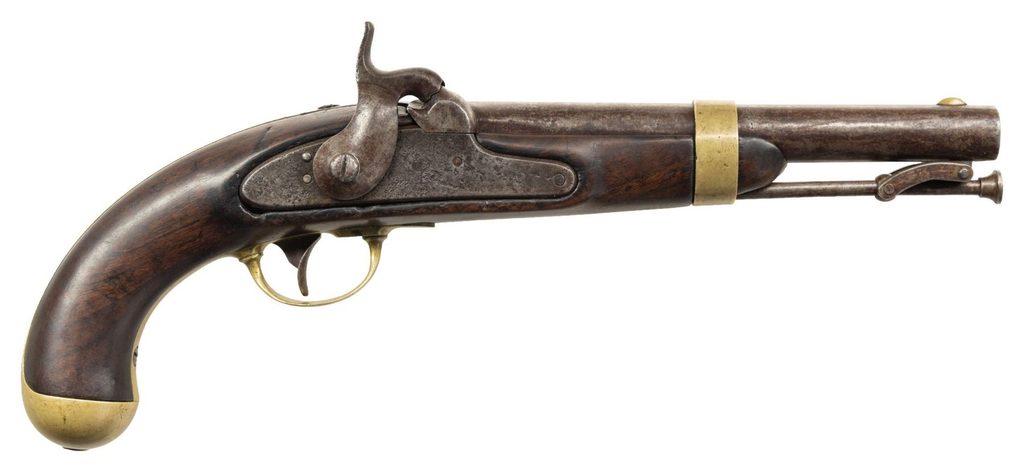
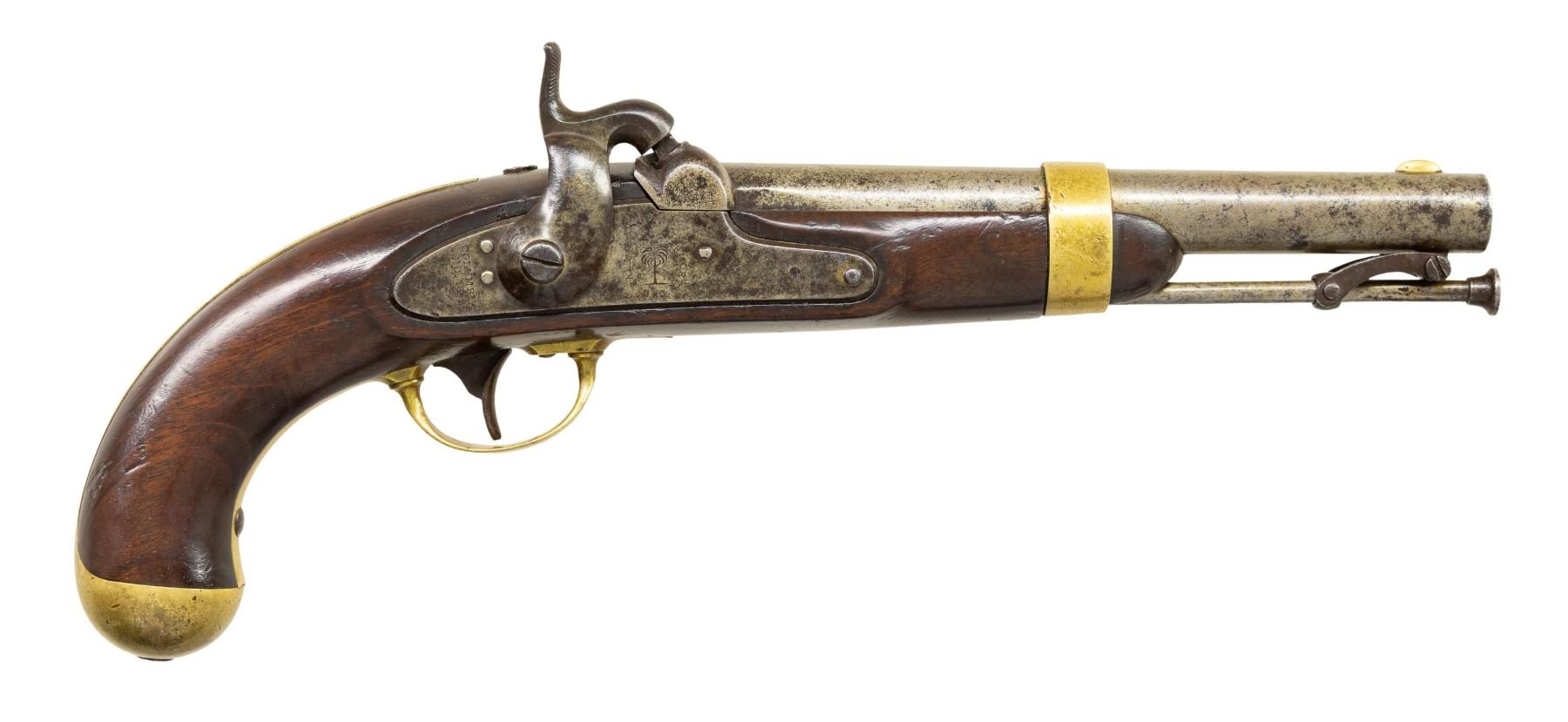
    Lot 3239 carries a $5,000–$7,000 estimate. Poulin describes the .54-caliber pistol as an exceptionally well-preserved survivor, with strong Palmetto Armory and William Glaze markings.

    More importantly, it retains traces of its original brown finish. The auction house considers it among the top 10% of documented survivors for condition.

    The pistol also comes with records of its 2006 sale through Greg Martin Auctions and a historical letter from Norm Flayderman. Its principal noted mechanical issue is a lock that will not hold at half-cock.

    That pistol is pictured in the header of this piece.

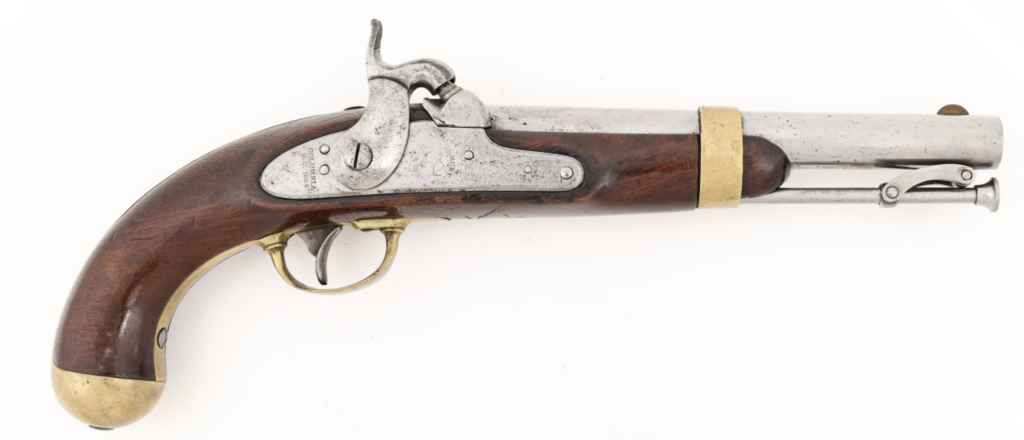
    Lot 3240, estimated at $3,000–$4,000, presents a different picture.

    Although complete and original, it exhibits considerable pitting, worn markings, an older stock refinish, and hairline cracks. The lock mortise also shows wear. Poulin grades its overall condition as good.

    palmetto pistol
    Lot 3240 at Poulin’s November 2026 sale

    What Might They Bring?

    The Alderfer result establishes a recent comparison, but not necessarily a market benchmark. Its extensive cleaning and refinished stock undoubtedly affected its appeal to collectors who prize originality.

    Poulin’s better pistol has a reasonable chance of reaching its $5,000–$7,000 estimate, perhaps exceeding it if multiple bidders prioritize preservation and original finish.

    The second example seems more directly comparable to Alderfer’s pistol. A result near $3,000–$4,000 would be unsurprising, although its pitting and stock issues could limit bidding.

    Both Poulin lots carry a 26% buyer’s premium; Alderfer was 23%. The similar percentages making hammer-price comparisons particularly useful.

    What It Says About the Market

    Palmetto Armory pistols occupy an unusual position in American firearms collecting. Produced in South Carolina before the Civil War, many subsequently entered Confederate service. Their limited production and regional historical significance make them desirable, even when condition is less than ideal.

    But rarity alone does not guarantee a premium.

    Collectors distinguish between honest age-related wear and permanent alterations such as aggressive cleaning or refinishing. Original surfaces, sharp markings, sound wood, and documented history can all influence what a buyer will pay.

    The most revealing comparison may be between Poulin’s two examples. Selling in the same auction removes some of the variables associated with comparing different auction houses and dates.

    If the better-preserved pistol substantially outperforms its rougher counterpart, the results will reinforce an important collecting principle: scarcity creates interest, but condition often determines price.

  • Researchers Reconstruct Arms Historian’s Gun Lock Catalog

    Researchers Reconstruct Arms Historian’s Gun Lock Catalog

    A significant collection of historic gun lock research has gained a new audience thanks to the efforts of three firearms historians. The American Society of Arms Collectors (ASAC) has published the reconstructed gun lock catalog of the late S. James “Jim” Gooding.

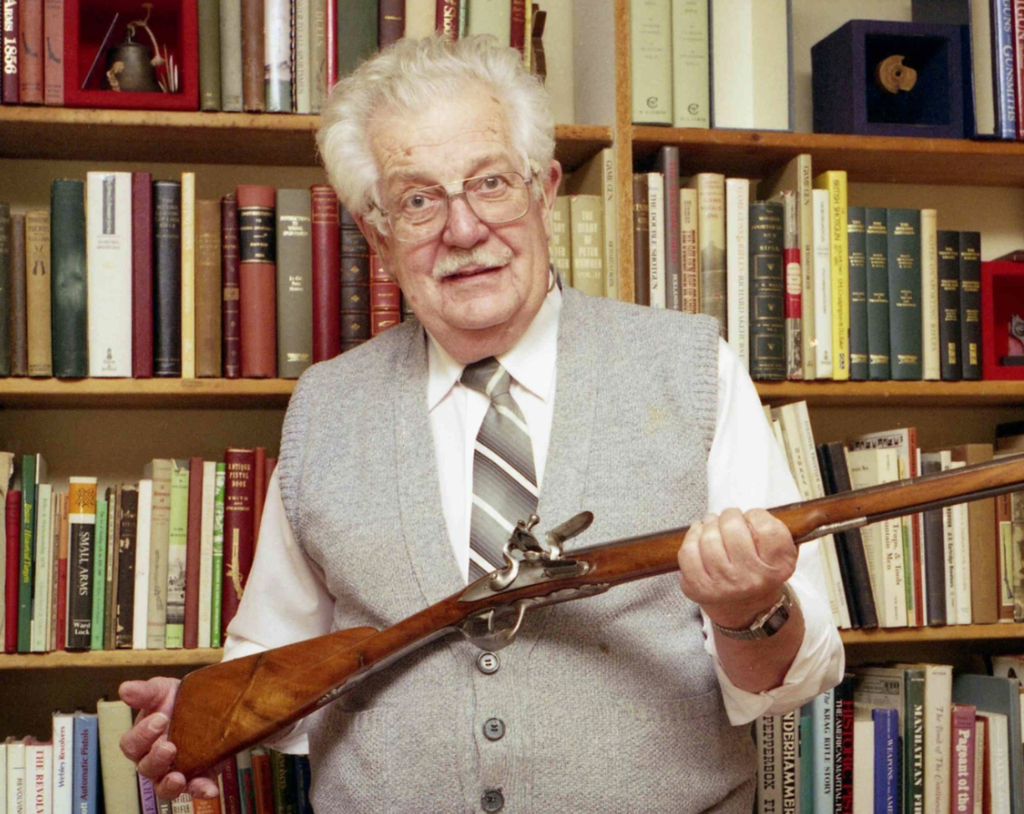
    Gooding, who died in 2012, spent decades studying antique firearms, particularly their ignition systems. His work as a researcher, author, publisher, and collector made him a respected authority in the field.

    Among his interests was an extensive collection of gun locks. These mechanisms provide important evidence about the development of firearms technology, manufacturing practices, and individual gunmakers.

    Gooding photographed nearly every lock in his collection and maintained a detailed catalog of their characteristics. He intended to incorporate the material into a comprehensive history of firearms ignition systems. The collection would have formed Chapter 14 of that unfinished work.

    However, Gooding died before completing the project.

    S. James Gooding
    S. James Gooding (1930-2012)

    Fortunately, the photographs included numbers corresponding to entries in his catalog. Researchers Will Adye-White, Brian Godwin, and Matthew Schneiderman used those numbers to reunite the photographs with their original descriptions.

    Their efforts resulted in the reconstructed Jim Gooding’s Gun Lock Collection and Catalogue, which ASAC published online in 2026.

    The catalog includes detailed information about individual locks, their makers, mechanical features, and historical context.

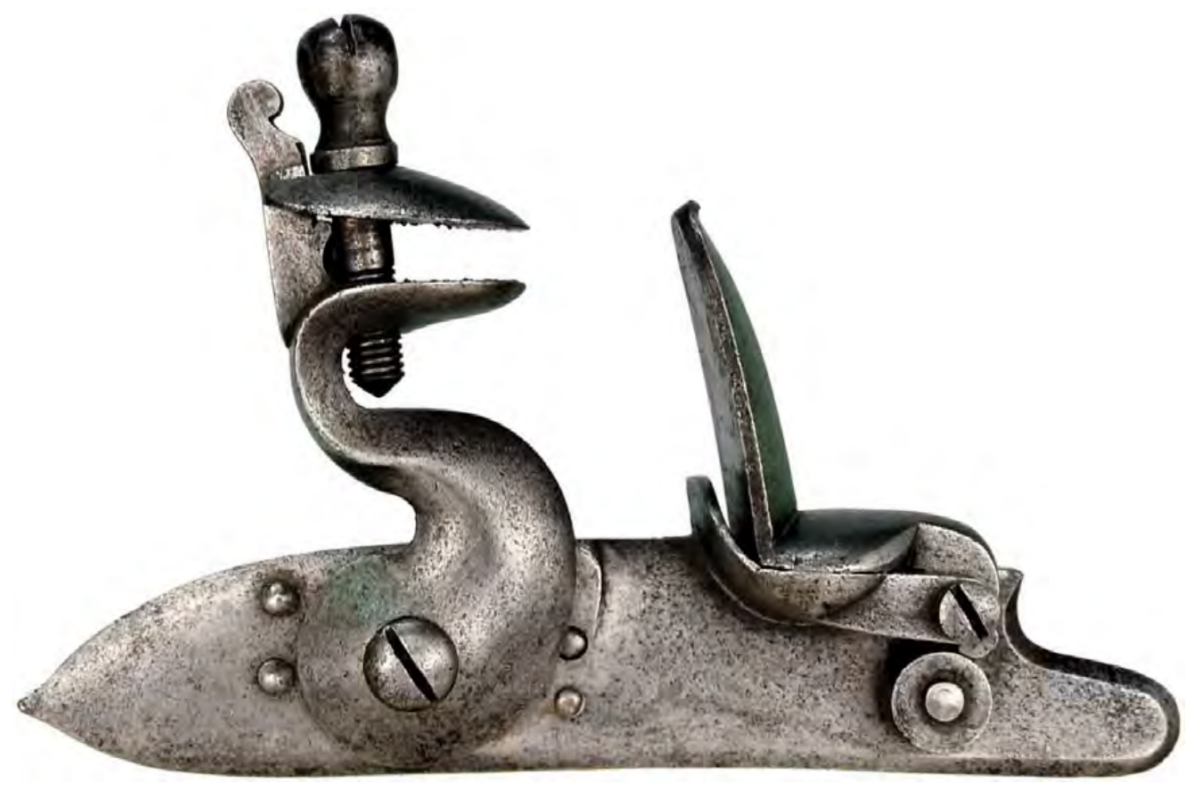
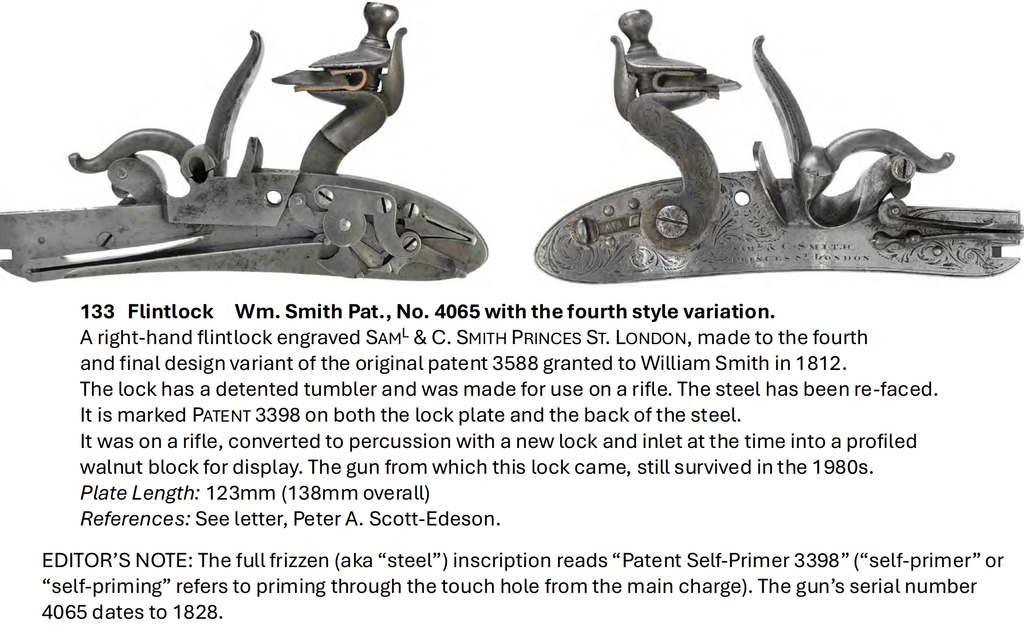
    One example is catalog number 133, a William Smith patent flintlock dating to 1828. The entry documents the lock’s markings, patent information, and the serial number of the rifle to which it was originally attached.

    flintlock excerpt
    Catalog number 133

    Such information can prove valuable when identifying detached locks or examining antique firearms whose original configurations are uncertain. Like other specialized firearms research, Gooding’s catalog demonstrates how original documentation can help collectors identify historical artifacts and better understand their significance.

    For collectors, the catalog provides an additional reference for comparing surviving examples against documented historical specimens. It also preserves information about a specialized collection that might otherwise have become difficult to reconstruct.

    The project illustrates the importance of maintaining detailed collection records. Photographs, identification numbers, and written descriptions allowed researchers to preserve Gooding’s work more than a decade after his death.

    Gooding’s research continues to benefit collectors through additional publications available from ASAC. These include his unfinished history of firearms ignition systems and his scarce reference work on early percussion primers.

    The reconstructed catalog is available to the public through ASAC’s online research library, providing collectors and historians with access to material that might otherwise have remained unpublished.

  • Historic Weapons, Artillery, and Tanks Return to Action at Texas Military Museum

    Historic Weapons, Artillery, and Tanks Return to Action at Texas Military Museum

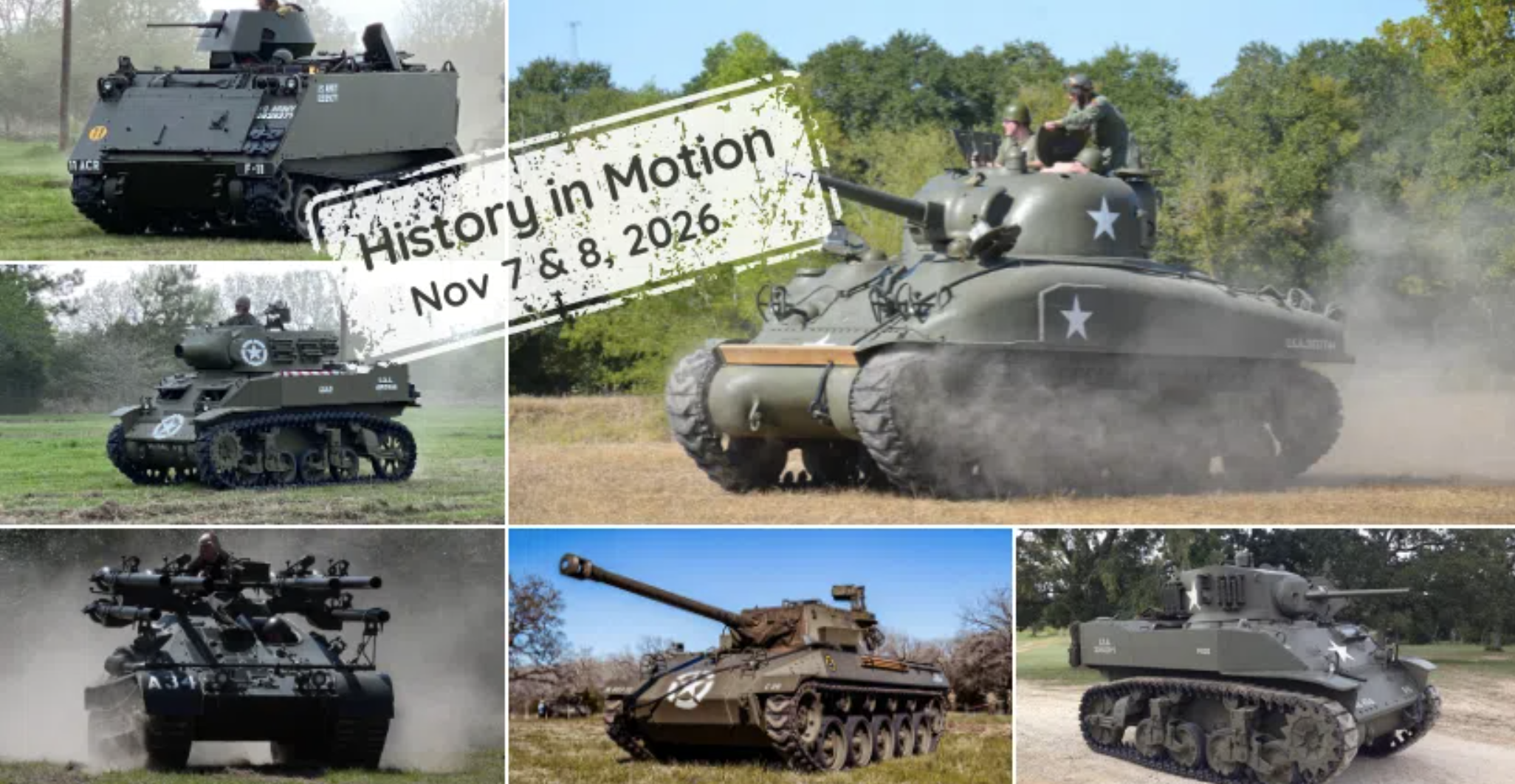
    Historic military weapons, artillery, and armored vehicles will return to action during the Museum of the American G.I.‘s annual History in Motion event. The museum will host the two-day program November 7–8, 2026, in College Station, Texas.

    The event offers visitors an opportunity to experience historic military equipment beyond traditional museum displays. Make sure you’re checking TCW regularly for other updates about museums and events.

    Of particular interest to firearms collectors are the planned weapons demonstrations, which will showcase examples of historic military arms in operation.

    Although the museum has not published a complete list of participating firearms, the demonstrations promise a closer look at the weapons and equipment used by American military personnel.

    For collectors, operational demonstrations can provide context that static displays cannot always convey. Differences in loading procedures, handling, and firing characteristics become more apparent when historic weapons are demonstrated.

    The museum will also conduct artillery demonstrations, including a finale scheduled to conclude each day’s activities.

    Beyond firearms, History in Motion will showcase the museum’s collection of restored military vehicles. The institution specializes in preserving equipment associated with American military service, particularly World War II and the Vietnam War.

    museum of the american gi

    Visitors can watch two major vehicle demonstrations each day. The museum will also offer opportunities to ride in historic tanks and military vehicles, including a Vietnam-era M113 armored personnel carrier.

    New living history displays will explore American military life from the Civil War through Vietnam. These presentations will feature period uniforms, equipment, and camp life, providing additional context for the weapons and vehicles on display.

    For military collectors, the event provides an opportunity to observe the relationship between individual weapons, crew-served equipment, and the vehicles that supported American troops.

    It also demonstrates the importance of preserving operational artifacts. Restoring and maintaining historic military equipment allows museums to interpret how these objects functioned rather than simply displaying their appearance.

    History in Motion takes place at the Museum of the American G.I., 19124 Highway 6 South, College Station, Texas.

    Gates open at 9 a.m., with programming running from 10 a.m. to 3 p.m. on both days.

    Admission costs $25 for adults and $10 for children ages 5–17. Children younger than five enter free. These are cash admission prices. Online tickets are also available.

    Free parking is available at Santa’s Wonderland’s Blitzen Lot. The museum building will remain closed during the outdoor event.

    Additional information, including tickets and vehicle ride reservations, is available through the museum’s official event page.

  • Ruger Collectors Take Center Stage at November Tulsa Arms Show

    Ruger Collectors Take Center Stage at November Tulsa Arms Show

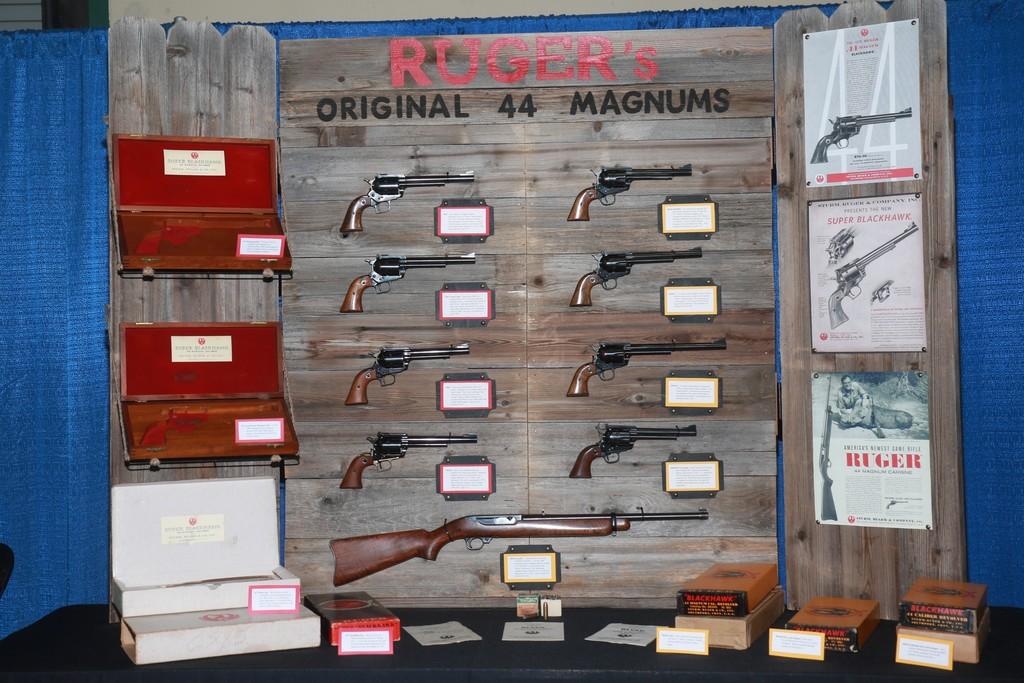
    Wanenmacher’s Tulsa Arms Show returns for its bi-annual event on November 14–15, 2026, with the Ruger Owners & Collectors Society (ROCS) prominently featuring their displays as questions surround the future of several discontinued Ruger models.

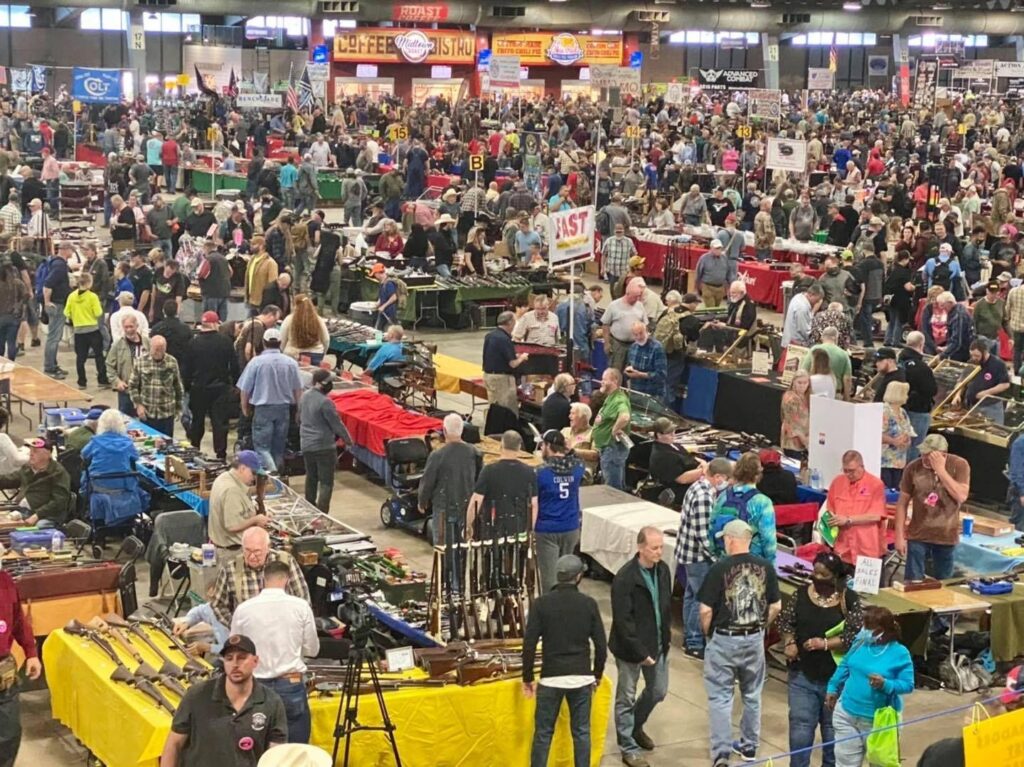
    The show will fill Tulsa’s Expo Square with more than 4,200 tables of antique and modern firearms, knives, and related collectibles. Organizers describe the event as the world’s largest gun show, occupying approximately 11 acres of indoor exhibition space.

    ROCS brings together enthusiasts interested in the history, development, and collecting of firearms manufactured by Sturm, Ruger & Co, and the collector’s club will hold its 13th annual Tulsa display show in November.

    ROCS members are encouraged to exhibit their collections in a dedicated Ruger display area. The organization also plans an awards banquet and other activities during the weekend.

    The timing is particularly interesting for Ruger collectors.

    Earlier this month, The Collector’s Wire examined Ruger’s decision to discontinue several major firearm models, including the potential consequences for collectors.

    Although discontinued production does not automatically increase a firearm’s value, it can change how collectors view particular models and variations.

    Original configurations, production numbers, mechanical differences, and surviving condition all influence collectibility. Models that receive relatively little attention while in production can develop dedicated followings after manufacturing ends.

    The Tulsa gathering offers an opportunity to examine Ruger’s history through collections assembled by knowledgeable enthusiasts.

    Collector displays can highlight rare variations, limited-production models, factory presentation firearms, and other historically significant examples. They also provide opportunities to compare firearms that collectors might otherwise encounter only in books or photographs.

    For attendees interested in Ruger history, the society’s dedicated displays could prove as worthwhile as the thousands of commercial tables.

    tulsa arms show
    Tulsa Arms Show

    Beyond Ruger, the Tulsa Arms Show will feature antique firearms, military collectibles, edged weapons, accessories, and related historical material.

    The event takes place at Expo Square, 4145 East 21st Street, Tulsa, Oklahoma.

    Doors open Saturday, November 14, from 8 a.m. to 6 p.m., and Sunday, November 15, from 8 a.m. to 4 p.m.

    Admission is $15 on Saturday and $10 on Sunday, with children under 12 admitted for $3 per day. Admission is cash only.

    Collectors can find additional information through the official Tulsa Arms Show website and the Ruger Owners & Collectors Society’s Tulsa event page.

  • Smith & Wesson Buys Savage; What About 130 Years of Firearms History?

    Smith & Wesson Buys Savage; What About 130 Years of Firearms History?

    The $160 million acquisition unites two historic American gunmakers, raising questions about Savage’s legacy, collector records, and discontinued models.

    Smith & Wesson’s October 21 acquisition of Savage Arms made headlines throughout the firearms industry. The $160 million deal combines two of America’s oldest surviving gunmakers.

    Of the $160 million, only $37.5 million was cash; the rest was in stocks. This is important to note because Savage was owned by JDH Capital, a private investment firm. With approximately 9 million shares of Smith & Wesson, JDH Capital is now the single-largest shareholder in the company. They also gained a seat on the Smith & Wesson board of directors, which now has seven members.

    But beyond manufacturing capabilities and market share, the acquisition brings together more than 300 years of combined firearms history.

    For collectors, that history raises questions that extend well beyond the company’s current product offerings.

    Savage began manufacturing firearms in 1894 and introduced its Model 1899 lever-action rifle five years later. Renamed the Model 99, it became one of America’s most recognizable sporting rifles.

    The company also produced the Model 1907 automatic pistol, Stevens firearms, and military arms during both world wars.

    Savage acquired Stevens in 1920 and A.H. Fox Gun Company in 1930. These acquisitions brought additional historic names and manufacturing traditions into the Savage organization.

    Now Savage itself has changed hands.

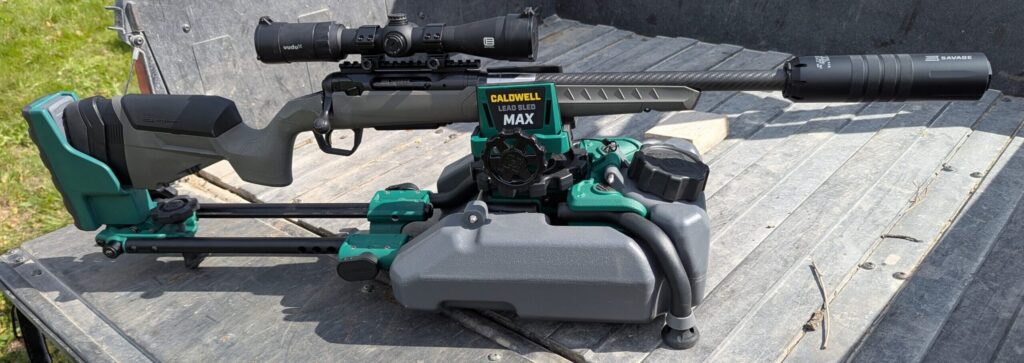
    Smith & Wesson’s acquisition expands its presence in hunting and bolt-action rifles, particularly through Savage’s established Model 110 platform.

    Savage 110 rifle with a Savage AccuCan AC30 B.O.B. suppressor

    However, the company’s October 21 announcement offered no specific plans for reintroducing discontinued Savage models or expanding historical collector services.

    That distinction matters.

    Collectors may naturally wonder whether the acquisition could revive interest in classics like the Model 99. Yet a change in corporate ownership does not automatically make discontinued designs economically practical to manufacture.

    The Model 99, for example, last appeared in Savage’s production timeline in 1998. [Ed. note: When I interviewed Savage CEO Chris Bezzina in 2025, he said the Model 99 would never come back due to production costs.]

    Another important consideration involves the company’s historical records.

    In July 2020, Savage transferred its historical firearms records to the Cody Firearms Museum at the Buffalo Bill Center of the West.

    The museum assumed responsibility for preserving these materials and providing historical research services for collectors.

    Consequently, the acquisition does not mean Smith & Wesson has suddenly acquired direct control of Savage’s historical factory records. (Smith & Wesson doesn’t even have its own historical factory records. They are part of the Smith & Wesson Historical Foundation.)

    That separation is significant for collectors seeking factory documentation, original shipping information, or historical identification assistance.

    Smith & Wesson maintains its own extensive collecting tradition, supported by generations of research into the company’s revolvers, pistols, and long guns.

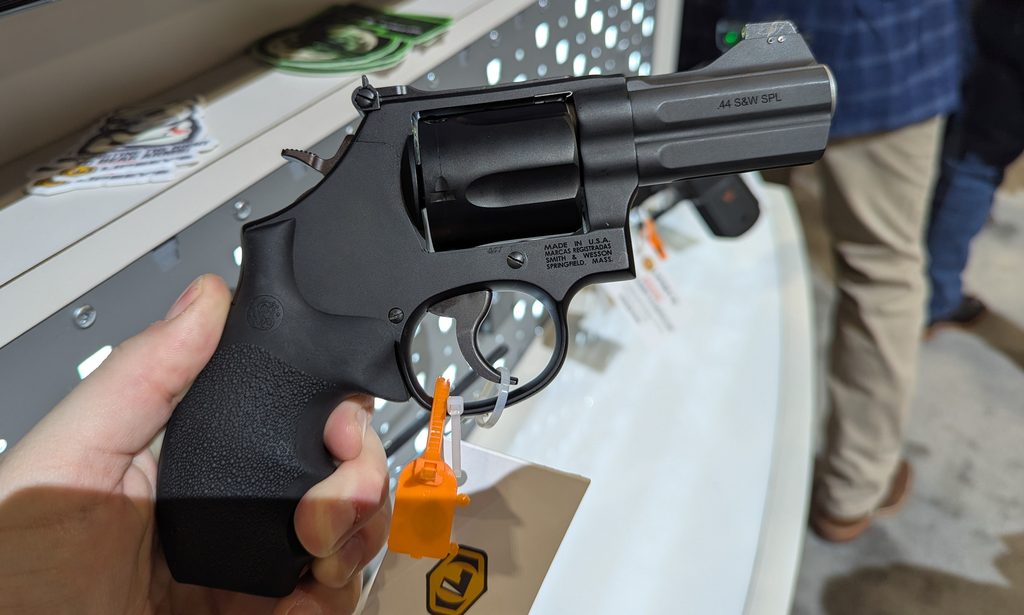
    Smith Wesson Night Guard
    Smith & Wesson Night Guard revolver at SHOT Show 2026

    Whether the acquisition eventually creates opportunities for expanded historical services remains unknown.

    The immediate transaction is primarily about combining manufacturing capabilities and strengthening Smith & Wesson’s position in the hunting market.

    But Savage’s history encompasses considerably more than its current product catalog.

    For collectors, the most important developments may involve how the new ownership approaches that heritage, preserves historical knowledge, and supports the firearms that established Savage’s reputation.

    Whatever happens, Savage’s place in American firearms history remains unchanged by the ownership of the company whose name they bear, and we can only hope that a private investment firm now being S&W’s largest shareholder of stock and a member of their board doesn’t spell problems for them later.

  • Old Western Scrounger Discounts Vintage and Surplus Firearms Across Its Inventory

    Old Western Scrounger Discounts Vintage and Surplus Firearms Across Its Inventory

    With discounts averaging approximately 20% and some firearms marked down as much as 40%, collectors have until midnight Eastern on October 31 to take advantage of the sale.

    Old Western Scrounger is offering sale pricing across its online firearms inventory, giving collectors an opportunity to revisit a selection that goes well beyond ordinary commercial firearms.

    Known for its unusual ammunition, military surplus arms, and vintage firearms, the company has long occupied a distinctive position in the collecting community. Its inventory has included everything from historic military rifles and European service pistols to sporting arms that rarely appear in conventional gun stores.

    For collectors, the significance of a sale like this isn’t simply the possibility of paying less. It’s the opportunity to examine firearms that may be difficult to find elsewhere, especially as the availability of imported military surplus continues to change.

    Discounts average approximately 20% across the firearms inventory, with selected items reduced by 30% and even 40%. The sale ends at midnight Eastern on Saturday, October 31, 2026.

    Old Western Scrounger traces its roots to the 1970s, when David “Dangerous Dave” Cumberland built a business supplying obsolete and hard-to-find ammunition. It became a familiar name among collectors trying to keep unusual military and sporting firearms shooting.

    ows selection

    The company was later acquired by Val Forgett III, whose family founded Navy Arms in 1957. Today, both businesses operate under his leadership, continuing a longstanding tradition of importing and distributing historically interesting firearms.

    Three Firearms Worth a Closer Look

    Russian-made Baikal shotguns offer a different collecting opportunity. Known for their rugged construction and straightforward designs, these sporting arms appeal to enthusiasts interested in Russian firearms manufacturing and imported shotguns.

    Also included are OWS coach guns, short-barreled double-barrel shotguns that recall the practical firearms associated with nineteenth-century American transportation and frontier life. While modern reproductions lack the provenance of original antiques, they offer a connection to a traditional firearm design.

    The French MAC 50 pistols are another noteworthy offering. Adopted in 1950, these 9mm semiautomatic pistols served France for decades. Surplus examples give collectors a tangible connection to postwar French military history, particularly when original markings and service features remain intact.

    What Collectors Should Consider

    As with any surplus firearm purchase, the advertised discount is only part of the equation. Condition, originality, matching serial numbers, import markings, and the presence of original accessories can significantly influence collector value.

    Buyers should examine individual descriptions carefully. Surplus firearms may show varying degrees of finish wear, refurbishment, or replacement parts. Photographs of the actual firearm, rather than a representative example, can be especially valuable.

    Collectors should also account for ammunition availability, replacement parts, accessories, shipping, and transfer fees.

    With the sale ending Saturday night, interested collectors have a limited window to examine the available inventory. The complete selection can be viewed through the Old Western Scrounger firearms listings. Pricing and availability are subject to change.

  • New Smith & Wesson Registered Magnum Research

    New Smith & Wesson Registered Magnum Research

    Collectors studying Smith & Wesson’s Registered Magnum have a new batch of factory data to examine. Researcher R. M. Vivas published his latest Magnum Opus update on October 7, 2026. It analyzes registration numbers RM1001 through RM1500, a block of 500 revolvers.

    His database contains about 2,600 entries toward an anticipated total of roughly 5,500. The latest analysis focuses on each revolver’s configuration when it first left the factory.

    Among these 500 guns, the 6½-inch barrel leads with 167 examples. Vivas also records 90 six-inch barrels and 76 measuring 8¾ inches. One revolver’s barrel length remains unknown. Those figures apply only to this sample. Later alterations can separate a surviving gun from its original specifications.

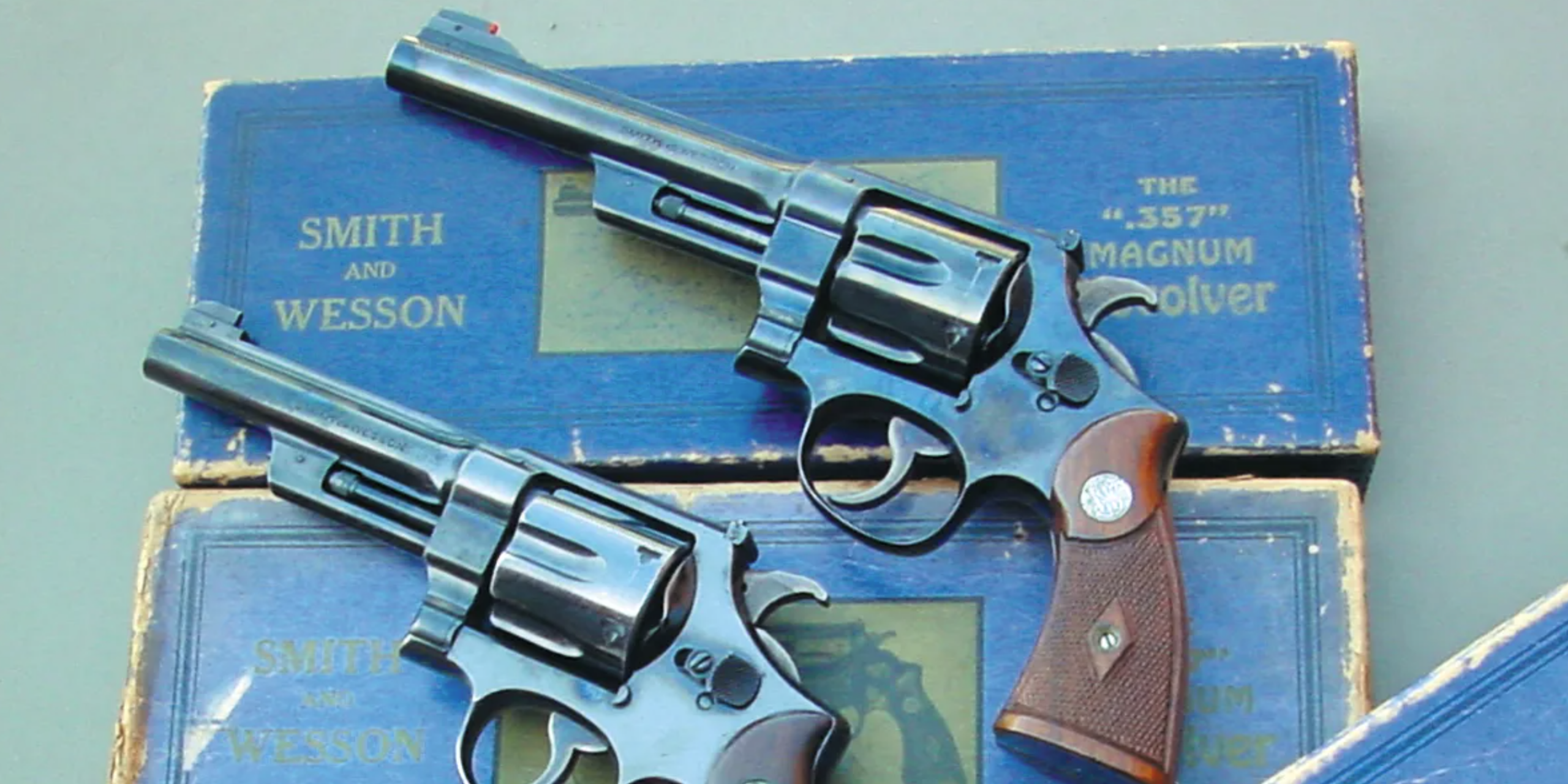
    That distinction matters for a revolver built around individual preferences. Introduced in 1935, the Registered Magnum allowed buyers to specify features, including barrel length. Smith & Wesson supplied a registration card with each gun. Returning it brought a certificate recording the owner and details of the order.

    Collector Nick Rukavina illustrated the documentation problem in a 2025 RevolverGuy article about his own Registered Magnum. Its paperwork specifies an 8¾-inch barrel, while the gun now wears a 3½-inch barrel. He also retains the removed original barrel. The gun and documents tell different parts of the same history.

    smith and wesson historical foundation logo

    The Smith & Wesson Historical Foundation notes that factory research can require reconciling several kinds of records. A shipping entry, an order form, and a later repair record may answer different questions.

    For collectors, the practical lesson is to investigate an unusual feature before turning it into a rarity claim. Record what the gun has today, then compare that description with its earliest paperwork. Keep later service records with it, too.

    In a collection catalog, dates and sources deserve space beside measurements and condition notes. A documented change can explain an apparent discrepancy. Without that paper trail, a plausible explanation remains an explanation waiting for evidence.

    The project gives collectors new evidence to test against their own records. Many thanks to Mr. Vivas for doing the heavy lifting for Registered Magnum collectors everywhere.

  • What Royal Armouries’ £100 Million Plans Could Mean for Collectors

    What Royal Armouries’ £100 Million Plans Could Mean for Collectors

    The Royal Armouries is planning a Leeds waterfront development with an estimated budget exceeding £100 million. For firearms collectors, the museum’s wider ambitions raise a practical question: how could redevelopment improve access to historic arms and their records?

    Director general Nat Edwards outlined the waterfront proposal in a September 28, 2026, interview with Place Yorkshire. Its centerpiece would be a 38,000-square-foot exhibition and events hall on the existing Tiltyard site.

    Edwards targeted a planning submission during the second half of 2027, followed by construction beginning in mid-2028. His estimated timetable would bring completion and fit-out by early 2031. He said the existing museum would remain open throughout the waterfront construction. These dates represent targets for the proposed development.

    The broader Armouries 700 masterplan contains proposals with more direct relevance to collectors. These include phased gallery refurbishment, redisplaying the collection, improving conservation facilities, and expanding the library and archive.

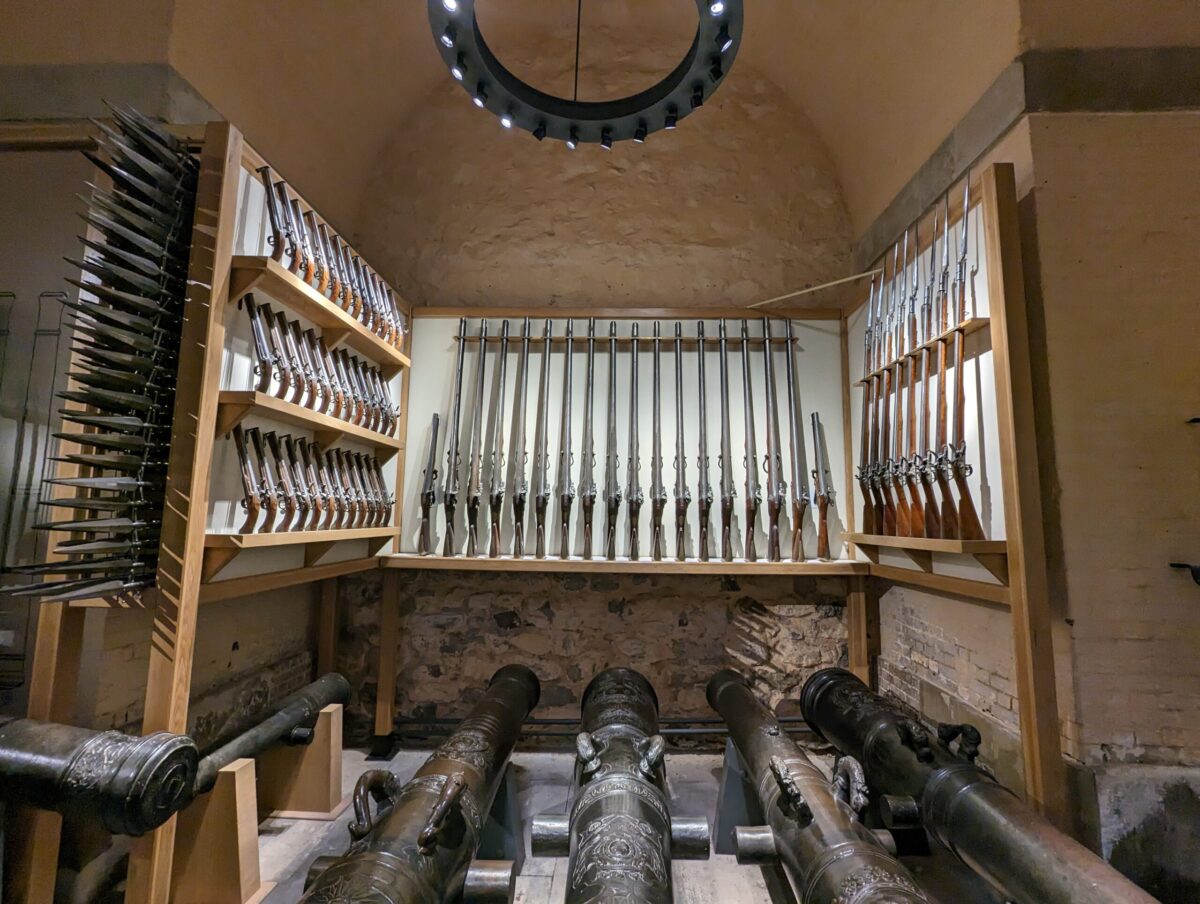
    royal armouries artist rendering
    Royal Armouries artist’s rendering

    Those improvements could give visitors fresh opportunities to examine how curators present historic firearms and explain their development. Better conservation facilities would also support the preservation of the objects themselves. One element of the wider program has already opened: the Special Exhibitions Gallery welcomed visitors in June 2025.

    The research collections provide a particularly strong reason for firearms enthusiasts to follow the project. The archives contain nearly 500,000 documents, files, bound volumes, photographs, films, and videos. Holdings include material relating to the Royal Small Arms Factory at Enfield and the Ministry of Defence Pattern Room. They also preserve company records and personal papers from arms researchers and collectors.

    For collectors studying British military firearms, these resources can help place individual models and design changes in historical context. However, only a small portion of the archive holdings currently appears in the searchable online catalog.

    The published masterplan leaves several collector questions unanswered. It does not identify which firearms will feature in redesigned displays or specify expanded research hours. It also does not promise comprehensive archive digitization. The eventual benefits will depend on how the museum delivers those details.

    Collectors planning research visits can already request library and archive appointments, currently offered Tuesday through Friday. Both services require advance booking. Library staff specifically advise visitors to wait for booking confirmation before making travel arrangements.

    A few years ago, I interviewed Jonathan Ferguson, the Keeper of Firearms and Artillery for the Royal Armouries. You can check it out here:

  • Swiss Rifle and Zastava Books: Preorder Deadline Nov. 1

    Swiss Rifle and Zastava Books: Preorder Deadline Nov. 1

    Safar Publishing will end discounted preorders for two new rifle reference books on November 1, 2026. The titles cover Swiss military rifles and the Zastava and Tabuk branches of the Kalashnikov family.

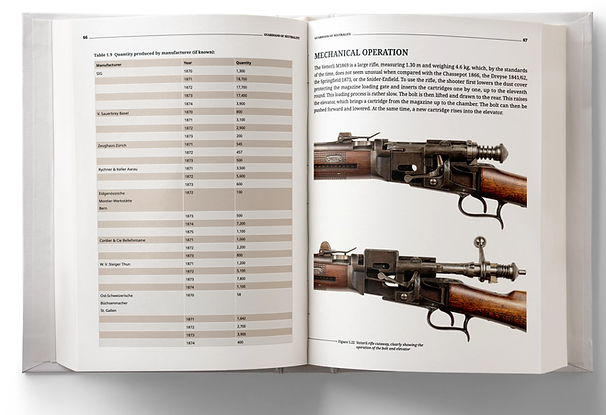
    Thomas Anderson’s Guardians of Neutrality: Swiss Rifles Through the Ages examines Swiss service rifles from 1860 to 1990. Its coverage includes the Vetterli, Schmidt-Rubin designs, Gewehr 11 and Karabiner 31. Safar says Anderson used Swiss federal archives and visited private collections for his research. The book combines historical analysis with archival images and detailed photographs.

    The forthcoming Drawing Fire book will likewise explore firearm development through original Winchester engineering drawings.

    book pages
    Sample page from ‘Guardians of Neutrality.’

    For collectors, that approach could help connect individual rifles with the design changes that distinguish successive Swiss models. The promised close-ups could also support comparisons between a reference example and a rifle in hand.

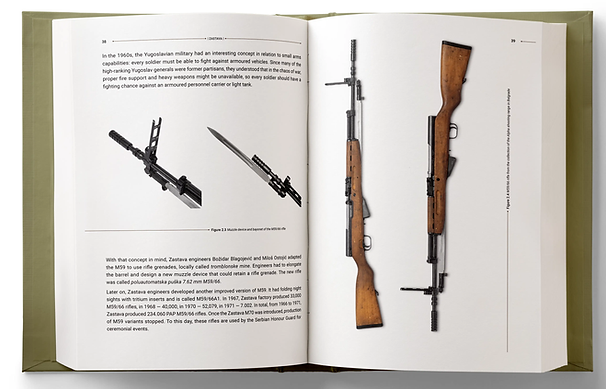
    Vladimir Onokoy’s From Balkans to Babylon: Zastava AKs of Yugoslavia, Serbia, and Iraq addresses another demanding identification subject. Coverage includes the M70 family, the M80, M85 and M21, and Iraqi Tabuk variants. Safar also lists prototypes, manufacturing details, markings and an illustrated development timeline.

    The publisher says the research draws on declassified intelligence documents and Yugoslav records. Photographs include examples documented in the Middle East and Africa. For collectors, the promised emphasis on markings and production differences could help distinguish closely related variants. Those details also provide starting points for researching a rifle’s background.

    book pages
    Sample pages from ‘From Balkans to Babylon.’

    A similar emphasis on surviving examples shapes the new Whitworth reference Hex Bore, built around 750 known rifles.

    The books occupy different stages of production. Safar’s October update reports that From Balkans to Babylon has finished printing and is heading to its warehouse. Guardians of Neutrality, approaching 600 pages, was completing final proofreading, with printing planned for October.

    The standard Swiss volume currently lists at $80, compared with a regular price of $99. The Zastava/Tabuk book lists at $59, compared with $69. Those discounts represent savings of $19 and $10, respectively. Both product pages list autumn 2026 shipping.

    Collectors planning their fall reading can also explore forthcoming books on Confederate powder production and New Hampshire gunmakers.

    If you are considering either title, then you should consider ordering before November 1, when Safar says full retail pricing begins.