Author: Logan Metesh

  • Better-Condition Palmetto Pistol Brings $8,190 at Poulin’s

    Better-Condition Palmetto Pistol Brings $8,190 at Poulin’s

    Two examples sold for dramatically different prices, providing a revealing comparison with an October sale at Alderfer.

    Two Palmetto Armory Model 1842 percussion pistols sold at Poulin’s November 8 auction, bringing $8,190 and $3,465, respectively, including buyer’s premiums. The $4,725 difference provides an interesting illustration of how condition and originality influence prices for scarce antique firearms.

    As The Collector’s Wire reported before the sale, the two pistols represented markedly different levels of preservation.

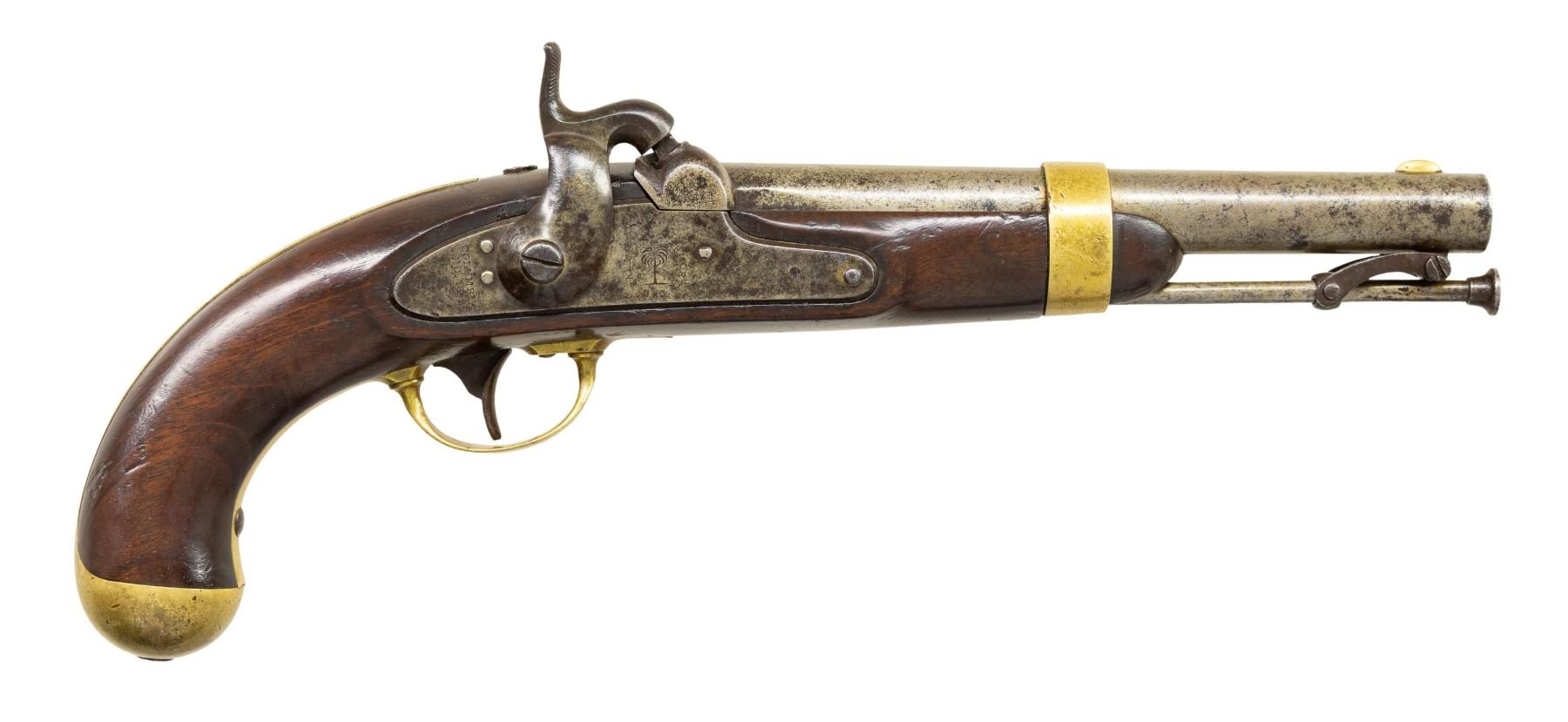
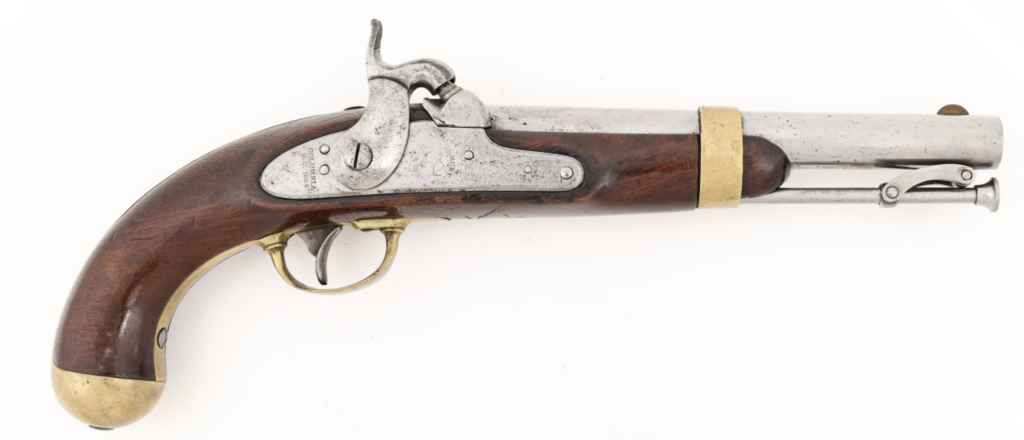
    Lot 3239, the better-preserved example, retained traces of original brown finish and strong Palmetto Armory and William Glaze markings. Poulin described it as being among the top 10% of surviving examples for condition.

    The pistol also included documentation of a 2006 Greg Martin Auctions sale and a historical letter from Norm Flayderman. Despite a mechanical issue preventing the lock from holding at half-cock, it brought $8,190. It is pictured at the top of this article.

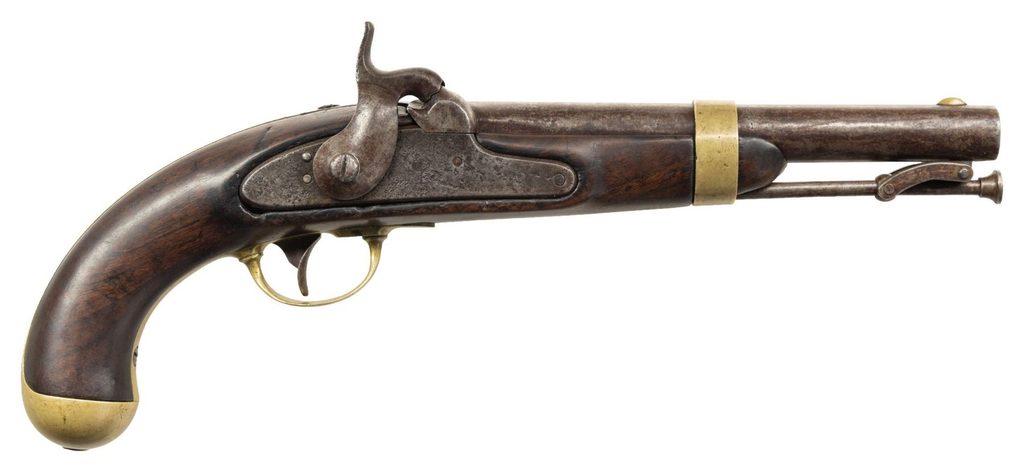
    Lot 3240 was considerably rougher, exhibiting pitting, worn markings, an older stock refinish, and hairline cracks. It brought $3,465.

    The better example therefore realized approximately 2.36 times the price of its lesser-condition counterpart.
    palmetto pistol
    Lot 3240 sold for $3,465.

    A Third Palmetto Provides Perspective

    The results become even more interesting when compared with Alderfer’s October 27 auction.

    There, a heavily cleaned Palmetto Armory pistol with refinished and cracked wood brought $3,690, including the buyer’s premium.

    That places the Alderfer example just $225 above Poulin’s lesser-condition pistol, despite the different auction houses and audiences.
    palmetto pistol
    Palmetto sold at Alderfer’s

    All three pistols sold within 12 days, providing a useful snapshot of current collector demand.

    What Do the Results Tell Us?

    The Palmetto Armory pistols are scarce regardless of condition. Their historical significance and limited production ensure that even compromised examples attract attention.

    But rarity does not eliminate the importance of preservation.

    The two Poulin pistols offered a particularly useful comparison because they sold in the same auction. Their substantial price difference suggests that collectors were willing to pay considerably more for original surfaces, stronger markings, and better overall preservation.

    The better example’s supporting documentation may also have strengthened its appeal, meaning the difference cannot be attributed to condition alone.

    Three sales do not establish a definitive market value. They do, however, reinforce a familiar principle in antique firearms collecting: rarity gets collectors interested, but condition and originality often determine how much they’re willing to pay.


  • CMP Targets January M14 Sales and a Price Under $2,000

    CMP Targets January M14 Sales and a Price Under $2,000

    Nearly 27,000 surplus rifles have arrived in Anniston, Alabama, where conversion work is underway.

    The Civilian Marksmanship Program is targeting mid-to-late January 2027 to begin online sales of surplus U.S. military M14 rifles. CMP aims to have several thousand rifles permanently converted to semiautomatic operation and ready for the first round of orders. The exact launch date and ordering details will follow, according to CMP’s Nov. 16 update.

    M14 on ammo

    CMP CEO Fabian Lobera said the organization is aiming to keep the price below $2,000 per rifle in regular sales. CMP is still assessing the rifles’ condition and deciding whether to sell them in different grades. It plans to auction a small number through GunBroker.

    Lobera estimated in the video that another 100,000 to 120,000 rifles could arrive in 2027. CMP’s written update says it expects a larger transfer from the U.S. Army over the winter and projects more than 100,000 rifles for the program overall. Executive Chairman Jerry O’Keefe said more than 80 percent of the expected inventory was still to come, and CMP is still assessing which manufacturers are represented in the rifles it has received.

    Membership Priority and State Availability

    CMP is evaluating state-specific configurations for California and New York and plans to offer rifles for both states after the initial online release.

    All three tiers of CMP’s new paid membership program offer the same processing priority for eligible M14 orders. The standard annual limit is two rifles. Silver raises it to three and Gold to four, as detailed in The Collector’s Wire’s coverage of the membership launch.

    We’ll provide any project updates as they become available.

  • A Classic, Reimagined: Snake Eyes Colt Python Set

    A Classic, Reimagined: Snake Eyes Colt Python Set

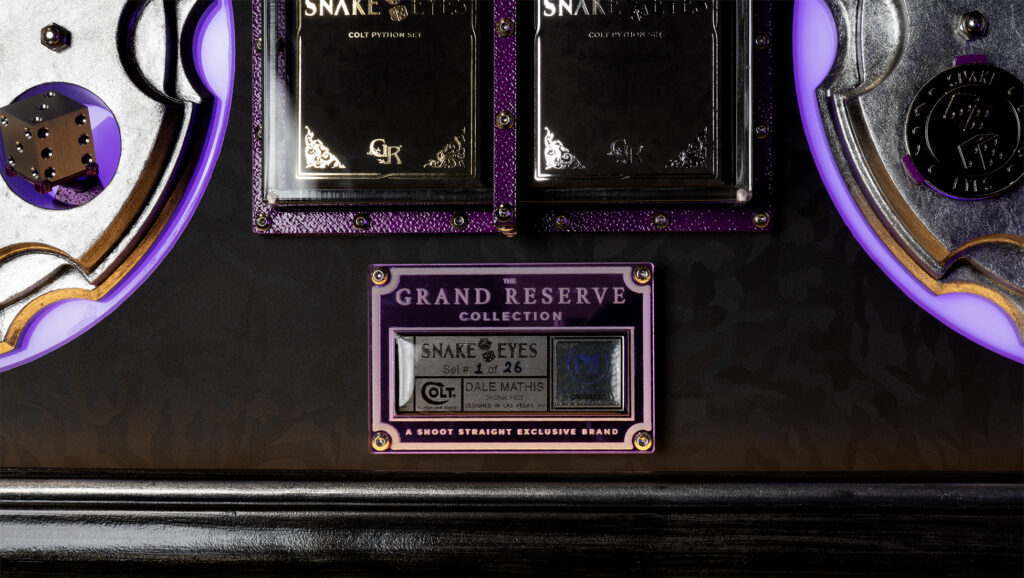
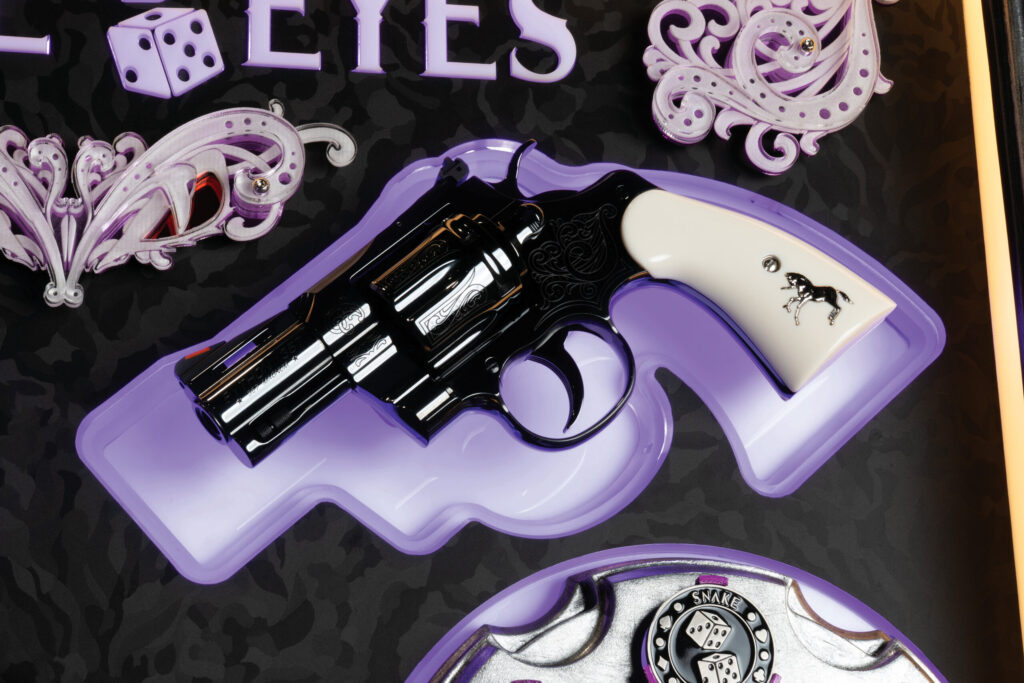
    In 1989, Colt released the original Snake Eyes set, a matched pair of 2.5-inch Pythons that became one of the most sought-after collector sets the company ever made. The Grand Reserve Collection, Shoot Straight’s custom firearm brand and a longtime Colt partner, has reimagined it for a new generation of collectors.

    In collaboration with internationally exhibited mechanical sculptor Dale Mathis and the engravers at Baron Engraving, the team created a collection worthy of its name. Two custom-engraved, polished 2.5-inch Colt Pythons, presented in a handmade display. Only 26 individually numbered sets will ever be produced.

    snake eyes number
    Each set is individually numbered, 1-26.

    The price is set at $14,999 per set, and while that may initially seem steep, it isn’t necessarily unreasonable when viewed in the context of the original Snake Eyes sets and their performance on the collector market. Colt produced 500 sets in 1989, compared to just 26 for this new edition.

    Despite that larger production run, original Snake Eyes sets command considerably higher prices when they come to market. A sampling of seven sales over the past couple of years saw prices ranging from $29,000 to $55,580, with an average of $36,898. Even an empty lighted presentation case from the original edition sold for $6,282.

    Colt didn’t set an MSRP for the original set, allowing dealers to set the price. Most sold for $2,200 to $2,500. Adjusted for inflation, that’s $6,200 – which is what one of the empty cases sold for – and less than half of what one of the new sets costs.

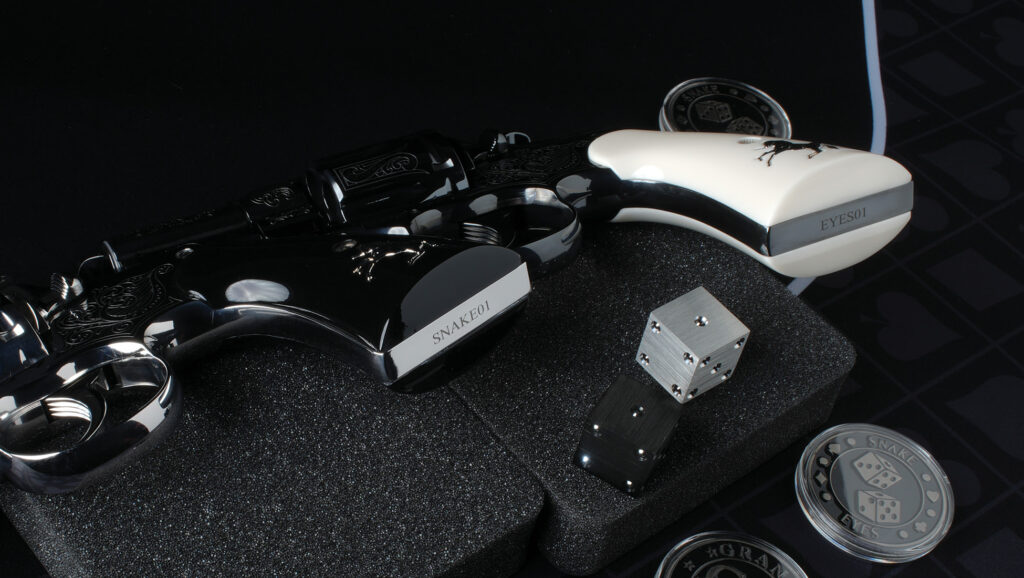
    Each Python in the new sets is hand-engraved and polished by Baron Engraving. One reads SNAKE, the other EYES, a fresh turn on the original set, which numbered both guns the same.

    Matching numbers run across both Pythons, the Presentation Display, and the certificate of authenticity. No set is ever sold apart.

    snake eyes serial numbers
    One gun says SNAKE while the other says EYES

    A handmade Presentation Display with integrated LED lighting, built to hang as a work of art in any den, game room, or collection.

    The Presentation Display was designed by Dale Mathis, a mechanical sculptor whose work has been exhibited around the world. Every display ships with a numbered certificate of authenticity, a printed art booklet, a USB drive of digital content, a remote for the LED lighting, a wall mount bracket, and an instruction manual. The playing card decks inside are removable.

    Of course, the market for the original sets is well established, while the long-term collector demand for this new edition remains to be seen.

    snake eyes one

    If you’re willing to place your bets on the future value of one of the new Snake Eyes sets, you can find more details here.

  • Historic Firearms Take Center Stage at Fort Lancaster

    Historic Firearms Take Center Stage at Fort Lancaster

    The Texas historic site will host its second annual Frontier Firearms program on November 21, featuring weapons from multiple periods of American military history.

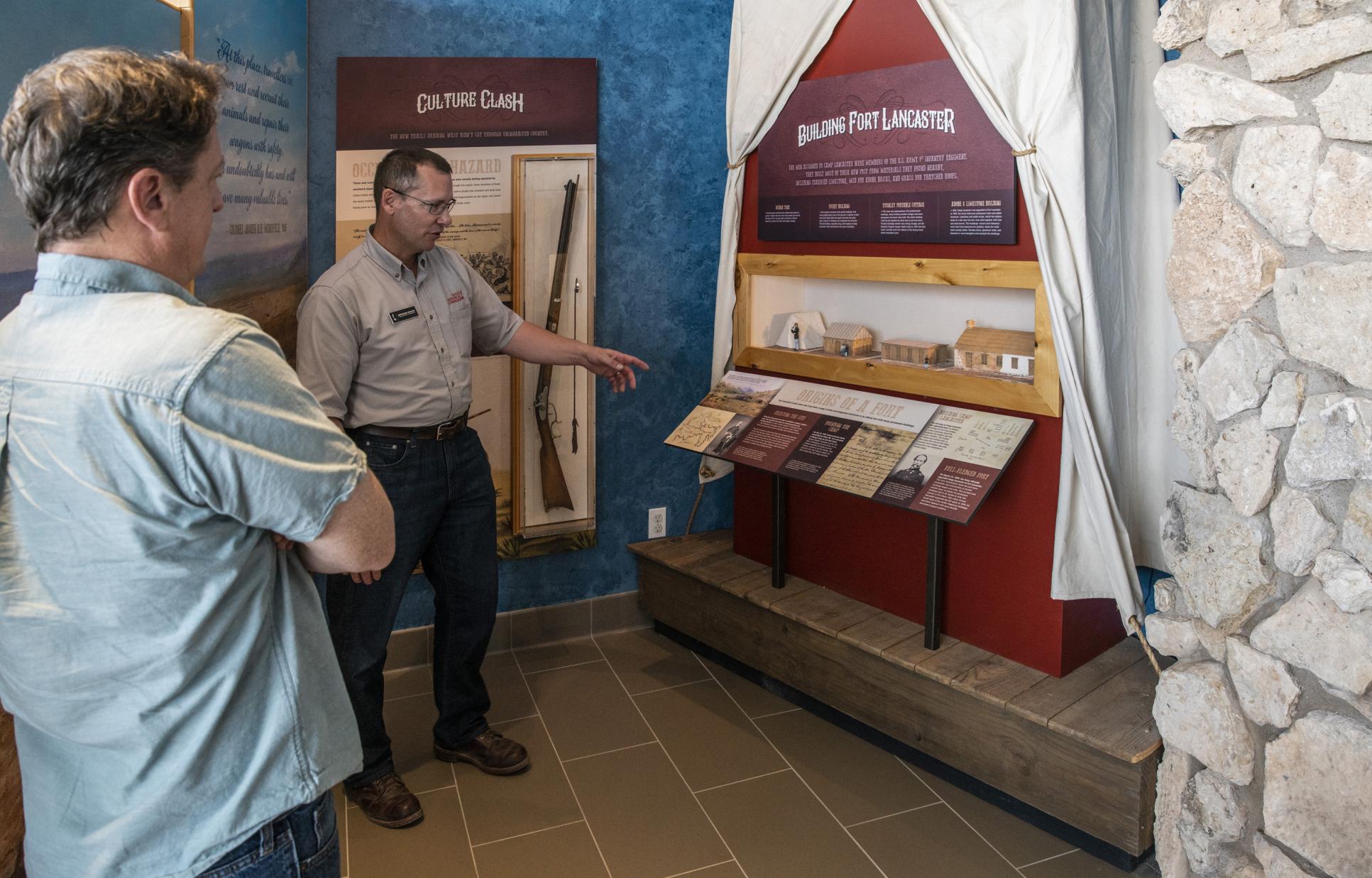
    Fort Lancaster & Battlefield State Historic Site in Sheffield, Texas, will host its second annual Frontier Firearms program on November 21, 2026, offering visitors an opportunity to examine historic firearms and explore their influence on American military and frontier history.

    Organized by the Texas Historical Commission, the event will feature living-history presenters and examples of historic weapons, including muskets, pistols, rifles, machine guns, and other firearms.

    The program will run from 10 a.m. to 3 p.m. and is intended to demonstrate the evolution of firearms technology while examining the role weapons played in the experiences of soldiers and civilians.

    event info

    According to the official event announcement, the program will emphasize the stories, historical significance, and technological developments associated with the weapons being presented.

    For firearms collectors, these types of programs offer an opportunity to study historic arms in a setting that connects their mechanical development with the circumstances in which they were used.

    The setting itself is particularly appropriate.

    Fort Lancaster was established in August 1855 to protect travelers along the San Antonio–El Paso Road, an important overland transportation route through West Texas.

    Originally known as Camp Lancaster, the post was formally designated a permanent fort in 1856. Its soldiers provided protection for mail carriers, wagon trains, and settlers traveling through the region.

    Fort Lancaster
    Fort Lancaster

    The site also played a role in the history of the Buffalo Soldiers.

    On December 26, 1867, soldiers of Company K, 9th U.S. Cavalry, defended Fort Lancaster during a major attack. The engagement made Fort Lancaster the only U.S. Army fort in Texas to be directly attacked by Native American forces.

    Today, the historic site preserves the remains of a military installation that once contained more than 30 permanent structures, including barracks, officers’ quarters, a hospital, workshops, and other support buildings.

    Visitors can explore the surviving ruins and learn about the lives of the soldiers stationed at the isolated frontier post.

    Although Fort Lancaster is primarily associated with the mid-19th century, the inclusion of machine guns and other later firearms in the upcoming program will allow visitors to consider technological developments beyond the site’s original period of military occupation.

    TCW recently highlighted a similar approach to military history interpretation in its coverage of the Museum of the American G.I.’s History in Motion event, which featured historic weapons and military equipment demonstrations.

    Programs like these help connect surviving firearms with the people, places, and military experiences that give them historical significance.

    event info

    Frontier Firearms will take place Saturday, November 21, at Fort Lancaster & Battlefield State Historic Site, 629 Fort Lancaster Road, Sheffield, Texas.

    The event is included with regular site admission. Adult admission is $5, with reduced rates available for seniors, veterans, teachers, first responders, and children.

    Additional information is available through the Texas Historical Commission’s Fort Lancaster page and the Frontier Firearms event listing.

  • Tiger Stripe Camo Reference Book Available for Preorder

    Tiger Stripe Camo Reference Book Available for Preorder

    Headstamp Publishing is accepting preorders for Tiger Stripe: The Vietnam Camouflage Story, a new reference by Owen Thornton. The hardcover is planned at approximately 750 pages with more than 1,250 images.

    With photography by James Rupley, the book draws on original uniforms, period photographs, government documents and contemporary publications. Headstamp’s announced coverage traces the camouflage’s development and its use by American and South Vietnamese forces, including special operations units.

    For firearms collectors assembling Vietnam-era displays, a reference devoted to the clothing and equipment surrounding the guns could fill a useful gap. Choosing a firearm is only one part of interpreting a particular unit, place or period. Uniforms and accessories introduce their own questions of identification and authenticity.

    That connection between firearms and the uniforms, photographs and equipment surrounding them also features in our coverage of the Ohio Valley Military Society.

    The planned contents address patterns including Okinawa Tiger, ARVN Tiger and Gold Tiger, along with reproduction clothing and later uses. Related subjects include unit patches, scarves and other accessories. That scope makes the book worth watching for collectors whose interests extend from small arms into the material culture of the people who carried them.

    tiger stripe inner

    Prices are $118 for the standard edition, $138 signed and $440 for the collector’s edition. Headstamp estimates warehouse arrival around March 2027, with customer delivery dates still undetermined.

    Preorders are charged when placed, and the publisher says content and page count may change during production. Full specifications and ordering information are available on Headstamp’s Tiger Stripe page.

  • The Met Adds Rare Russian Flintlock Revolvers

    The Met Adds Rare Russian Flintlock Revolvers

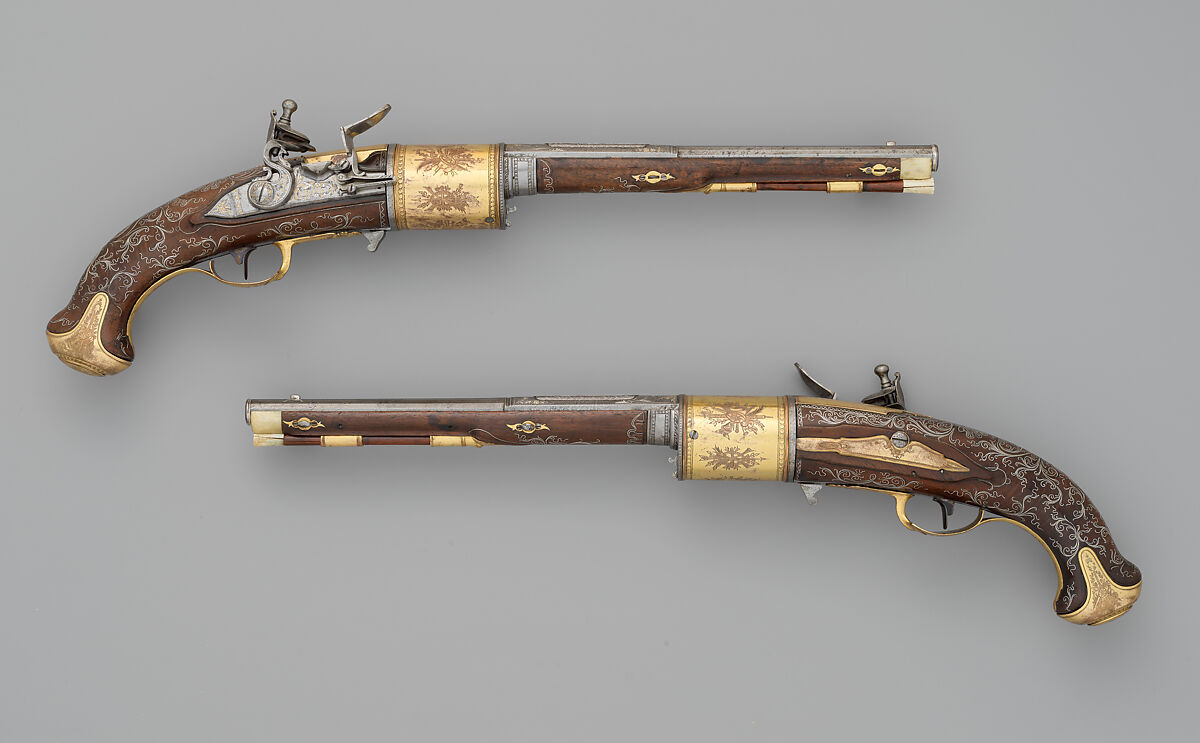
    A pair of Russian flintlock revolvers dating to about 1790 has joined the Metropolitan Museum of Art’s collection through a 2026 gift from Irene Roosevelt Aitken.

    Made at the Tula Arms Factory, the pistols offer a look at repeating firearms and luxury gunmaking decades before Colt’s revolvers. According to the museum’s collection record, they belonged to a matching set made for a member of the Russian imperial family during Catherine the Great’s reign between 1762 and 1796. A corresponding six-shot fowling piece survives at the State Hermitage Museum in St. Petersburg, Russia.

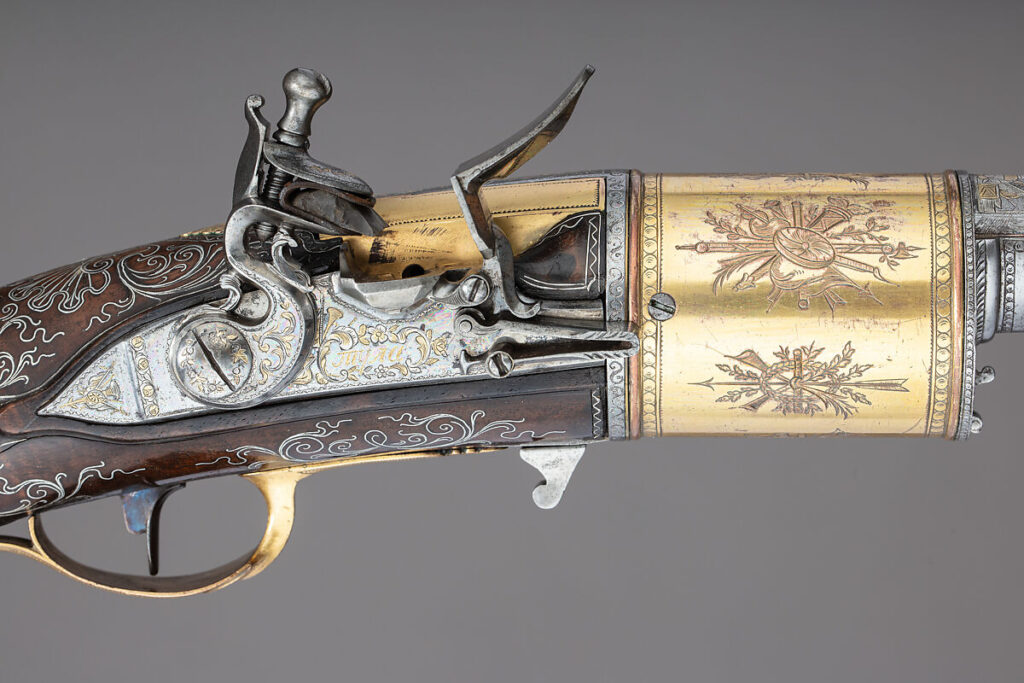
    The pair combines gilt copper-alloy cylinders and mounts with walnut stocks decorated in silver wire. Particularly interesting to collectors are the smoothbore barrels: the museum identifies their Damascus-like appearance as etched decoration imitating pattern-welded steel as opposed to being actual pattern-welded steel. That distinction illustrates why a surface pattern warrants closer examination when identifying a firearm’s construction.

    tula flintlock revolver

    The acquisition expands an existing group of Tula arms at the Met. Its holdings also include pistols made for Grand Duke Constantine around 1801, part of a series made for Emperor Alexander I and his brothers to mark Alexander’s coronation. Each of the four brothers received five hunting arms, including a pair of pistols. The museum currently lists Constantine’s pair on view in Gallery 375 at its Fifth Avenue building.

    Together, the two pairs offer collectors an opportunity to compare the factory’s approach to ornament and imperial patronage across roughly a decade.

    The circa-1790 revolvers, accession numbers 2026.267.9a and b, are currently listed as not currently on view, but that could change with future exhibitions. In the meantime, their online record includes public-domain photographs for closer study.

    Collectors interested in studying early ignition systems can also explore Jim Gooding’s reconstructed gun lock catalog, which brings together photographs, markings and descriptions of historic mechanisms.

  • New Research Challenges Serial Number Identification on Rare British Firearms

    New Research Challenges Serial Number Identification on Rare British Firearms

    An examination of Isaac Riviere’s patented firearms reveals why collectors should reconsider familiar markings and production dates.

    Numbers stamped on antique firearms can reveal important information about their manufacture. However, new research suggests that markings on certain British firearms have frequently been misidentified as serial numbers.

    In February 2026, researcher Matthew Schneiderman published a study of firearms manufactured by London gunmaker Isaac Riviere. The report, available through the American Society of Arms Collectors (ASAC), examines Riviere’s unusual numbering practices.

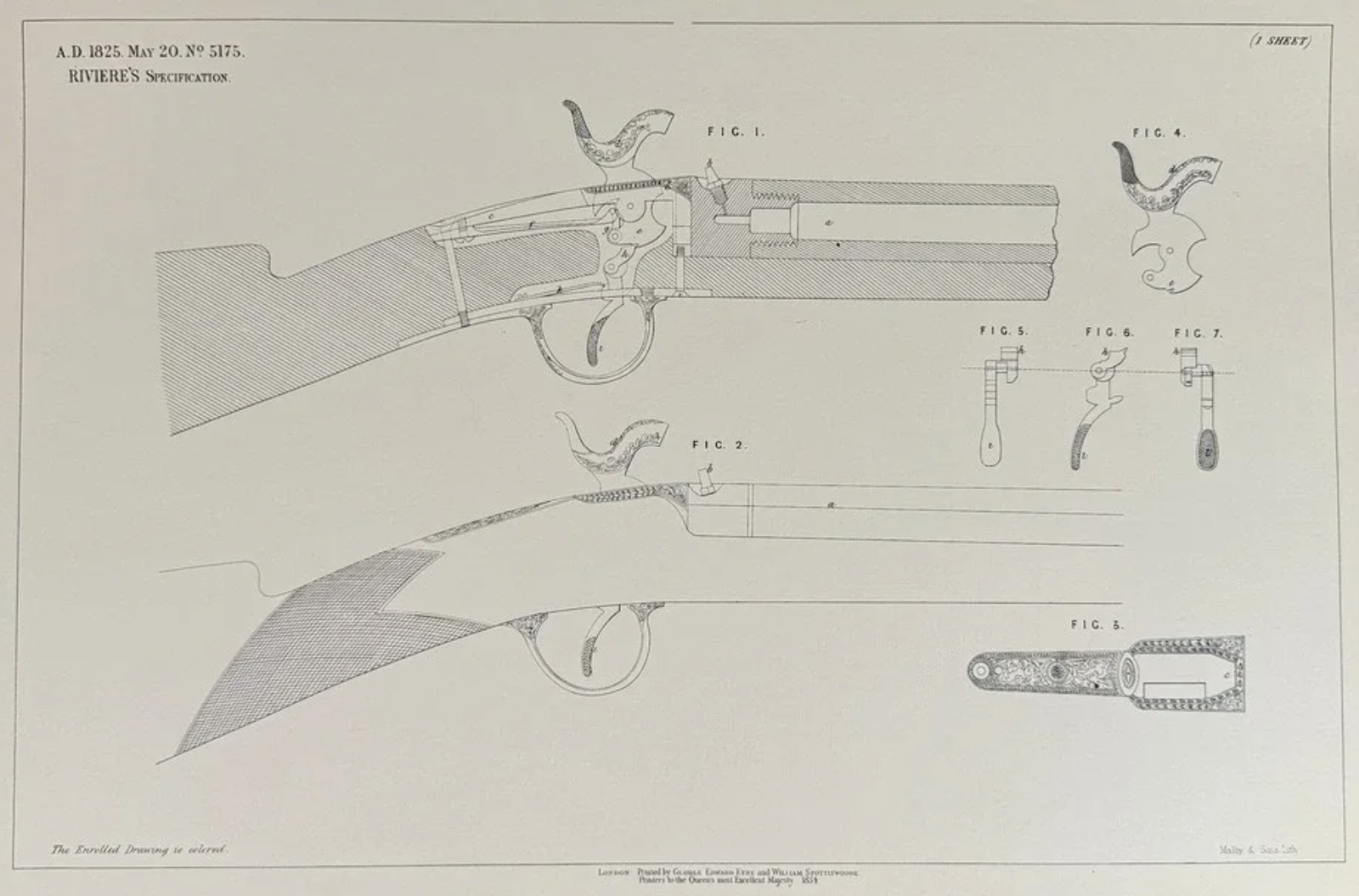
    Riviere received British patent No. 5175 on May 20, 1825, for an innovative box-lock firearm mechanism. He advertised the design as “the guns without locks,” referring to its unconventional construction.

    Surviving examples of these firearms sometimes bear markings consisting of Riviere’s name, the word “Patent,” and an individual number.

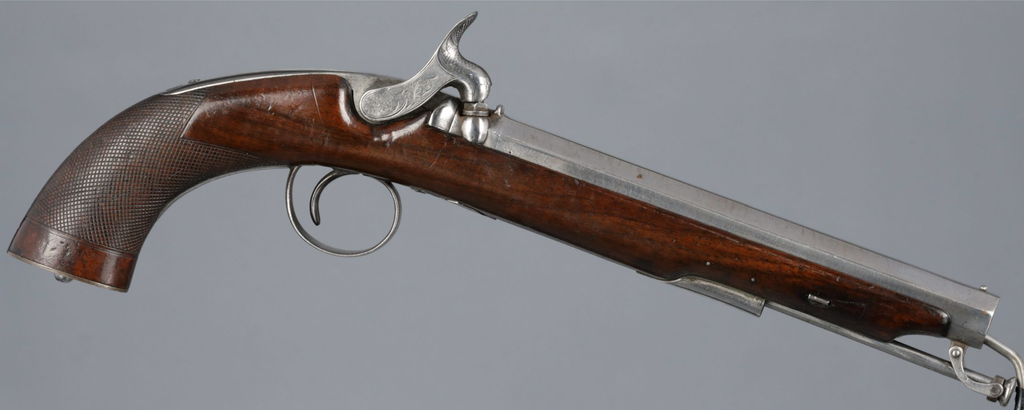
    Riviere Patent Percussion Pistol
    Riviere Patent Percussion Pistol (Rock Island Auction Company)

    Collectors and auction houses have often described these markings as serial numbers. Schneiderman argues that they served an entirely different purpose.

    His research indicates that Riviere numbered firearms incorporating his patented mechanism to track production under that patent. Other firearms bearing the Riviere name appear to lack comparable numbering.

    This distinction matters because serial numbers and patent-tracking numbers do not necessarily provide the same information.

    A manufacturer’s serial number can help establish production chronology and sometimes indicate how many firearms were manufactured. Patent-tracking numbers, however, may account for only those examples incorporating a particular patented feature.

    Schneiderman also notes that paired Riviere firearms received consecutive patent-tracking numbers rather than sharing one number.

    The study challenges another common assumption involving these firearms.

    Auction and dealer descriptions frequently date Riviere’s patented designs to approximately 1825 or 1825–1830. Schneiderman cautions that these dates often reflect the patent’s issuance rather than documented manufacturing dates.

    Without reliable production benchmarks, determining when individual examples were manufactured remains difficult.

    For collectors, these findings demonstrate the limitations of relying exclusively on markings and traditional catalogue descriptions. Similar identification challenges arise in archaeological collections, where researchers use reference materials to identify historic firearms components.

    A number stamped on an antique firearm may appear straightforward, but its original purpose can dramatically change how researchers interpret it.

    The same applies to assumptions about rarity. A numbered example cannot automatically establish total production figures when the manufacturer also produced unnumbered firearms.

    Schneiderman’s study identifies known examples and invites owners to contribute additional patent-tracking numbers.

    Those contributions could help researchers better understand surviving Riviere firearms and potentially establish more accurate production patterns.

    The complete report, Isaac Riviere Patent-Tracking Numbers (Sometimes Referred To Erroneously As “Serial Numbers”), Plus Background Information, is available through ASAC’s online research library.

    For collectors examining rare British firearms, the study offers a reminder that identification requires more than reading the numbers stamped into the metal.

  • Napoleon-Linked Flintlock Passes Without Bids

    Napoleon-Linked Flintlock Passes Without Bids

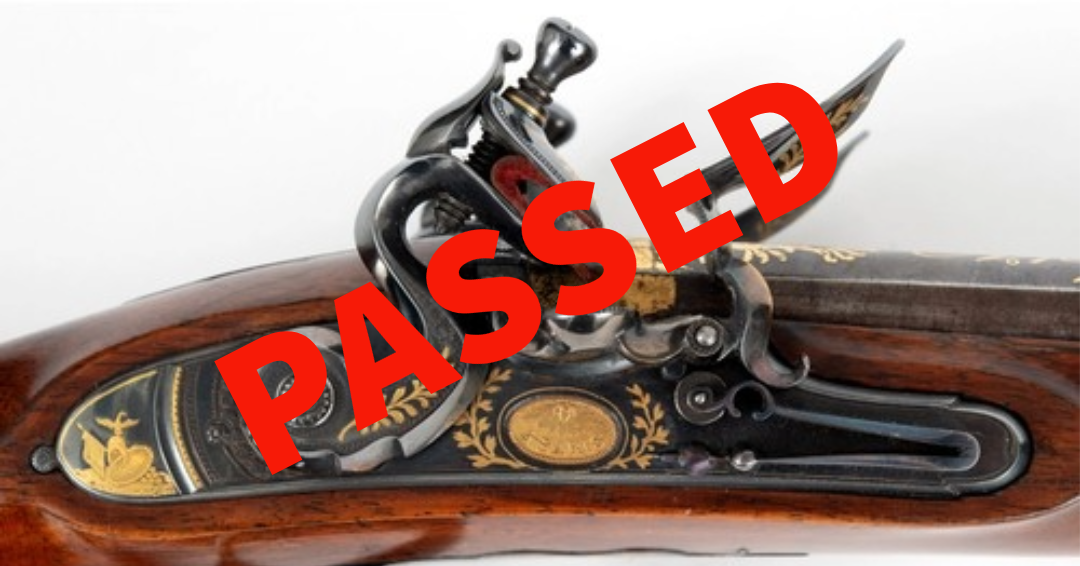
    The gold-decorated Le Page sporting gun with a claimed connection to Napoleon Bonaparte received no bids at Charterhouse’s November 11, 2026 auction in Sherborne, England. The lot was passed, leaving its ownership history—and the price buyers might accept—unresolved.

    As noted in TCW’s preview, the double-barrel flintlock carried an estimate of £75,000–£100,000 before fees. The auction catalog described it as having been presented to Napoleon, but also acknowledged: “There is no written provenance for this gun and flask.”

    That disclosure may have complicated the valuation. The Le Page name, elaborate gold decoration and imperial symbols give collectors features to assess, but they do not independently establish Napoleon’s personal ownership. If prospective bidders understood the estimate to include a premium for that association, the absence of documentation could have made the price difficult to justify.

    Provenance and price are closely connected here. A buyer might accept an uncertain attribution at a figure supported by the firearm’s other qualities, while declining to pay an additional premium for a famous owner whose connection remains unverified. A lower estimate might have made that uncertainty more palatable.

    The lack of bids does not disprove the Napoleon connection or establish the gun’s market value. Nor does the published estimate reveal the reserve or opening bid. Without feedback from prospective buyers, the combination of uncertain provenance and a substantial estimate remains a plausible explanation for the outcome, rather than a demonstrated cause.

  • Napoleon-Linked Flintlock Heads to Auction

    Napoleon-Linked Flintlock Heads to Auction

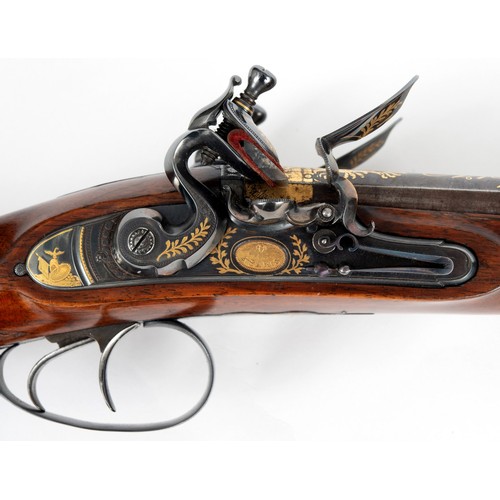
    A gold-decorated Le Page sporting gun with a claimed connection to Napoleon Bonaparte will headline Charterhouse’s November 11, 2026 sale in Sherborne, Dorset, England. The double-barrel flintlock carries an estimate of £75,000–£100,000 before fees—and an important disclosure about its history.

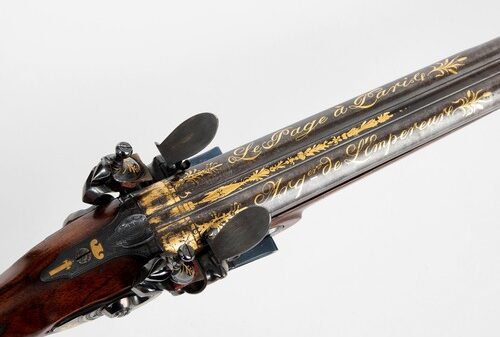
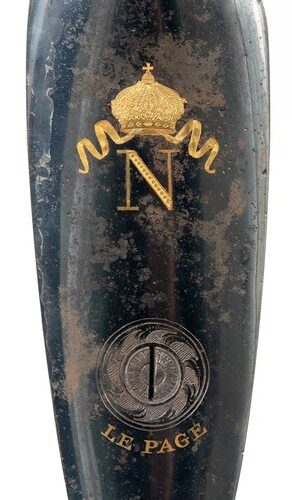
    According to Charterhouse’s description of lot 71, the 24-bore gun’s locks bear the date 1806 and number 816. Gold decoration includes crowned “N” monograms, eagles and bees. A horn powder flask with an imperial eagle accompanies it.

    The catalog describes the gun as having been presented to Napoleon. An additional note suggests a possible subsequent gift to a Swedish nobleman during a hunt at Fontainebleau, but states plainly: “There is no written provenance for this gun and flask.”

    napoleon barrels

    That disclosure makes the lot a useful case study in how collectors evaluate historical attribution. The decoration provides specific features to compare with documented imperial arms. Establishing who personally owned or received this particular gun requires evidence connecting the object to those individuals.

    For prospective bidders, the research questions include the earliest traceable appearance of the gun, any surviving collection inventories and the basis for the suggested Swedish connection. Those questions deserve attention alongside condition and workmanship. A distinguished maker and elaborate decoration can be assessed on their own merits; a famous owner adds a separate claim to evaluate.

    napoleon crest

    The importance of condition, originality and supporting documentation also runs through our comparison of Palmetto Armory pistols at Poulin’s.

    The sale comprises 71 lots of antique firearms and powder flasks. It begins at 10 a.m. GMT on November 11 at the Long Street Salerooms in Sherborne. Viewing is scheduled for November 9 and 10, from 9 a.m. to 5 p.m. Buyers should review the applicable premiums and fees in the auction information.

    After the sale, TCW will have follow-up coverage to see how the gun’s sale went.

  • Smith & Wesson Revives Historic .45 Revolvers

    Smith & Wesson Revives Historic .45 Revolvers

    The Model 1917 and Model 22 return with classic styling, modern manufacturing, and a few notable changes from their predecessors.

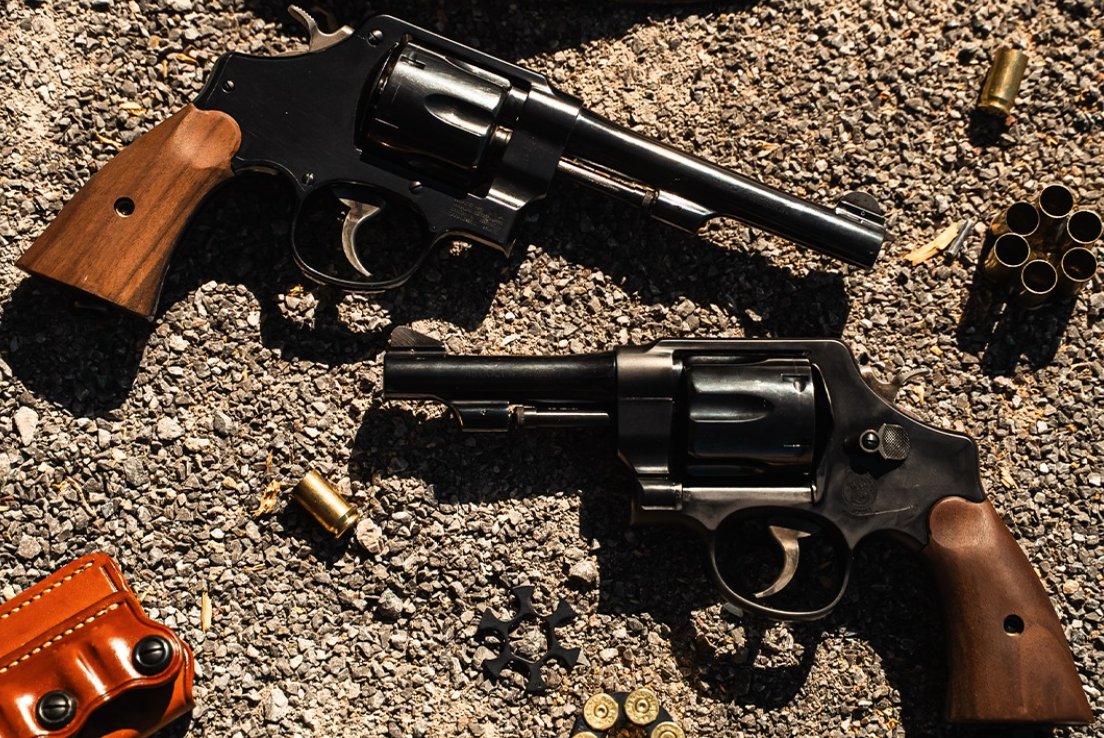
    Smith & Wesson is reaching into its past with the introduction of two new revolvers inspired by its historic .45 caliber N-frame handguns. The Model 1917 Classic and Model 22 Classic bring back familiar designs with several modern refinements.

    The announcement gives collectors an opportunity to revisit two revolvers with important places in American firearms history.

    From the Trenches of World War I

    When the United States entered World War I in 1917, the military faced a shortage of M1911 pistols. To supplement production, the government contracted with Smith & Wesson and Colt for revolvers chambered in .45 ACP.

    The rimless cartridge presented a challenge for revolver extraction. The solution was the half-moon clip, which held three cartridges together and allowed simultaneous extraction. The arrangement became an enduring feature of .45 ACP revolvers.

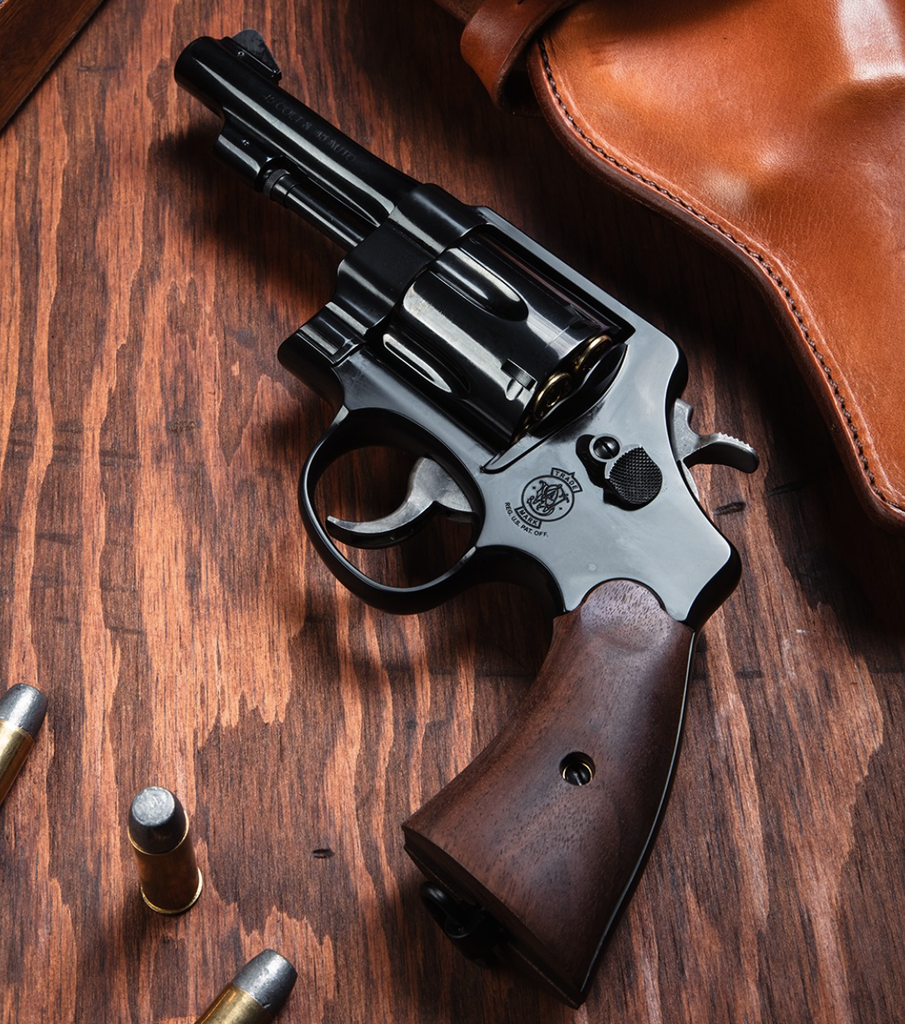
    Model 1917 Classic
    Model 1917 Classic

    The new Model 1917 Classic closely follows the original military configuration. It features a 5.5-inch barrel, half-moon front sight, smooth walnut stocks, and a lanyard ring. The blued carbon steel revolver holds six rounds and accommodates both half-moon and full-moon clips.

    Smith & Wesson has also omitted the internal lock, a feature many traditional revolver enthusiasts will appreciate.

    A Different Kind of Classic

    The second offering, the Model 22 Classic, takes a less historically rigid approach.

    The original Model 22 descended from the postwar .45 Hand Ejector Model of 1950 Army. Smith & Wesson introduced the numbered Model 22 designation in 1957.

    Model 22 Classic
    Model 22 Classic

    The new version uses a shorter 4-inch barrel and serrated ramp front sight. More significantly, it chambers both .45 Colt and .45 ACP. The former can be loaded directly, while the latter requires moon clips.

    Both revolvers feature double-action/single-action mechanisms and include five full-moon clips.

    What It Means for Collectors

    Although these revolvers reproduce historical designs, neither should be confused with an original military or midcentury production gun.

    For collectors, that distinction matters. Original Model 1917 revolvers possess military history, period-correct markings, and potential provenance that modern reproductions cannot replicate. Likewise, the comparatively limited production of the original postwar Model 22 gives surviving examples a different collecting appeal.

    As recent research into Smith & Wesson’s Registered Magnum demonstrates, original configurations, factory records, and subsequent alterations can substantially influence how collectors evaluate historic revolvers.

    However, reproductions offer something originals increasingly cannot: the opportunity to regularly shoot a historically inspired handgun without adding wear to a collectible example.

    The introductions also come as Smith & Wesson’s acquisition of Savage Arms has raised broader questions about how historic manufacturers approach discontinued designs and their collecting heritage.

    The new releases also raise an interesting question about Smith & Wesson’s Classic Series. As interest in traditional revolvers continues, could other discontinued designs eventually return?

    For now, the Model 1917 and Model 22 demonstrate that Smith & Wesson still sees commercial value in its extensive historical catalog.

    Both revolvers carry a suggested retail price of $1,299.