Two examples sold for dramatically different prices, providing a revealing comparison with an October sale at Alderfer.
Two Palmetto Armory Model 1842 percussion pistols sold at Poulin’s November 8 auction, bringing $8,190 and $3,465, respectively, including buyer’s premiums. The $4,725 difference provides an interesting illustration of how condition and originality influence prices for scarce antique firearms.
As The Collector’s Wire reported before the sale, the two pistols represented markedly different levels of preservation.
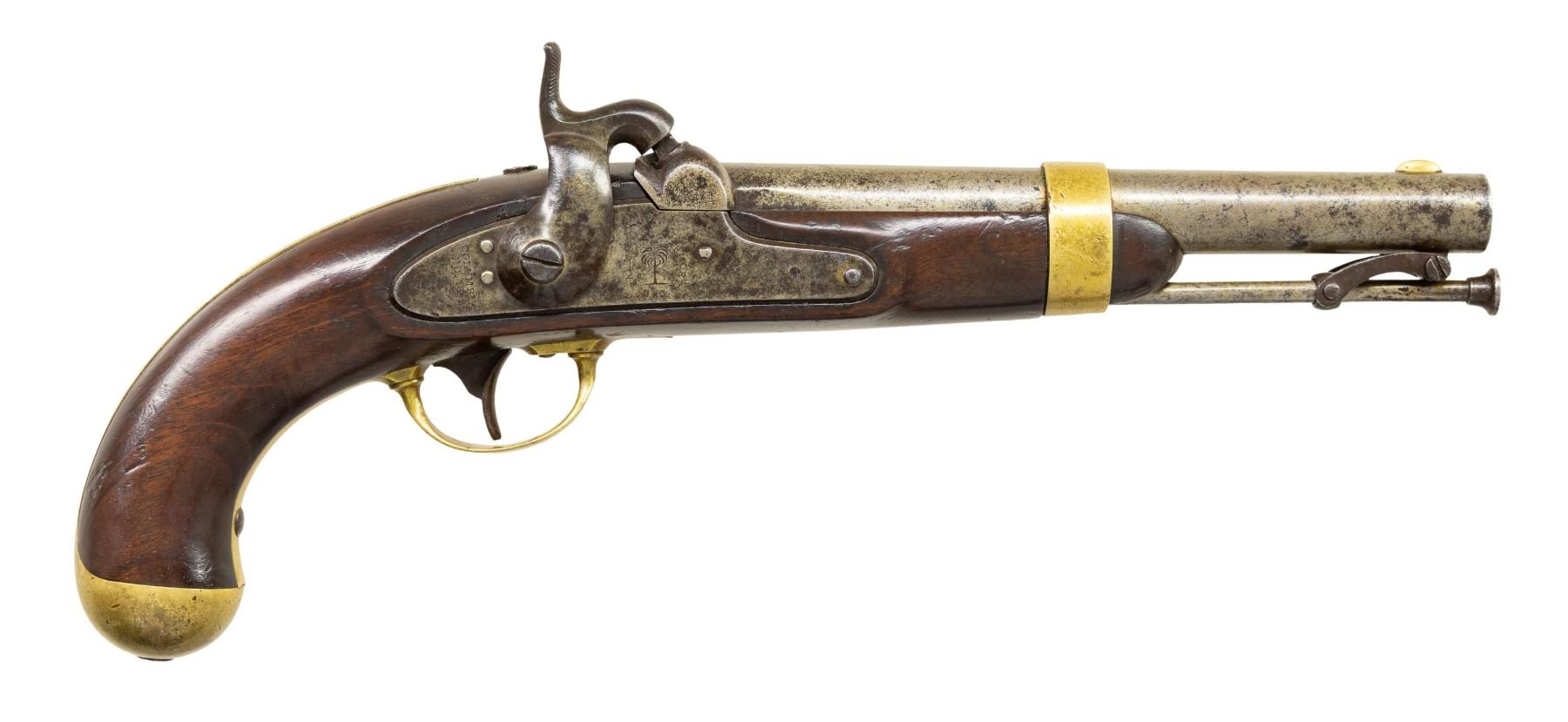
Lot 3239, the better-preserved example, retained traces of original brown finish and strong Palmetto Armory and William Glaze markings. Poulin described it as being among the top 10% of surviving examples for condition.
The pistol also included documentation of a 2006 Greg Martin Auctions sale and a historical letter from Norm Flayderman. Despite a mechanical issue preventing the lock from holding at half-cock, it brought $8,190. It is pictured at the top of this article.
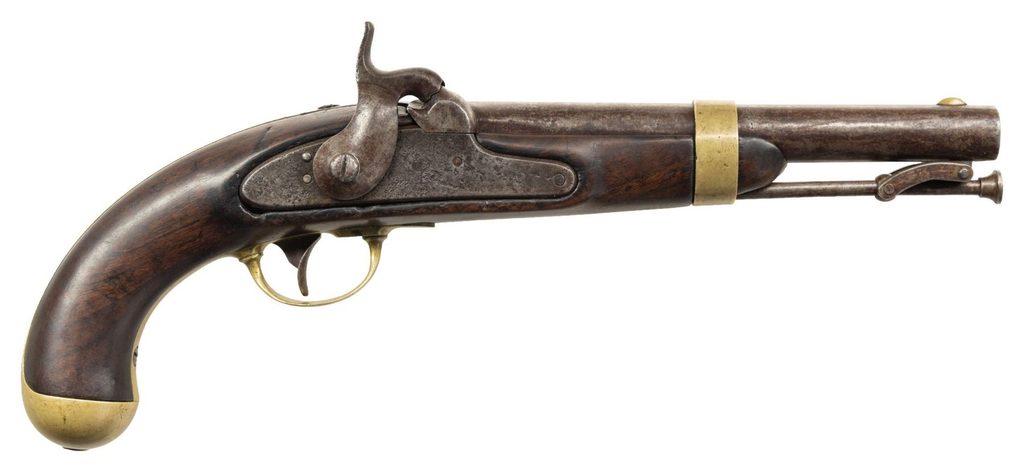
Lot 3240 was considerably rougher, exhibiting pitting, worn markings, an older stock refinish, and hairline cracks. It brought $3,465.
The better example therefore realized approximately 2.36 times the price of its lesser-condition counterpart.
A Third Palmetto Provides Perspective
The results become even more interesting when compared with Alderfer’s October 27 auction.
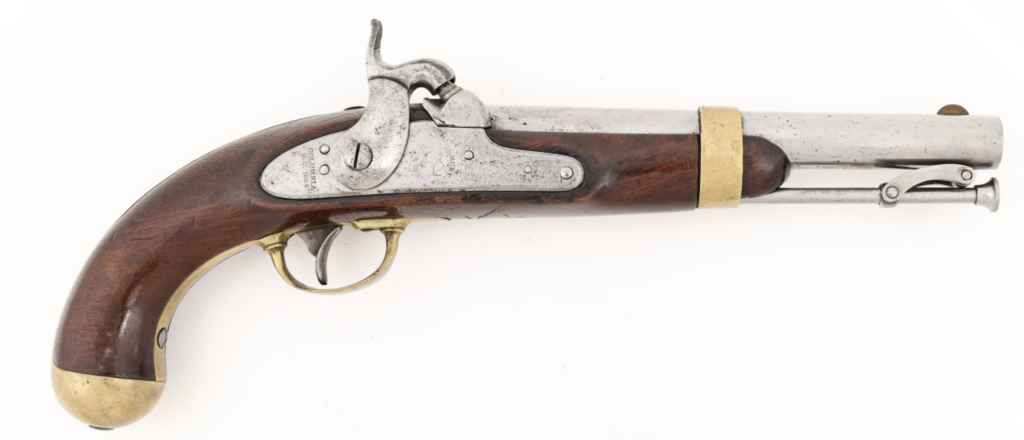
There, a heavily cleaned Palmetto Armory pistol with refinished and cracked wood brought $3,690, including the buyer’s premium.
That places the Alderfer example just $225 above Poulin’s lesser-condition pistol, despite the different auction houses and audiences.
All three pistols sold within 12 days, providing a useful snapshot of current collector demand.
What Do the Results Tell Us?
The Palmetto Armory pistols are scarce regardless of condition. Their historical significance and limited production ensure that even compromised examples attract attention.
But rarity does not eliminate the importance of preservation.
The two Poulin pistols offered a particularly useful comparison because they sold in the same auction. Their substantial price difference suggests that collectors were willing to pay considerably more for original surfaces, stronger markings, and better overall preservation.
The better example’s supporting documentation may also have strengthened its appeal, meaning the difference cannot be attributed to condition alone.
Three sales do not establish a definitive market value. They do, however, reinforce a familiar principle in antique firearms collecting: rarity gets collectors interested, but condition and originality often determine how much they’re willing to pay.