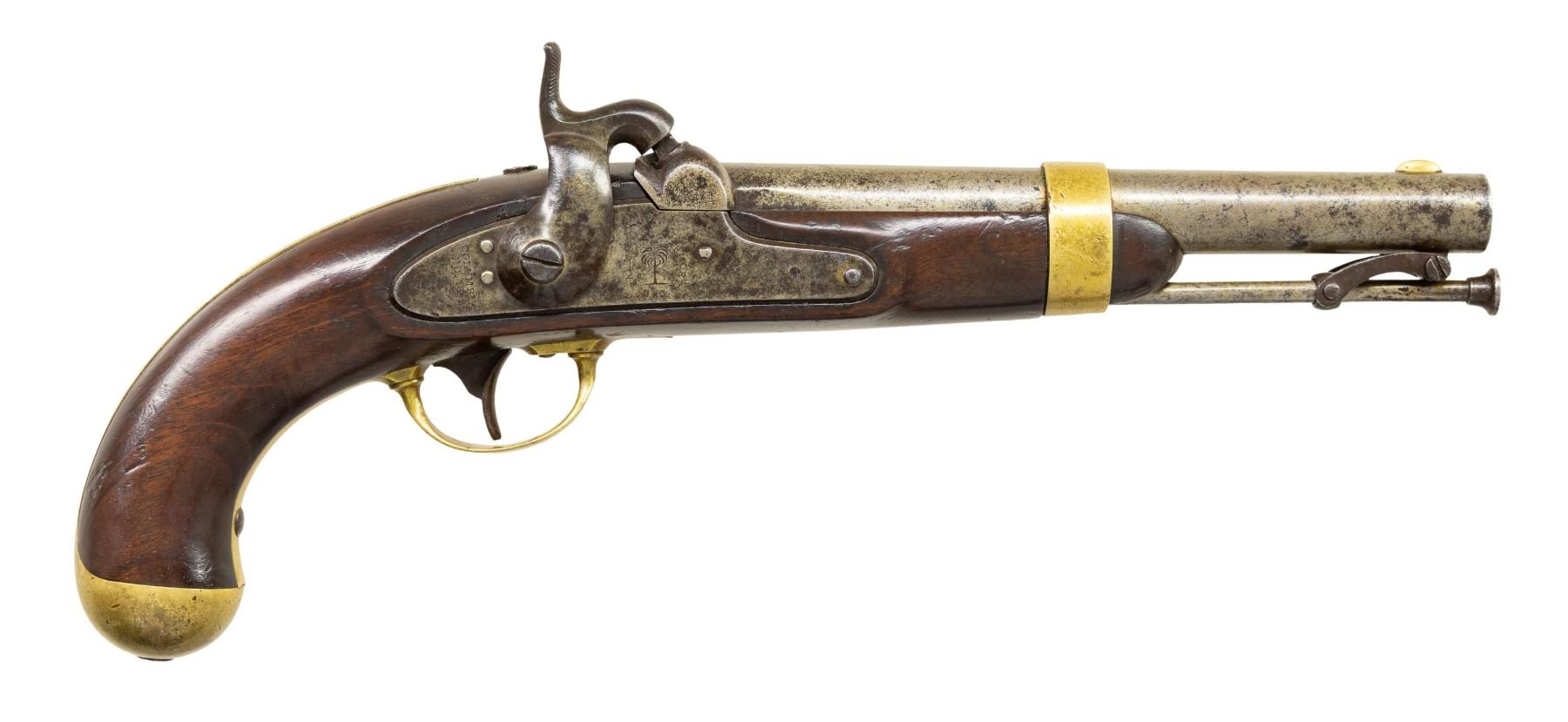
After a $3,690 result at Alderfer, two more Palmetto Armory pistols could reveal how much collectors will pay for better condition.
Just weeks after a Palmetto Armory pistol sold at Alderfer Auction, two more examples are heading to the auction block. Their differing conditions and estimates offer an interesting opportunity to examine what drives prices in the antique firearms market.
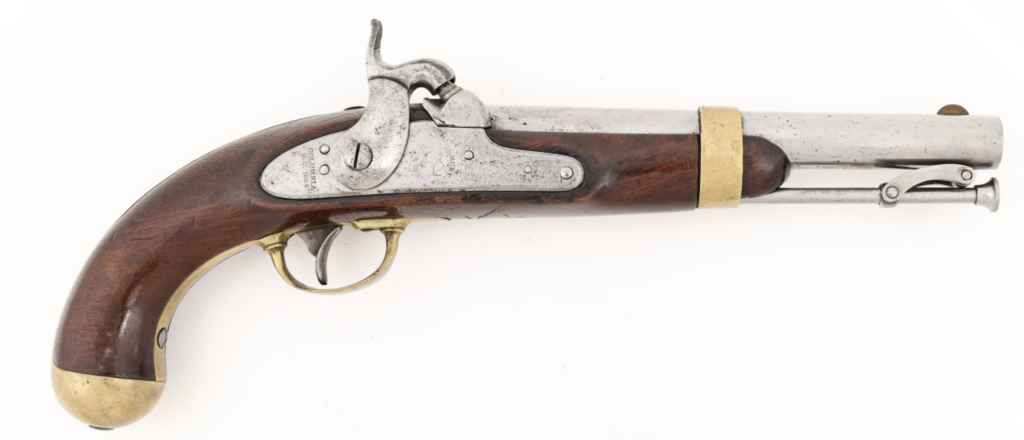
On October 27, Alderfer sold a William Glaze Palmetto Armory Model 1842 pistol for $3,000, or $3,690 including the 23% buyer’s premium.
As The Collector’s Wire previously reported, the pistol had been heavily cleaned. Its metal surfaces had a silver-gray appearance, while the stock showed an older refinish and cracks.
Despite those condition issues, the pistol attracted a buyer. Now, Poulin’s November 8 sale offers two more examples for comparison.
Two Pistols, Two Levels of Preservation
Lot 3239 carries a $5,000–$7,000 estimate. Poulin describes the .54-caliber pistol as an exceptionally well-preserved survivor, with strong Palmetto Armory and William Glaze markings.
More importantly, it retains traces of its original brown finish. The auction house considers it among the top 10% of documented survivors for condition.
The pistol also comes with records of its 2006 sale through Greg Martin Auctions and a historical letter from Norm Flayderman. Its principal noted mechanical issue is a lock that will not hold at half-cock.
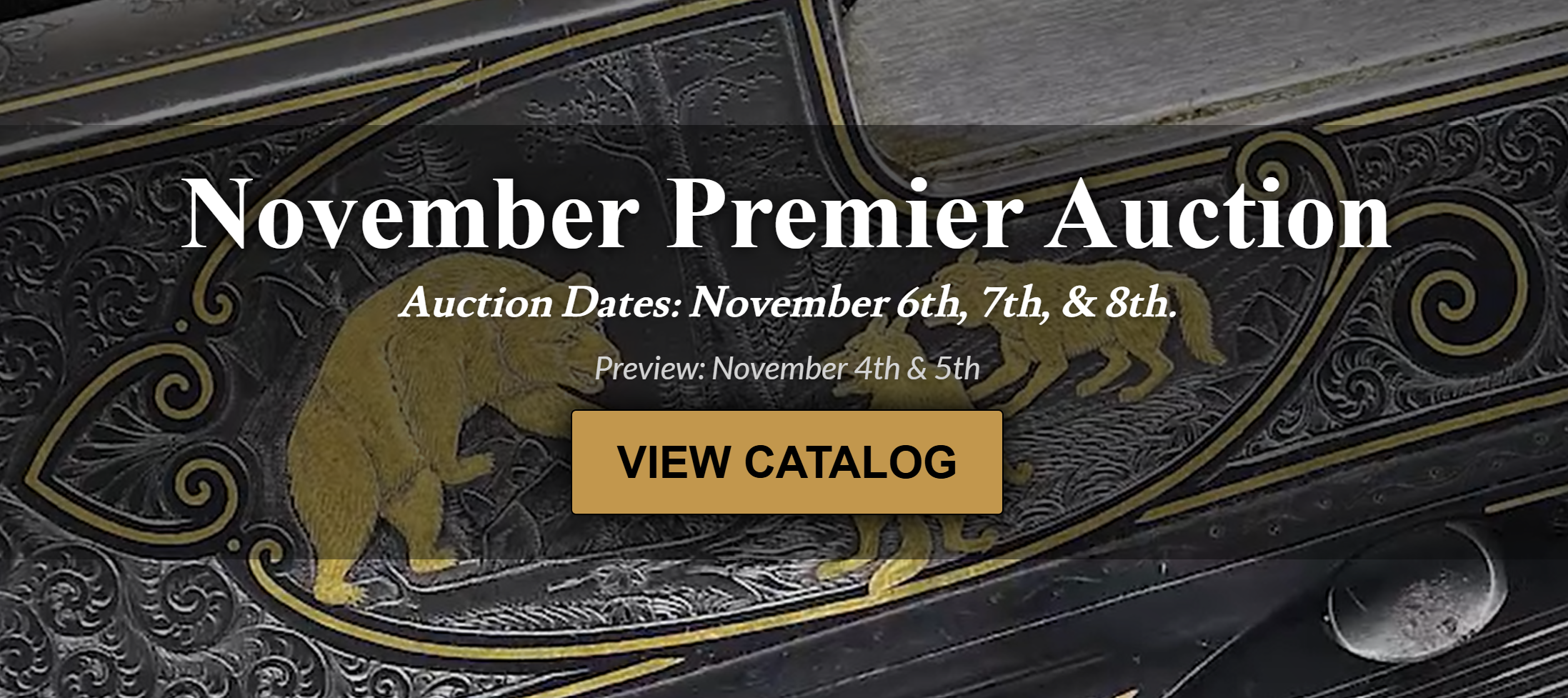
That pistol is pictured in the header of this piece.
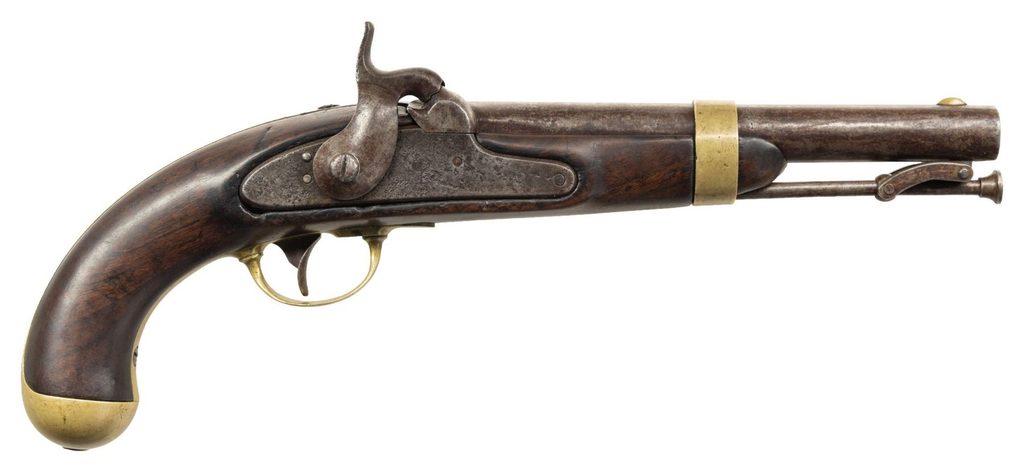
Lot 3240, estimated at $3,000–$4,000, presents a different picture.
Although complete and original, it exhibits considerable pitting, worn markings, an older stock refinish, and hairline cracks. The lock mortise also shows wear. Poulin grades its overall condition as good.
What Might They Bring?
The Alderfer result establishes a recent comparison, but not necessarily a market benchmark. Its extensive cleaning and refinished stock undoubtedly affected its appeal to collectors who prize originality.
Poulin’s better pistol has a reasonable chance of reaching its $5,000–$7,000 estimate, perhaps exceeding it if multiple bidders prioritize preservation and original finish.
The second example seems more directly comparable to Alderfer’s pistol. A result near $3,000–$4,000 would be unsurprising, although its pitting and stock issues could limit bidding.
Both Poulin lots carry a 26% buyer’s premium; Alderfer was 23%. The similar percentages making hammer-price comparisons particularly useful.
What It Says About the Market
Palmetto Armory pistols occupy an unusual position in American firearms collecting. Produced in South Carolina before the Civil War, many subsequently entered Confederate service. Their limited production and regional historical significance make them desirable, even when condition is less than ideal.
But rarity alone does not guarantee a premium.
Collectors distinguish between honest age-related wear and permanent alterations such as aggressive cleaning or refinishing. Original surfaces, sharp markings, sound wood, and documented history can all influence what a buyer will pay.
The most revealing comparison may be between Poulin’s two examples. Selling in the same auction removes some of the variables associated with comparing different auction houses and dates.
If the better-preserved pistol substantially outperforms its rougher counterpart, the results will reinforce an important collecting principle: scarcity creates interest, but condition often determines price.