Category: Research & Books

  • Tiger Stripe Camo Reference Book Available for Preorder

    Tiger Stripe Camo Reference Book Available for Preorder

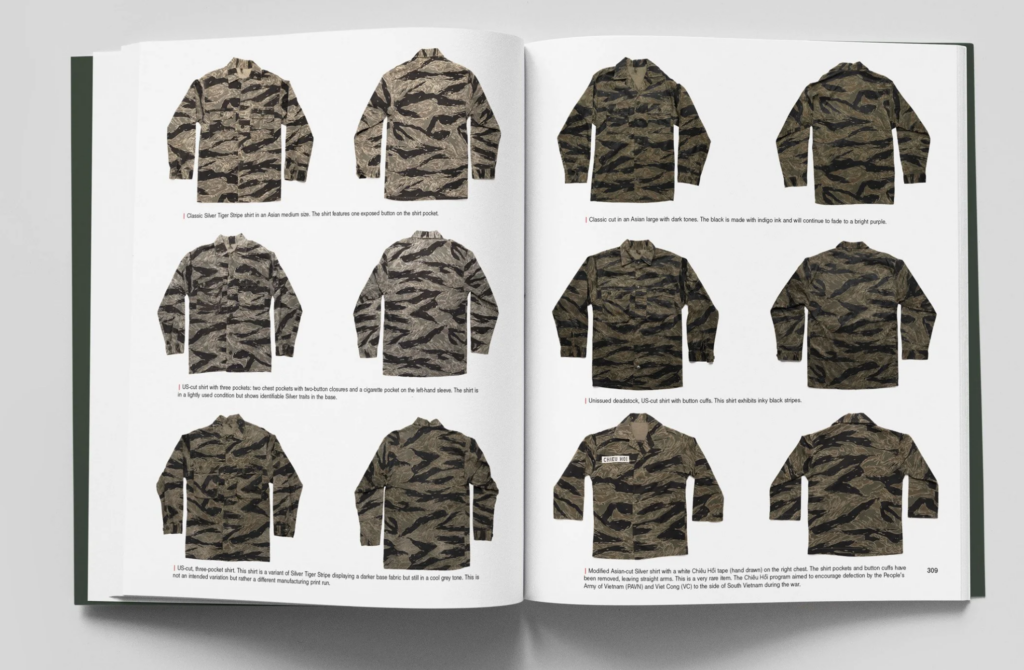
    Headstamp Publishing is accepting preorders for Tiger Stripe: The Vietnam Camouflage Story, a new reference by Owen Thornton. The hardcover is planned at approximately 750 pages with more than 1,250 images.

    With photography by James Rupley, the book draws on original uniforms, period photographs, government documents and contemporary publications. Headstamp’s announced coverage traces the camouflage’s development and its use by American and South Vietnamese forces, including special operations units.

    For firearms collectors assembling Vietnam-era displays, a reference devoted to the clothing and equipment surrounding the guns could fill a useful gap. Choosing a firearm is only one part of interpreting a particular unit, place or period. Uniforms and accessories introduce their own questions of identification and authenticity.

    That connection between firearms and the uniforms, photographs and equipment surrounding them also features in our coverage of the Ohio Valley Military Society.

    The planned contents address patterns including Okinawa Tiger, ARVN Tiger and Gold Tiger, along with reproduction clothing and later uses. Related subjects include unit patches, scarves and other accessories. That scope makes the book worth watching for collectors whose interests extend from small arms into the material culture of the people who carried them.
    tiger stripe inner

    Prices are $118 for the standard edition, $138 signed and $440 for the collector’s edition. Headstamp estimates warehouse arrival around March 2027, with customer delivery dates still undetermined.

    Preorders are charged when placed, and the publisher says content and page count may change during production. Full specifications and ordering information are available on Headstamp’s Tiger Stripe page.
  • New Research Challenges Serial Number Identification on Rare British Firearms

    New Research Challenges Serial Number Identification on Rare British Firearms

    An examination of Isaac Riviere’s patented firearms reveals why collectors should reconsider familiar markings and production dates.

    Numbers stamped on antique firearms can reveal important information about their manufacture. However, new research suggests that markings on certain British firearms have frequently been misidentified as serial numbers.

    In February 2026, researcher Matthew Schneiderman published a study of firearms manufactured by London gunmaker Isaac Riviere. The report, available through the American Society of Arms Collectors (ASAC), examines Riviere’s unusual numbering practices.

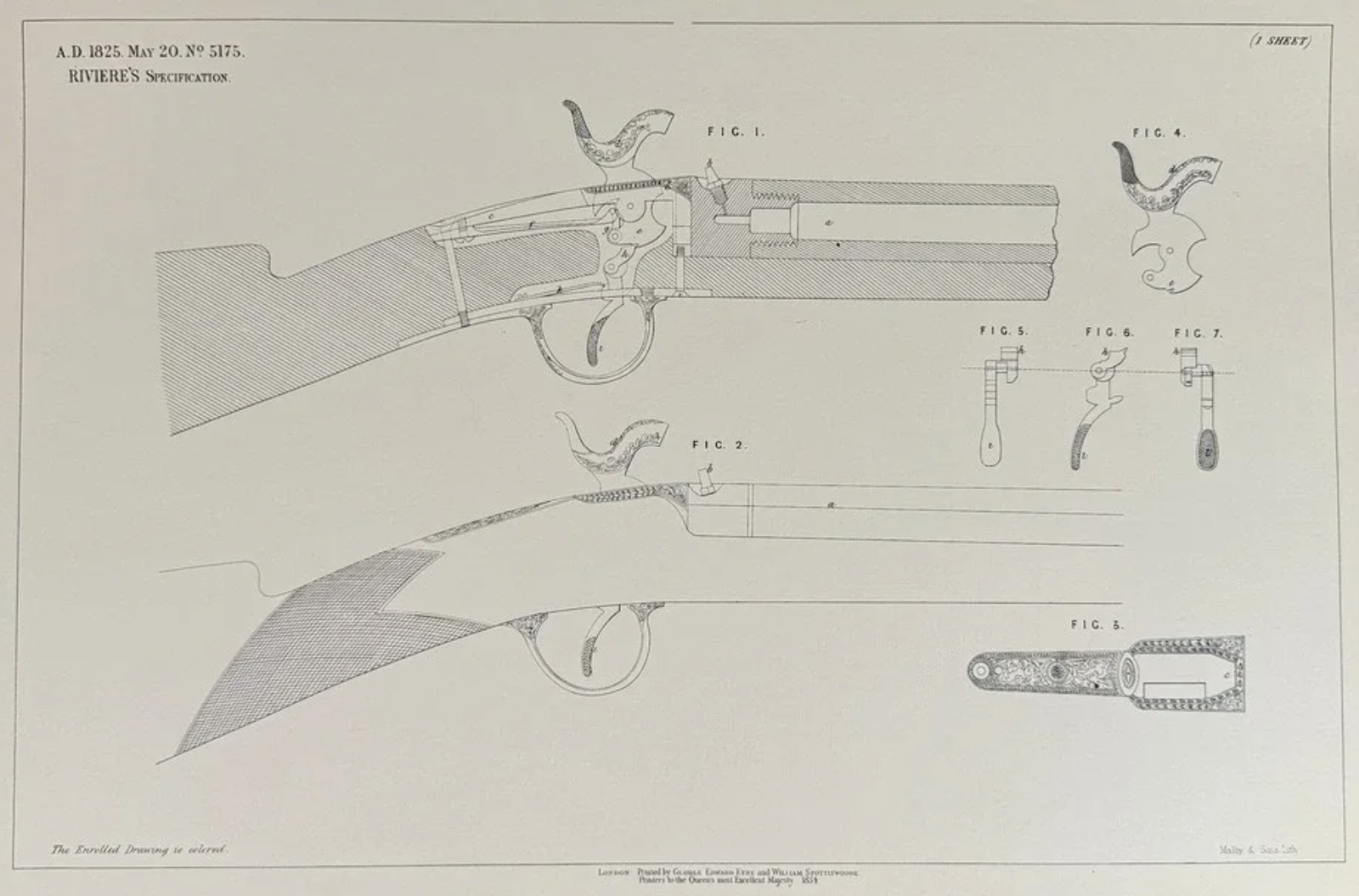
    Riviere received British patent No. 5175 on May 20, 1825, for an innovative box-lock firearm mechanism. He advertised the design as “the guns without locks,” referring to its unconventional construction.

    Surviving examples of these firearms sometimes bear markings consisting of Riviere’s name, the word “Patent,” and an individual number.

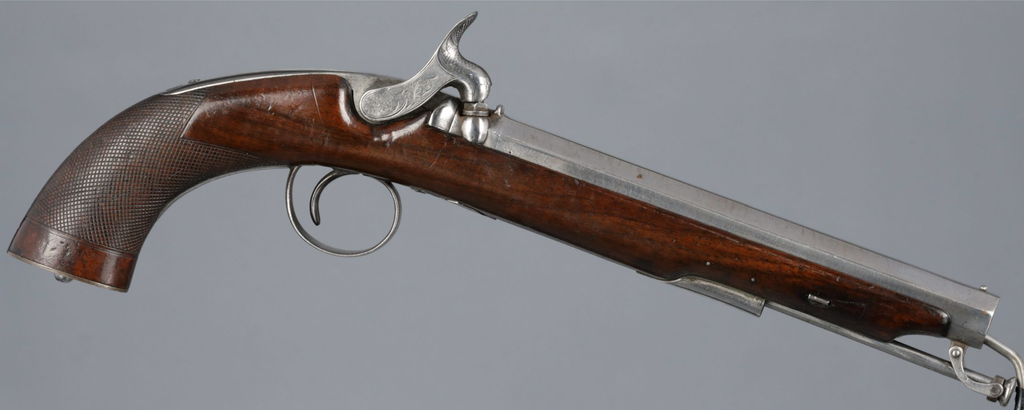
    Riviere Patent Percussion Pistol
    Riviere Patent Percussion Pistol (Rock Island Auction Company)

    Collectors and auction houses have often described these markings as serial numbers. Schneiderman argues that they served an entirely different purpose.

    His research indicates that Riviere numbered firearms incorporating his patented mechanism to track production under that patent. Other firearms bearing the Riviere name appear to lack comparable numbering.

    This distinction matters because serial numbers and patent-tracking numbers do not necessarily provide the same information.

    A manufacturer’s serial number can help establish production chronology and sometimes indicate how many firearms were manufactured. Patent-tracking numbers, however, may account for only those examples incorporating a particular patented feature.

    Schneiderman also notes that paired Riviere firearms received consecutive patent-tracking numbers rather than sharing one number.

    The study challenges another common assumption involving these firearms.

    Auction and dealer descriptions frequently date Riviere’s patented designs to approximately 1825 or 1825–1830. Schneiderman cautions that these dates often reflect the patent’s issuance rather than documented manufacturing dates.

    Without reliable production benchmarks, determining when individual examples were manufactured remains difficult.

    For collectors, these findings demonstrate the limitations of relying exclusively on markings and traditional catalogue descriptions. Similar identification challenges arise in archaeological collections, where researchers use reference materials to identify historic firearms components.

    A number stamped on an antique firearm may appear straightforward, but its original purpose can dramatically change how researchers interpret it.

    The same applies to assumptions about rarity. A numbered example cannot automatically establish total production figures when the manufacturer also produced unnumbered firearms.

    Schneiderman’s study identifies known examples and invites owners to contribute additional patent-tracking numbers.

    Those contributions could help researchers better understand surviving Riviere firearms and potentially establish more accurate production patterns.

    The complete report, Isaac Riviere Patent-Tracking Numbers (Sometimes Referred To Erroneously As “Serial Numbers”), Plus Background Information, is available through ASAC’s online research library.

    For collectors examining rare British firearms, the study offers a reminder that identification requires more than reading the numbers stamped into the metal.

  • Researchers Reconstruct Arms Historian’s Gun Lock Catalog

    Researchers Reconstruct Arms Historian’s Gun Lock Catalog

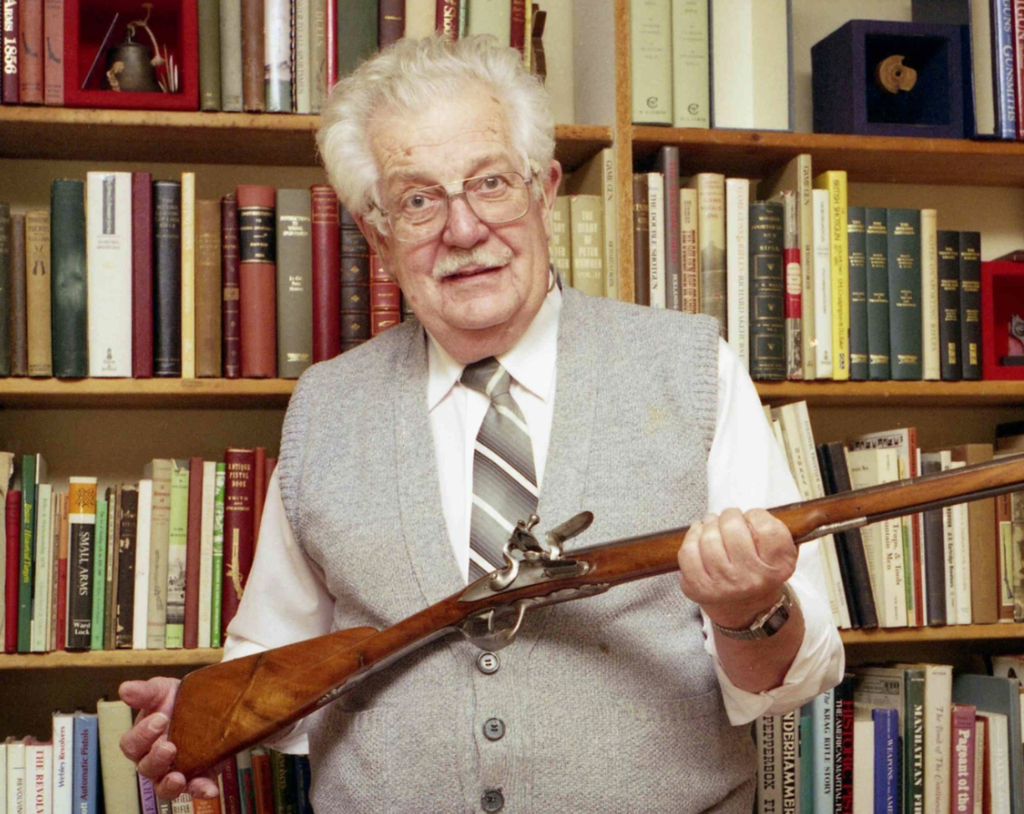
    A significant collection of historic gun lock research has gained a new audience thanks to the efforts of three firearms historians. The American Society of Arms Collectors (ASAC) has published the reconstructed gun lock catalog of the late S. James “Jim” Gooding.

    Gooding, who died in 2012, spent decades studying antique firearms, particularly their ignition systems. His work as a researcher, author, publisher, and collector made him a respected authority in the field.

    Among his interests was an extensive collection of gun locks. These mechanisms provide important evidence about the development of firearms technology, manufacturing practices, and individual gunmakers.

    Gooding photographed nearly every lock in his collection and maintained a detailed catalog of their characteristics. He intended to incorporate the material into a comprehensive history of firearms ignition systems. The collection would have formed Chapter 14 of that unfinished work.

    However, Gooding died before completing the project.

    S. James Gooding
    S. James Gooding (1930-2012)

    Fortunately, the photographs included numbers corresponding to entries in his catalog. Researchers Will Adye-White, Brian Godwin, and Matthew Schneiderman used those numbers to reunite the photographs with their original descriptions.

    Their efforts resulted in the reconstructed Jim Gooding’s Gun Lock Collection and Catalogue, which ASAC published online in 2026.

    The catalog includes detailed information about individual locks, their makers, mechanical features, and historical context.

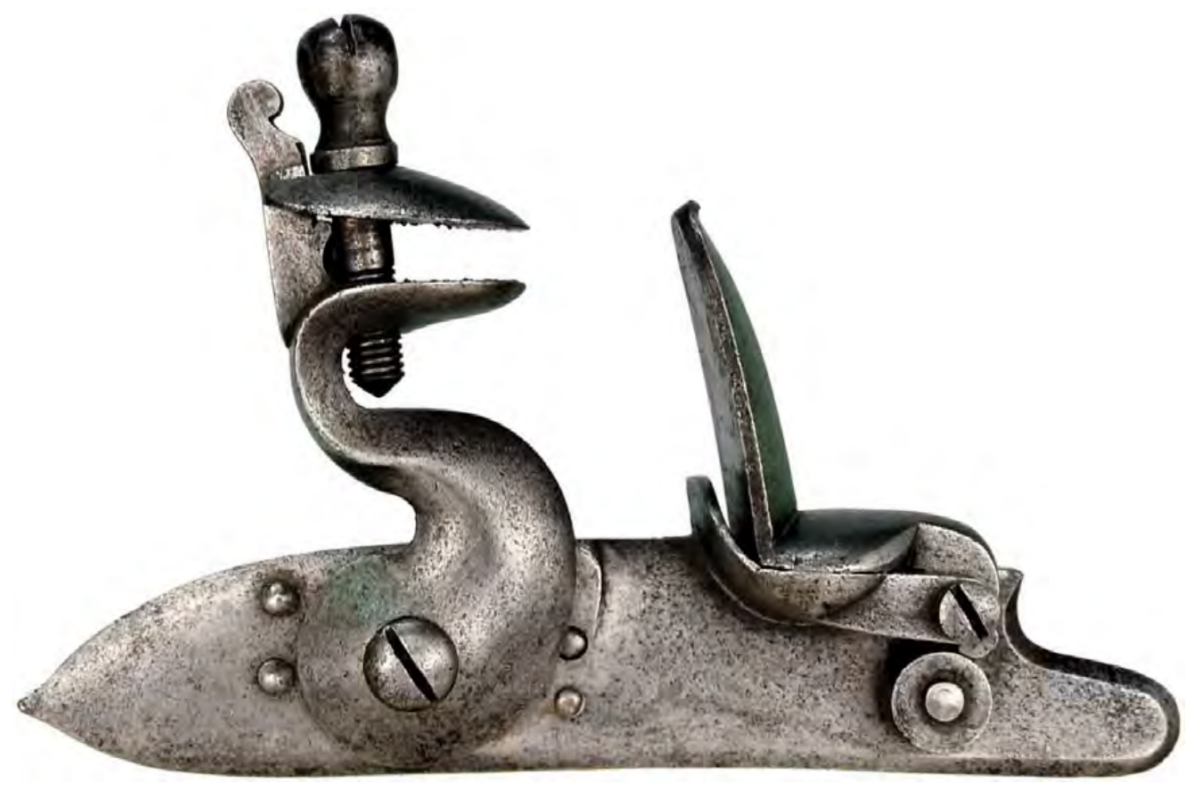
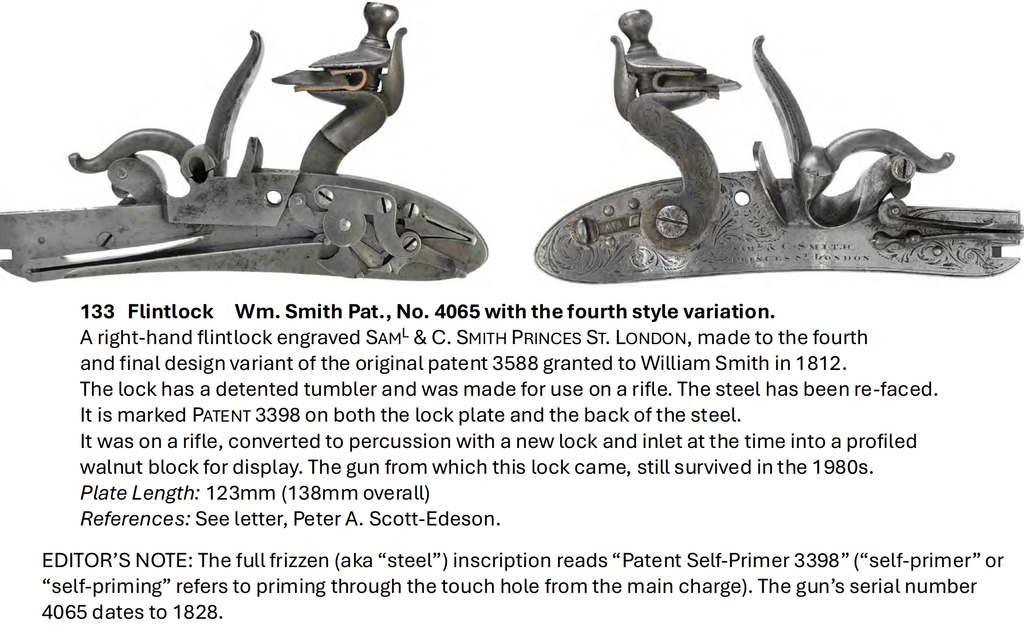
    One example is catalog number 133, a William Smith patent flintlock dating to 1828. The entry documents the lock’s markings, patent information, and the serial number of the rifle to which it was originally attached.

    flintlock excerpt
    Catalog number 133

    Such information can prove valuable when identifying detached locks or examining antique firearms whose original configurations are uncertain. Like other specialized firearms research, Gooding’s catalog demonstrates how original documentation can help collectors identify historical artifacts and better understand their significance.

    For collectors, the catalog provides an additional reference for comparing surviving examples against documented historical specimens. It also preserves information about a specialized collection that might otherwise have become difficult to reconstruct.

    The project illustrates the importance of maintaining detailed collection records. Photographs, identification numbers, and written descriptions allowed researchers to preserve Gooding’s work more than a decade after his death.

    Gooding’s research continues to benefit collectors through additional publications available from ASAC. These include his unfinished history of firearms ignition systems and his scarce reference work on early percussion primers.

    The reconstructed catalog is available to the public through ASAC’s online research library, providing collectors and historians with access to material that might otherwise have remained unpublished.

  • New Smith & Wesson Registered Magnum Research

    New Smith & Wesson Registered Magnum Research

    Collectors studying Smith & Wesson’s Registered Magnum have a new batch of factory data to examine. Researcher R. M. Vivas published his latest Magnum Opus update on October 7, 2026. It analyzes registration numbers RM1001 through RM1500, a block of 500 revolvers.

    His database contains about 2,600 entries toward an anticipated total of roughly 5,500. The latest analysis focuses on each revolver’s configuration when it first left the factory.

    Among these 500 guns, the 6½-inch barrel leads with 167 examples. Vivas also records 90 six-inch barrels and 76 measuring 8¾ inches. One revolver’s barrel length remains unknown. Those figures apply only to this sample. Later alterations can separate a surviving gun from its original specifications.

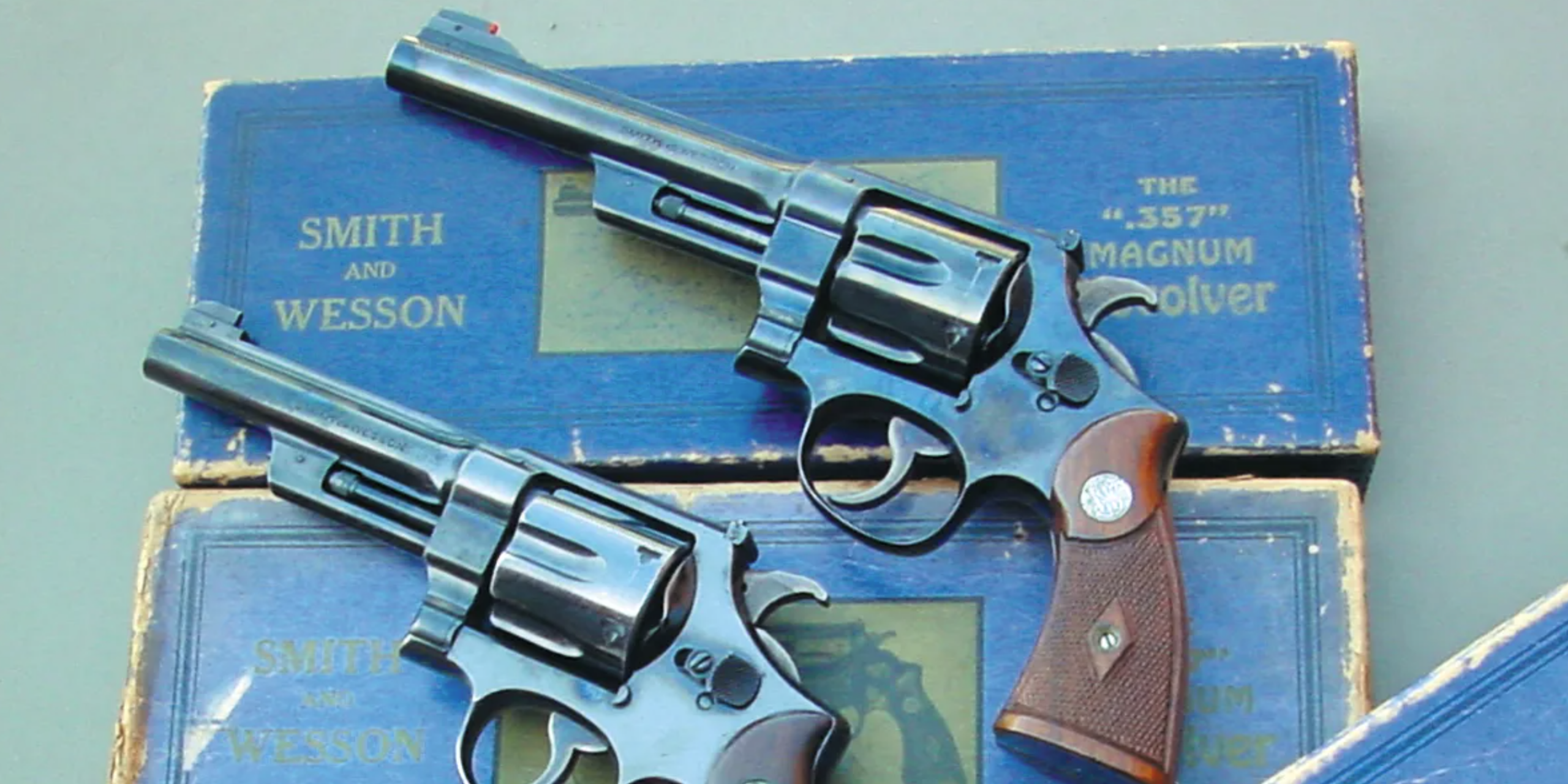
    That distinction matters for a revolver built around individual preferences. Introduced in 1935, the Registered Magnum allowed buyers to specify features, including barrel length. Smith & Wesson supplied a registration card with each gun. Returning it brought a certificate recording the owner and details of the order.

    Collector Nick Rukavina illustrated the documentation problem in a 2025 RevolverGuy article about his own Registered Magnum. Its paperwork specifies an 8¾-inch barrel, while the gun now wears a 3½-inch barrel. He also retains the removed original barrel. The gun and documents tell different parts of the same history.

    smith and wesson historical foundation logo

    The Smith & Wesson Historical Foundation notes that factory research can require reconciling several kinds of records. A shipping entry, an order form, and a later repair record may answer different questions.

    For collectors, the practical lesson is to investigate an unusual feature before turning it into a rarity claim. Record what the gun has today, then compare that description with its earliest paperwork. Keep later service records with it, too.

    In a collection catalog, dates and sources deserve space beside measurements and condition notes. A documented change can explain an apparent discrepancy. Without that paper trail, a plausible explanation remains an explanation waiting for evidence.

    The project gives collectors new evidence to test against their own records. Many thanks to Mr. Vivas for doing the heavy lifting for Registered Magnum collectors everywhere.

  • Swiss Rifle and Zastava Books: Preorder Deadline Nov. 1

    Swiss Rifle and Zastava Books: Preorder Deadline Nov. 1

    Safar Publishing will end discounted preorders for two new rifle reference books on November 1, 2026. The titles cover Swiss military rifles and the Zastava and Tabuk branches of the Kalashnikov family.

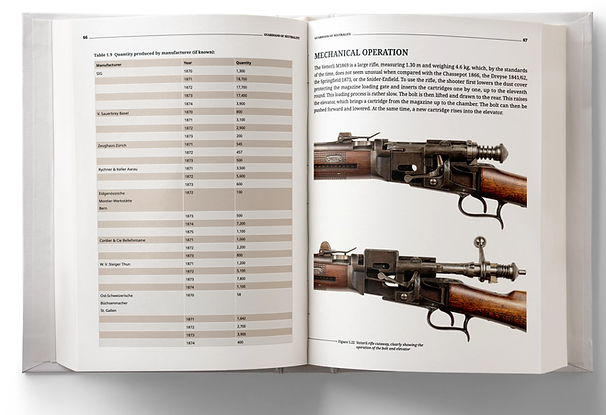
    Thomas Anderson’s Guardians of Neutrality: Swiss Rifles Through the Ages examines Swiss service rifles from 1860 to 1990. Its coverage includes the Vetterli, Schmidt-Rubin designs, Gewehr 11 and Karabiner 31. Safar says Anderson used Swiss federal archives and visited private collections for his research. The book combines historical analysis with archival images and detailed photographs.

    The forthcoming Drawing Fire book will likewise explore firearm development through original Winchester engineering drawings.

    book pages
    Sample page from ‘Guardians of Neutrality.’

    For collectors, that approach could help connect individual rifles with the design changes that distinguish successive Swiss models. The promised close-ups could also support comparisons between a reference example and a rifle in hand.

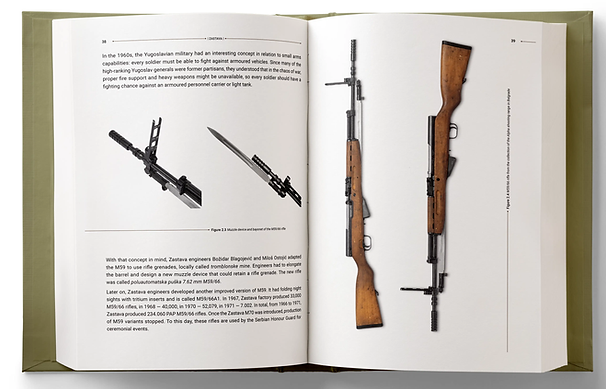
    Vladimir Onokoy’s From Balkans to Babylon: Zastava AKs of Yugoslavia, Serbia, and Iraq addresses another demanding identification subject. Coverage includes the M70 family, the M80, M85 and M21, and Iraqi Tabuk variants. Safar also lists prototypes, manufacturing details, markings and an illustrated development timeline.

    The publisher says the research draws on declassified intelligence documents and Yugoslav records. Photographs include examples documented in the Middle East and Africa. For collectors, the promised emphasis on markings and production differences could help distinguish closely related variants. Those details also provide starting points for researching a rifle’s background.

    book pages
    Sample pages from ‘From Balkans to Babylon.’

    A similar emphasis on surviving examples shapes the new Whitworth reference Hex Bore, built around 750 known rifles.

    The books occupy different stages of production. Safar’s October update reports that From Balkans to Babylon has finished printing and is heading to its warehouse. Guardians of Neutrality, approaching 600 pages, was completing final proofreading, with printing planned for October.

    The standard Swiss volume currently lists at $80, compared with a regular price of $99. The Zastava/Tabuk book lists at $59, compared with $69. Those discounts represent savings of $19 and $10, respectively. Both product pages list autumn 2026 shipping.

    Collectors planning their fall reading can also explore forthcoming books on Confederate powder production and New Hampshire gunmakers.

    If you are considering either title, then you should consider ordering before November 1, when Safar says full retail pricing begins.

  • Two Firearms History Books Coming in November

    Two Firearms History Books Coming in November

    Two new books arriving in November 2026 promise fresh perspectives on American firearms history. One examines Confederate gunpowder production during the Civil War. The other documents New Hampshire’s gunsmiths and firearms retailers across two centuries.

    Both titles offer collectors and historians opportunities to explore lesser-known aspects of American arms development.

    The Indispensable Man: George Washington Rains, the Confederate Powder Works, and the Civil War You Never Knew

    The Indispensable Man: George Washington Rains

    Historian Theodore P. Savas examines the extraordinary career of George Washington Rains, whose work helped sustain the Confederate war effort.

    A West Point graduate, Rains served as an engineer, inventor, educator, and military officer. His most significant contribution came through his efforts to secure gunpowder for the Confederacy.

    In 1861, Confederate leaders faced an enormous challenge. Their armies needed ammunition, but the South lacked the manufacturing infrastructure necessary to support a prolonged war.

    Rains helped address that shortage through industrial development, procurement, and the establishment of Confederate powder production capabilities.

    Savas also examines Rains’s lesser-known activities in the Western Theater during the war’s opening year. His research draws on nearly four decades of work with primary sources, including previously unpublished material.

    The 768-page volume includes 55 images, additional photographs, and 13 maps. The book promises to connect firearms manufacturing, military logistics, and broader Confederate strategy in a single narrative.

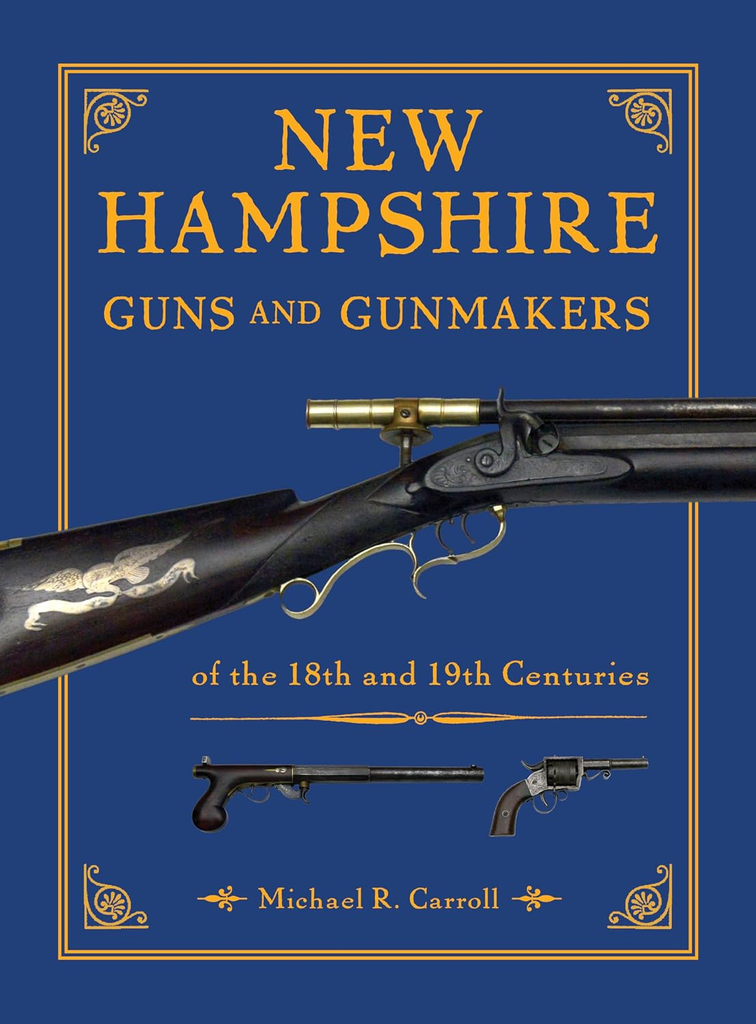
    New Hampshire Guns and Gunmakers: Of the 18th and 19th Centuries

    New Hampshire guns and gunmakers

    Author Michael R. Carroll explores the gunsmiths, manufacturers, and retailers who shaped New Hampshire’s firearms history.

    The book covers the period surrounding the American Revolution through the aftermath of the Civil War.

    Unlike larger manufacturers, many New Hampshire gunmakers operated small shops employing only a handful of workers. Their businesses often combined firearms production with unrelated trades and services.

    Among the craftsmen featured is David Hall Hilliard, who reportedly produced approximately 3,000 firearms over 35 years. Hilliard also manufactured cabinets and stoves, repaired carriages, and operated other businesses from his family farm.

    Carroll organizes his research alphabetically by gunsmith and retailer. Individual entries combine biographical information, historical context, and descriptions of surviving firearms.

    The 384-page reference features approximately 950 photographs, including detailed images of more than 100 antique pistols and long guns.

    Carroll brings more than 50 years of antique firearms collecting experience to the project. He has also contributed research to the journal of the American Society of Arms Collectors.

    For collectors specializing in regional American arms, the book promises an especially useful reference for identifying makers and researching surviving examples.

    New, well-written gun books are always a welcome addition to the library, even if the bookshelves are straining under the weight.

    The Indispensible Man and New Hampshire Guns and Gunmakers are currently available for preorder by clicking their titles above, with publication scheduled for November 26 and November 28, respectively.

  • New Whitworth Rifle Book Draws on Database of 750 Known Examples

    New Whitworth Rifle Book Draws on Database of 750 Known Examples

    A new firearms reference book takes an unusually deep look at one of the 19th century’s most important rifle designs.

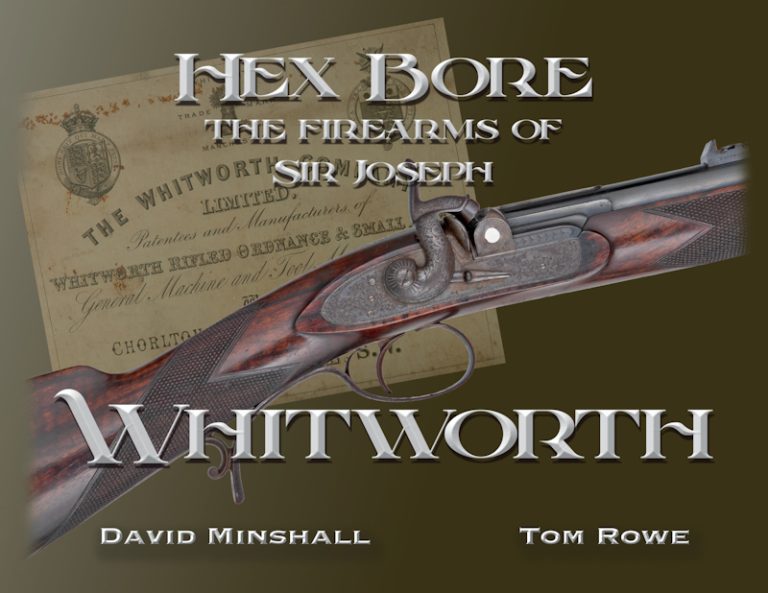
    Research Press in the UK has released Hex Bore: The Firearms of Sir Joseph Whitworth by David Minshall and Tom Rowe.

    The 380-page hardcover traces the development of Whitworth’s distinctive hexagonally bored muzzle-loading rifles. More importantly for collectors, the authors built their study around a database of 750 known examples.

    That gives the book a strong foundation in surviving firearms rather than historical documents alone.

    Joseph Whitworth approached rifle design through precision engineering and systematic experimentation. His work demonstrated the accuracy possible from carefully manufactured rifles firing elongated projectiles.

    The results influenced rifle development far beyond Whitworth’s own production.

    The British military extensively tested the Whitworth rifle but never adopted it as a standard service arm. Civilian target shooters proved more receptive.

    Queen Victoria famously fired a Whitworth rifle when she opened the National Rifle Association’s inaugural annual meeting at Wimbledon in 1860.

    The rifle soon developed a reputation among serious long-range competitors.

    Minshall and Rowe follow that development across several distinct firearm types. The book examines military rifles, military target rifles, match rifles, sporting rifles, double rifles, and related variations. It also explores firearms made by other gunmakers under license from Whitworth.

    American collectors will likely find the Civil War material particularly interesting. Confederate sharpshooters used Whitworth rifles during the war, creating a reputation that still shapes collector interest today. The authors also examine the rifle’s lesser-known use in New Zealand.

    Accessories receive substantial attention as well.

    The book covers ammunition and equipment associated with the rifles, including the Davidson telescopic sight. Surviving accessories can prove especially important when documenting unusual or high-condition examples.

    Access to private collections allowed the authors to illustrate the study with extensive color photography. That combination of archival research, production analysis, and examination of surviving guns gives the book considerable potential as a collector reference.

    The database of 750 rifles may prove its most useful contribution. Serial numbers and surviving examples can help researchers understand production patterns that factory documents alone may not reveal. They can also help collectors place individual rifles within the larger history of Whitworth production.

    For collectors of British military rifles, Civil War arms, or long-range target rifles, the book fills a very specialized niche. That specialization may also be its greatest strength.

    Research Press currently lists the hardcover at $150. You can order it here.

    The price may seem steep on the surface, but it’s important to remember that other specialized firearms books like these are usually priced similarly – and they’ll cost even more on the secondary market once they go out of print.

  • Shooter’s Bible Marks 118 Editions With New 2026 Release

    Shooter’s Bible Marks 118 Editions With New 2026 Release

    One of the firearms world’s longest-running reference books will return with a new edition later this month.

    Skyhorse Publishing will release the 118th edition of Shooter’s Bible on October 27. The new volume runs 608 pages and carries a $29.99 list price.

    The annual reference has appeared for more than 80 years. During that time, Shooter’s Bible has sold more than seven million copies. The publisher describes it as a reference guide to both current-production firearms and guns that remain on the commercial market.

    The 118th edition continues that approach. It includes specifications and information on firearms from manufacturers around the world. The book also covers ammunition, optics, and accessories.

    That scope separates Shooter’s Bible from a dedicated collector-price guide. Rather than concentrating primarily on values, the book serves as a broad snapshot of the firearms marketplace. Collectors can use older editions to track changes in manufacturers, models, specifications, and product lines over time.

    That gives the series value beyond its original purpose. A current edition can help identify a firearm or compare factory specifications. An edition from decades earlier can reveal what companies offered when a particular gun was new.

    For researchers, that historical trail can become especially useful. Catalog descriptions change. Companies disappear. Model names evolve. Specifications sometimes shift during a production run. Annual reference books can preserve those changes in ways that modern manufacturer websites do not.

    The new edition comes from editor Jay Cassell, a longtime outdoor writer and publishing veteran. His work has appeared in Field & Stream, Outdoor Life, Sports Afield, and other publications.

    Collectors should not expect Shooter’s Bible to replace specialized reference works. A Winchester researcher will still need Winchester books. A Colt collector will still need factory records and model-specific sources.

    But broad references serve another purpose. They help researchers establish context before moving into the details. They also document what the firearms industry looked like at a particular moment.

    That may prove particularly valuable decades from now. Today’s ordinary catalog entry can become tomorrow’s production-history evidence.

    After 118 editions, Shooter’s Bible has accumulated plenty of that evidence already.

  • 48th Gun Trader’s Guide Arrives October 27 With Updated Firearms Values

    48th Gun Trader’s Guide Arrives October 27 With Updated Firearms Values

    Collectors will get a new edition of one of the firearms world’s longest-running reference books later this month.

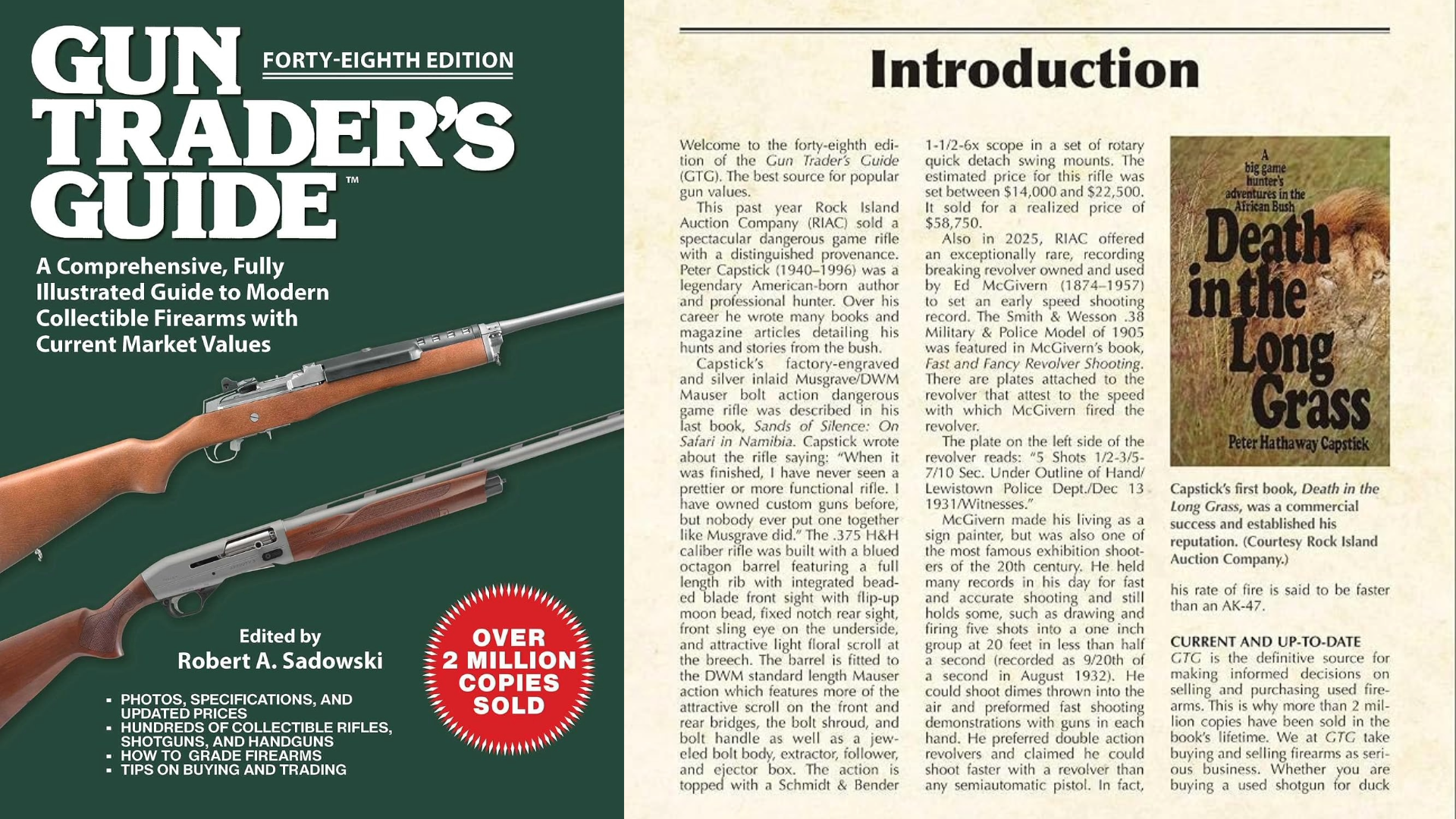
    Skyhorse Publishing will release the 48th edition of Gun Trader’s Guide on October 27. The 608-page paperback continues the annual reference series authored by Robert A. Sadowski.

    The book focuses on modern collectible firearms and current market values. It covers handguns, rifles, and shotguns from many major manufacturers. Those names include Beretta, Browning, Colt, Remington, Savage, Smith & Wesson, and Winchester. Skyhorse lists the new edition at $29.99.

    Gun Trader’s Guide has served collectors, dealers, shooters, and curators for more than half a century. The publisher updates the book annually to reflect the used-firearms market.

    That regular revision matters in a field where values can move quickly.

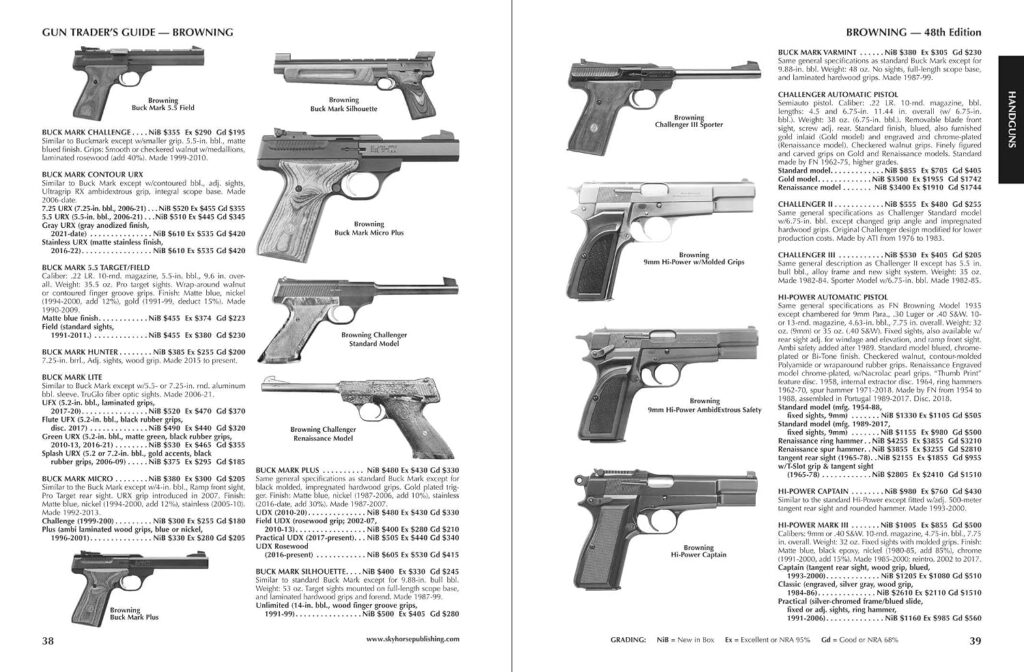
    Printed price guides still fill a useful role despite the growth of online auction archives and sales databases. They give collectors a broad reference point without requiring searches across numerous individual sources. They can also help collectors identify models and establish a starting point for further research.

    No printed guide can capture every shift in the market, however.

    gun trader pages

    Scarcity, configuration, originality, condition, provenance, and regional demand can push a specific firearm above or below a published value. Recent auction results may also reveal market movement that occurred after a book went to press.

    That makes the Guide most useful as a reference rather than a final appraisal. Collectors can establish a baseline, then compare that figure against recent sales of genuinely comparable firearms.

    Sadowski has written about firearms and hunting for nearly 15 years. He has authored several firearms books and edited others. His magazine work has appeared in publications including Combat Handguns, Gun Tests, SHOT Business, and Personal and Home Defense.

    For collectors who still prefer a physical reference shelf, the annual release offers an updated snapshot of the broader market. A digital version is also available. More importantly, it provides a starting point for the research that should follow any value printed on the page.