Author: Logan Metesh

  • New Whitworth Rifle Book Draws on Database of 750 Known Examples

    New Whitworth Rifle Book Draws on Database of 750 Known Examples

    A new firearms reference book takes an unusually deep look at one of the 19th century’s most important rifle designs.

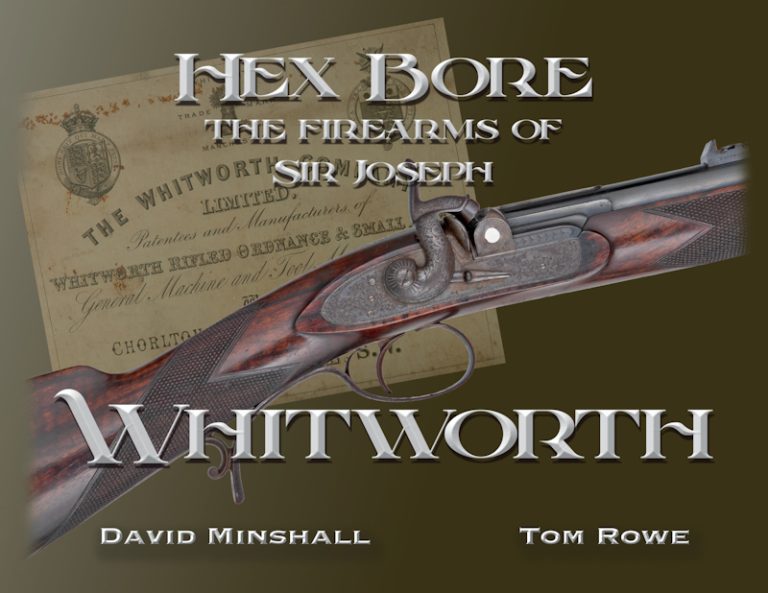
    Research Press in the UK has released Hex Bore: The Firearms of Sir Joseph Whitworth by David Minshall and Tom Rowe.

    The 380-page hardcover traces the development of Whitworth’s distinctive hexagonally bored muzzle-loading rifles. More importantly for collectors, the authors built their study around a database of 750 known examples.

    That gives the book a strong foundation in surviving firearms rather than historical documents alone.

    Joseph Whitworth approached rifle design through precision engineering and systematic experimentation. His work demonstrated the accuracy possible from carefully manufactured rifles firing elongated projectiles.

    The results influenced rifle development far beyond Whitworth’s own production.

    The British military extensively tested the Whitworth rifle but never adopted it as a standard service arm. Civilian target shooters proved more receptive.

    Queen Victoria famously fired a Whitworth rifle when she opened the National Rifle Association’s inaugural annual meeting at Wimbledon in 1860.

    The rifle soon developed a reputation among serious long-range competitors.

    Minshall and Rowe follow that development across several distinct firearm types. The book examines military rifles, military target rifles, match rifles, sporting rifles, double rifles, and related variations. It also explores firearms made by other gunmakers under license from Whitworth.

    American collectors will likely find the Civil War material particularly interesting. Confederate sharpshooters used Whitworth rifles during the war, creating a reputation that still shapes collector interest today. The authors also examine the rifle’s lesser-known use in New Zealand.

    Accessories receive substantial attention as well.

    The book covers ammunition and equipment associated with the rifles, including the Davidson telescopic sight. Surviving accessories can prove especially important when documenting unusual or high-condition examples.

    Access to private collections allowed the authors to illustrate the study with extensive color photography. That combination of archival research, production analysis, and examination of surviving guns gives the book considerable potential as a collector reference.

    The database of 750 rifles may prove its most useful contribution. Serial numbers and surviving examples can help researchers understand production patterns that factory documents alone may not reveal. They can also help collectors place individual rifles within the larger history of Whitworth production.

    For collectors of British military rifles, Civil War arms, or long-range target rifles, the book fills a very specialized niche. That specialization may also be its greatest strength.

    Research Press currently lists the hardcover at $150. You can order it here.

    The price may seem steep on the surface, but it’s important to remember that other specialized firearms books like these are usually priced similarly – and they’ll cost even more on the secondary market once they go out of print.

  • OGCA Sets November Meeting at Spooky Nook in Hamilton

    OGCA Sets November Meeting at Spooky Nook in Hamilton

    The Ohio Gun Collectors Association will bring its final meeting of 2026 to Hamilton, Ohio, on November 21 and 22.

    The gathering will take place at Spooky Nook at Champion Mill, offering 90,000 square feet of event space for the association’s members and invited guests.

    OGCA meetings are not public gun shows. The organization limits admission to members and their invited guests. That distinction helps preserve the collector-focused atmosphere that has defined the association for decades.

    The November meeting will run from 8:30 a.m. to 5 p.m. Saturday. Sunday hours run from 8:30 a.m. to 2 p.m.

    OGCA regularly fills its meetings with 600 to 700 tables of firearms and related material. Thousands of collectors attend its larger gatherings throughout the year.

    The association traces its history to 1937. Since then, OGCA has grown into one of the nation’s largest firearms collector organizations. It now reports membership exceeding 15,000.

    The group places a strong emphasis on historical arms and collector education. Members regularly include authors, researchers, advanced collectors, and specialists in individual manufacturers or periods.

    ogca display

    That concentration of knowledge gives the meetings significance beyond buying and selling.

    Collectors can compare firearms, examine variations, discuss provenance, and exchange research in person. Those opportunities become especially valuable when studying rare guns that seldom appear in reference books.

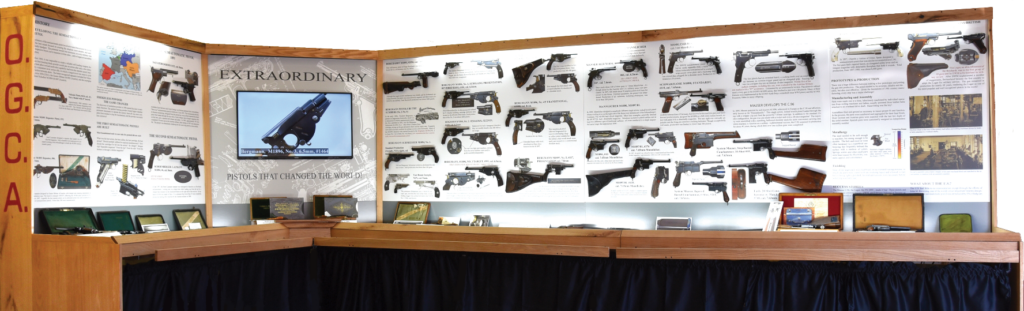
    Displays also play an important role in OGCA culture. Past meetings have featured large educational exhibits built around military firearms, sporting arms, manufacturers, and other specialized collecting subjects. The association also holds an annual competitive display show.

    The November gathering comes after OGCA’s September meeting in Wellington, Ohio. It also marks the group’s final scheduled meeting before its 2027 calendar begins.

    OGCA will return in February 2027 at the Ohio State Expo Center in Columbus. Additional meetings will follow in Wellington and Hamilton.

    For collectors interested in attending the November meeting, membership matters. OGCA does not sell general public admission. Members may bring invited guests under the association’s rules, while prospective members can apply through the organization.

    That closed format remains unusual in an era dominated by public gun shows and online sales. It also helps explain OGCA’s longevity.

    For nearly 90 years, the association has built its meetings around collectors gathering with other collectors. The November meeting will continue that tradition on a scale few collector organizations can match.

  • Smithsonian Conserves Revolutionary War Gunboat Philadelphia and Its Armament

    Smithsonian Conserves Revolutionary War Gunboat Philadelphia and Its Armament

    The Smithsonian is undertaking a major conservation project on one of its most significant Revolutionary War military artifacts.

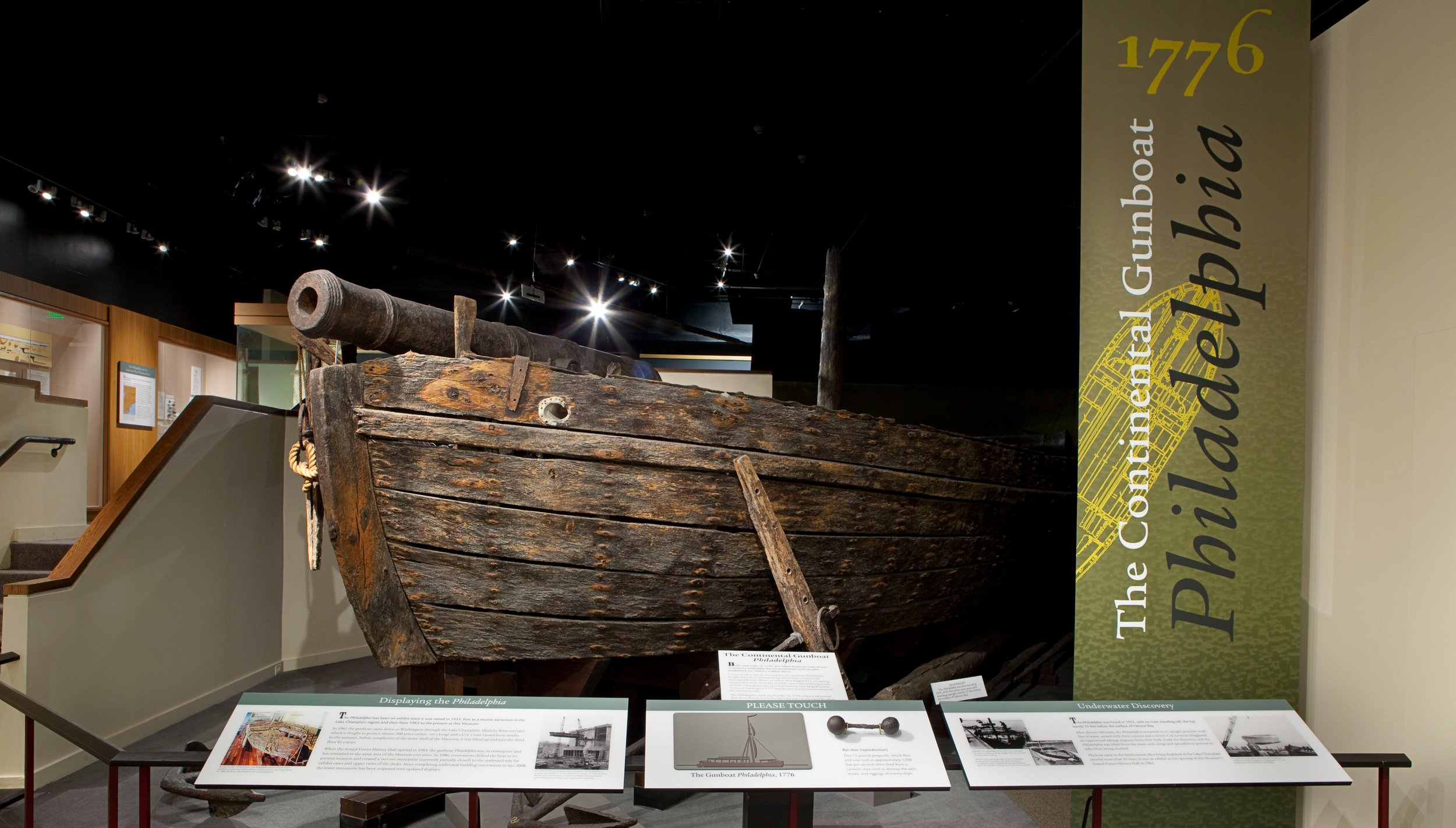
    The gunboat Philadelphia still carries physical evidence from the fighting that sank it on Lake Champlain in 1776. Its surviving cannon, iron fittings, hull, battle damage, and associated artifacts preserve an unusually complete record of an American warship in combat.

    Now the National Museum of American History is working to preserve that record for future generations.

    The Philadelphia fought at the Battle of Valcour Island on October 11, 1776. Brig. Gen. Benedict Arnold commanded the small American fleet against a larger British force advancing south from Canada.

    The Americans ultimately lost the battle. However, their resistance delayed the British advance and bought the Continental cause valuable time.

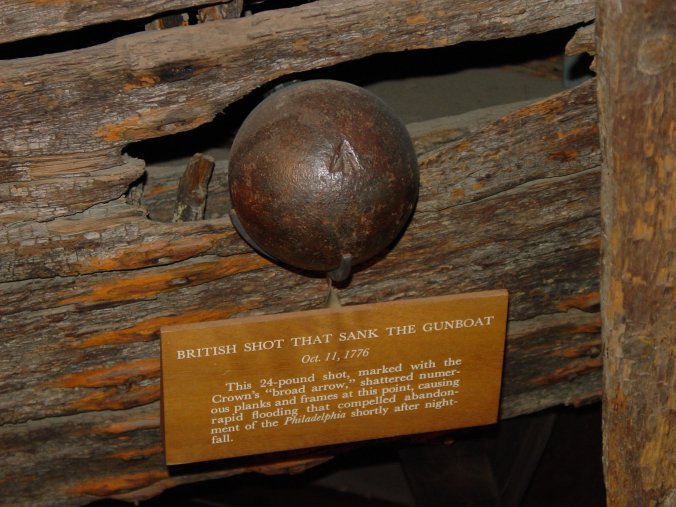
    The Philadelphia did not survive the engagement. A British 24-pound cannonball struck the vessel near its bow. The shot shattered planks and frames and caused rapid flooding. The gunboat sank shortly after nightfall.

    That projectile still survives with the vessel.

    gunboat cannonball

    The Smithsonian also preserves much of the Philadelphia’s original armament and equipment. The collection includes a Swedish-made 12-pound bow gun and a British 3/4-pound swivel gun. Conservation photographs also document a surviving 9-pound cannon aboard the vessel.

    Those guns make the Philadelphia especially important to arms historians. Collectors often encounter historic weapons after their original context has disappeared. A surviving firearm may lack documentation about where it served, who used it, or what happened around it.

    The Philadelphia presents almost the opposite situation. The vessel, its weapons, fittings, battle damage, and the projectile that sank it all remain tied to one documented event. Researchers can study those objects as parts of a complete military system rather than as isolated artifacts.

    The wreck remained underwater for nearly 160 years. Salvage engineer Lorenzo F. Hagglund recovered the Philadelphia from Lake Champlain in 1935. He displayed it around the region for more than two decades before the Smithsonian acquired the vessel.

    The museum eventually placed the gunboat on permanent exhibition. Decades of display created new preservation problems.

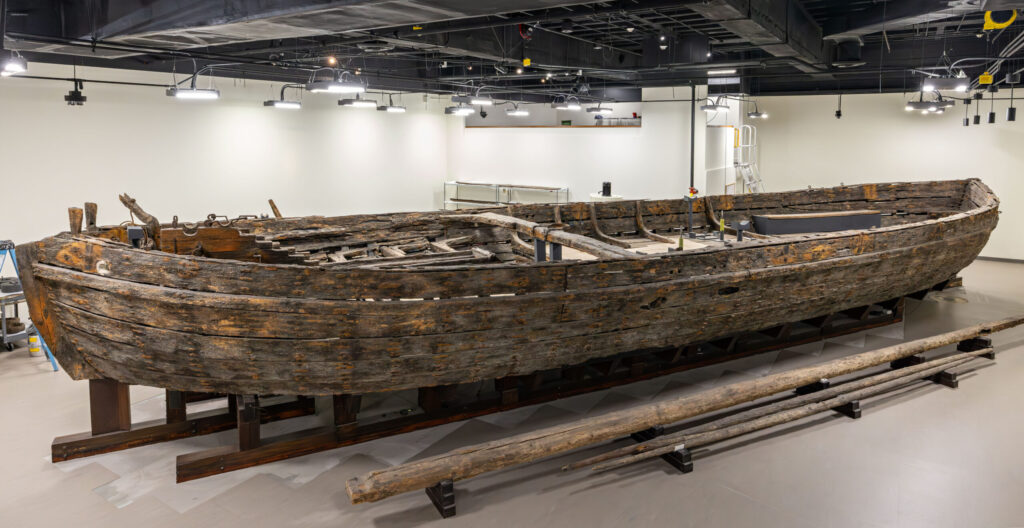
    The vessel’s wooden timbers continued to shrink after their long immersion. Its iron components also began to deteriorate. Conservators now monitor temperature, humidity, vibration, and other environmental factors that could affect the artifact.

    The Smithsonian has partnered with specialists from Texas A&M University’s Nautical Archaeology Program on the project. Their work includes the Philadelphia’s surviving artillery.

    gunboat conservation

    Conservators have removed old protective coatings from cannon, anchors, and other iron fittings. Earlier preservation efforts applied lacquer to slow corrosion. Modern specialists must remove those treatments before applying newer conservation materials.

    That process illustrates an important reality of museum work. A treatment considered appropriate decades ago may eventually create new challenges. Conservators must preserve the original object while also addressing the effects of previous restoration work.

    The project has produced less dramatic discoveries as well. Workers removed more than 150 pounds of sediment and accumulated debris from inside the vessel. They found rodent nests, trash, and coins dropped by museum visitors over the years.

    The museum has also made the conservation process part of the exhibition. Visitors can watch specialists work through viewing windows surrounding the Philadelphia. That gives the public unusual access to a part of museum operations normally hidden behind laboratory doors.

    The timing adds another layer of significance.

    On October 8, the National Museum of American History will mark the 250th anniversary of the Philadelphia’s sinking. Museum staff and Texas A&M specialists will discuss the conservation project and new research surrounding the vessel.

    The anniversary falls just three days before the actual 250th anniversary of the Battle of Valcour Island.

    For firearms collectors, the Philadelphia offers far more than a Revolutionary War anniversary story. It demonstrates the value of preserving arms with their original context intact. It also shows how museums confront corrosion, aging wood, earlier conservation treatments, and long-term environmental damage.

    A cannon standing alone can tell researchers a great deal, but a cannon preserved with its ship, associated equipment, battle damage, and the enemy projectile that sank it can tell them much more.

    That makes the Philadelphia an unusually complete surviving Revolutionary War weapons system.

    The Smithsonian is now working to make sure it remains that way for another generation.

  • MG42, Tommy Guns and M16 Predecessor Lead Poulin’s November Auction

    MG42, Tommy Guns and M16 Predecessor Lead Poulin’s November Auction

    Poulin’s Antiques & Auctions will offer nearly 2,000 lots during its November 6–8 Premier Firearms & Militaria Auction in Fairfield, Maine.

    The three-day sale spans antique arms, military firearms, sporting guns, edged weapons, ammunition, and accessories. Its first session places particular emphasis on transferable machine guns and unusual military arms.

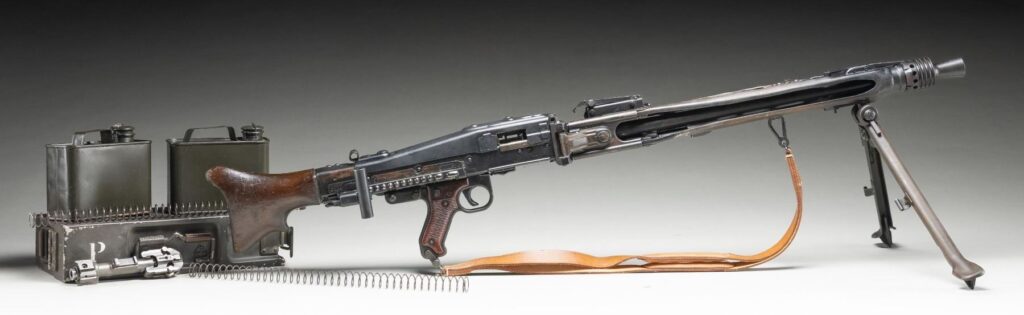
    MG42

    A Gustloff-Werke MG42 sits near the front of the catalog. The World War II German machine gun carries a $50,000–$75,000 estimate. Poulin catalogs the 8mm Mauser gun with accessories and identifies it as a Curio & Relic example.

    Collectors will also find several Thompson submachine guns.

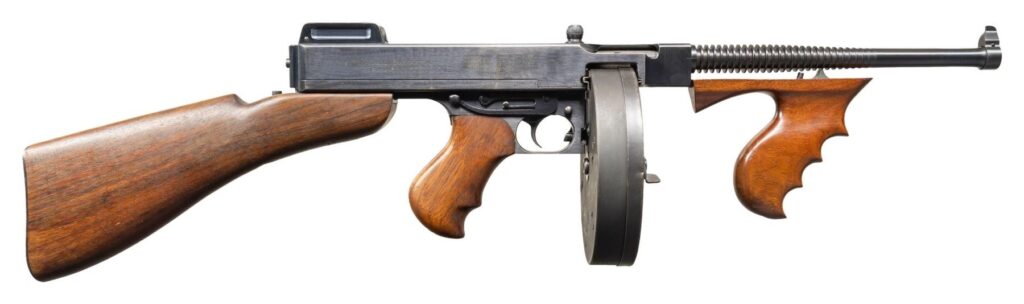
    tommy gun

    One of the most interesting is a Colt Model 1921AC Thompson, serial number 6662. The gun carries markings for the Salt Lake City Corporation and comes with a case and accessories. Poulin estimates it at $35,000–$50,000.

    Several later Thompsons follow it in the catalog. They include Savage M1 examples and Auto-Ordnance Model 1928 and M1A1 guns. Estimates generally range from the low $20,000s into the mid-$30,000s.

    Another group should interest collectors of Colt and early AR-platform development.

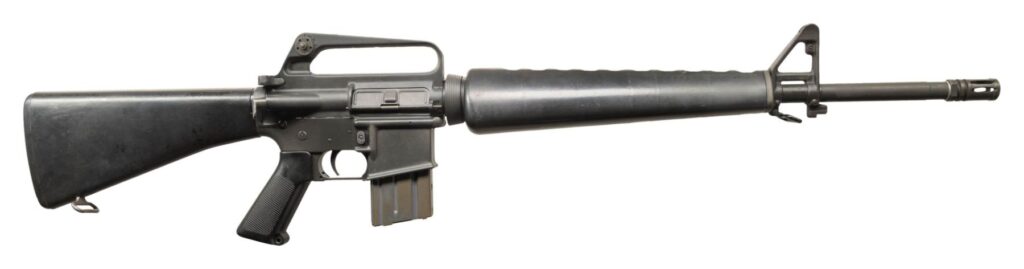
    M16

    Poulin will sell an unusual Colt transitional developmental light machine gun from the collection of former Colt executive John Keosayian. The auction house describes the .223-caliber firearm as a predecessor to the M16. It carries serial number XM20982 and a $50,000–$65,000 estimate.

    A second Colt light machine gun from the Keosayian collection carries a higher estimate. Poulin lists that AR-15/M16-pattern gun at $50,000–$70,000.

    The catalog also includes a transferable SACO-Lowell Maremont M60. Poulin estimates the 7.62 NATO machine gun at $65,000–$80,000.

    Collectors looking beyond automatic arms will find a large Winchester grouping on the second day.

    The November 7 session opens with an assortment of Winchester Model 70 rifles. Early lots include Super Grades, pre-64 rifles, African models, and several less-common chamberings.

    One pre-64 Model 70 Featherweight stands out in .358 Winchester. Poulin notes that Winchester produced approximately 2,000 examples during 1955 and 1956. The auction house estimates the rifle at $3,000–$4,000.

    Other Model 70 offerings include rifles in .375 H&H Magnum, .300 H&H Magnum, .257 Roberts, .220 Swift, and .22 Hornet. The catalog also includes Model 52 target and sporting rifles.

    Poulin has scheduled previews for November 4 and 5. Each auction session begins at 10 a.m. Eastern. The company will accept live, absentee, telephone, and online bids.

    The breadth of the catalog gives collectors several markets to watch. The Class III material may generate the largest prices. The developmental Colts offer a different kind of rarity. Meanwhile, the Winchester grouping gives traditional sporting-arms collectors plenty to study.

    For collectors tracking values, the sale should provide useful results across several very different categories.

  • Postwar Walther P38 Surplus Pistols Return to Market

    Postwar Walther P38 Surplus Pistols Return to Market

    A fresh batch of German-made Walther P38 pistols has surfaced on the U.S. surplus market.

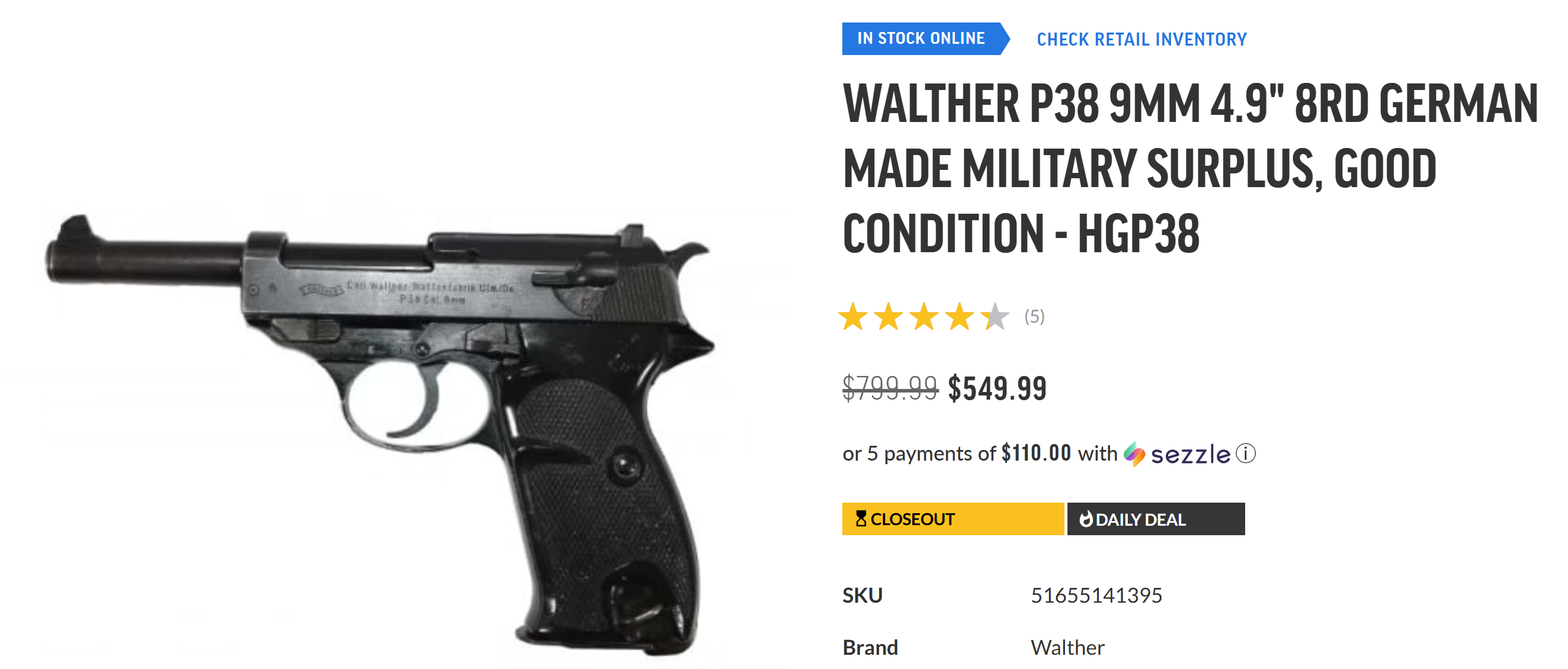
    Palmetto State Armory currently lists the postwar 9mm pistols for $549.99. The retailer marks them as a closeout and daily deal. They remain listed as in stock online at the time of this posting.

    Get yours by clicking this link.

    The pistols qualify as Curio & Relic firearms and carry an importer grade of NRA surplus “good” condition. PSA says many examples may actually reach very-good condition.

    Collectors should note one important distinction:

    These are not World War II-production steel-frame P38s.

    Walther resumed P38-family production in West Germany after the war. The company began supplying the newly created Bundeswehr in 1957. Unlike their wartime predecessors, the new pistols used lightweight aluminum frames. Walther later used the P1 designation for the German military version.

    PSA says most pistols in this batch date from the early 1960s. Some examples reportedly carry dates from the early 1970s. The retailer describes them as aluminum-frame P38s produced at Walther’s Ulm facility.

    That date range could create considerable variation within the shipment.

    Walther continued modifying the postwar design during its service life. Later aluminum frames received additional reinforcement, most visibly through a transverse hexagonal steel bolt above the trigger guard beginning in the mid-1970s. Earlier examples lack that feature.

    That means collectors should not assume every pistol in the shipment represents exactly the same variation.

    PSA lists each pistol with a 4.9-inch barrel and one eight-round magazine. The guns retain the familiar 9mm chambering and double-action/single-action operating system associated with the P38 family.

    The retailer tells buyers to expect normal finish wear and light scratches. However, PSA says it has not observed rust among the examples examined. It also describes the bores as generally good.

    The P38 occupies an important place in military handgun development.

    Germany adopted the original design before World War II as a replacement for the Luger P08. Walther gave it a double-action/single-action trigger system, an eight-round magazine, and a locking-block action. Mauser and Spreewerk eventually joined Walther in wartime production. More than a million examples were produced during the war.

    West Germany then gave the basic design a second military career.

    That history makes these newly available pistols interesting even without a wartime connection. They represent the Cold War continuation of one of Germany’s most important military handgun designs.

    Their appearance also highlights a larger collecting trend.

    Large quantities of inexpensive military surplus have largely disappeared from the American market. When sizeable groups of C&R-eligible firearms surface today, they increasingly qualify as collector news in their own right.

    At $549.99, these postwar Walthers offer a useful snapshot of that changing surplus market.

    Get yours by clicking this link.

  • Beretta Moves to Raise Its Stake in Ruger to 25 Percent

    Beretta Moves to Raise Its Stake in Ruger to 25 Percent

    Beretta Holding is moving to significantly increase its investment in Sturm, Ruger & Company.

    The Italian firearms group launched a cash tender offer on September 17 for up to 2,400,184 Ruger shares. Beretta is offering $44.80 per share. If fully subscribed, the deal would raise Beretta’s ownership from about 9.9 percent to approximately 25 percent.

    The offer remains open until October 15, unless Beretta extends it.

    This is not an acquisition of Ruger. The Connecticut-based manufacturer will remain an independent, publicly traded company after the transaction.

    Beretta already owned 1,587,000 Ruger shares when it launched the offer. The additional purchase could push its total investment to roughly one-quarter of the company.

    The move follows a strategic cooperation agreement announced in May. Under that agreement, Ruger agreed to allow Beretta to increase its ownership to as much as 25 percent. The original deal also gave Beretta the right to nominate up to two independent directors to Ruger’s board.

    Federal regulators later placed limits on that board arrangement. The Federal Trade Commission said the proposed structure raised concerns about interlocking directorates between competing firearms manufacturers. The FTC accepted a proposed consent order designed to keep the two companies operationally independent.

    Under that order, Beretta may nominate Ruger directors only if those nominees remain independent of Beretta. The company must also give the FTC advance notice before making those nominations. The FTC did not block the stock purchase itself.

    Ruger announced on September 16 that the regulatory conditions surrounding the cooperation agreement had been satisfied. Its board then terminated a shareholder rights plan that had restricted Beretta’s ability to increase its stake.

    Beretta launched the tender offer the following day.

    The $44.80 offer represented about a 21 percent premium over Ruger’s closing share price on September 16. Beretta said the investment forms part of its strategy to strengthen its position in the American firearms market.

    Beretta Holding already controls a broad portfolio of firearms companies. Its brands include Beretta, Benelli, Franchi, Sako, Tikka, Chapuis, Holland & Holland, and several others. Ruger would remain outside that corporate structure even if Beretta reaches the 25 percent threshold.

    That distinction matters. Collectors should not interpret the investment as a Beretta takeover of Ruger or Marlin. Nothing in the tender offer transfers control of Ruger’s brands, factories, intellectual property, or product lines to Beretta.

    It does, however, create a much closer financial relationship between two of the firearms industry’s largest companies. Ruger also owns Marlin Firearms, which it acquired from Remington’s bankruptcy assets in 2020. That gives the situation added interest for collectors who follow historic American brands.

    Both companies also maintain strong positions in traditional sporting firearms. Beretta traces its documented history to 1526. Ruger began operations in 1949 and grew into one of America’s largest firearms manufacturers.

    The tender offer therefore links two companies with very different histories and ownership structures.

    For now, the most important date is October 15. After the offer closes, investors and collectors will have a clearer picture of how much Ruger stock Beretta ultimately acquired. That result will determine how close the Italian group comes to its 25 percent ceiling.

  • Springfield Armory’s ‘Muskets to Motors’ Traces 250 Years of American Innovation

    Springfield Armory’s ‘Muskets to Motors’ Traces 250 Years of American Innovation

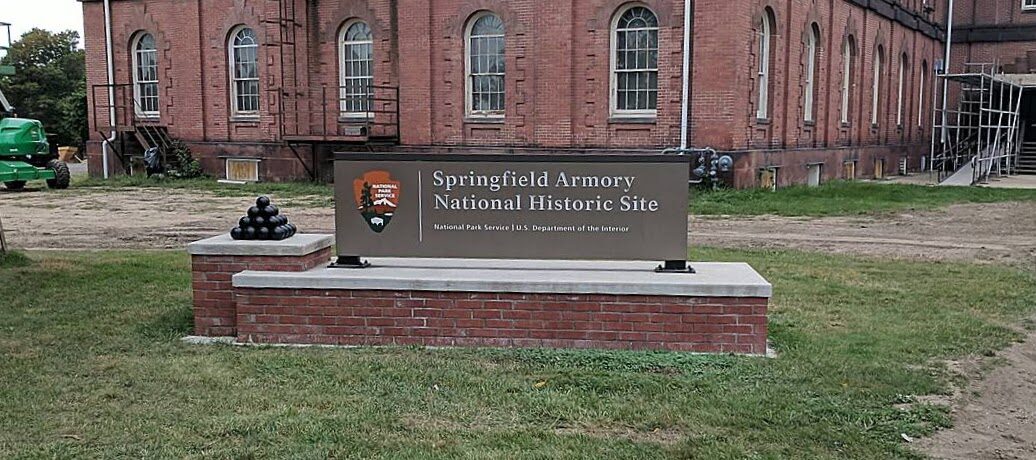
    Springfield Armory National Historic Site will look beyond firearms later this month to tell a broader story of American manufacturing.

    The park will host “From Muskets to Motors: 250 Years of Innovation” on October 17 in Springfield, Massachusetts. The free car and motorcycle show runs from 11 a.m. to 2 p.m.

    The Friends of the Springfield Armory National Historic Site will partner with the National Park Service for the event. Organizers will display cars and motorcycles from several eras of American transportation. The cutoff date carries particular significance. All participating vehicles will date to 1968 or earlier, the year the U.S. Army closed Springfield Armory.

    That connection gives the event its “Muskets to Motors” theme. Springfield Armory spent nearly two centuries at the center of American military-arms development. George Washington supported Springfield as a Continental Army arsenal during the Revolutionary War. The federal government began manufacturing muskets there in 1794.

    The Armory eventually influenced much more than firearm design. Its workers and engineers helped develop manufacturing methods built around machinery, standardization, and interchangeable parts. Those developments influenced American industrial production far beyond the gun trade.

    Visitors can examine vehicles that represent different periods of transportation history. Organizers will also offer food and information vendors during the show. Spectator admission is free.

    The museum will remain part of the experience. Springfield Armory National Historic Site preserves one of the world’s major collections of military small arms. The collection began as a technical reference resource for the Armory’s own workers and engineers. Today, the National Park Service preserves firearms, archival material, artwork, archaeological collections, and other objects connected with the site.

    That makes the location especially appropriate for an event devoted to technological change. Visitors can move from machines designed to manufacture military arms to later machines that transformed American transportation. Both industries relied heavily on precision manufacturing, standardized components, and mass production.

    muskets to motors

    The event also fits into the site’s broader America 250 programming. Springfield Armory currently hosts a special exhibition on its Revolutionary War origins. The exhibit examines why Washington and Henry Knox selected Springfield for the Continental Army’s arsenal. It includes historic French muskets and a French cannon.

    Together, the exhibition and vehicle show bookend a long period of American industrial development.

    Springfield began as a strategic military site during the Revolution. It later became one of the country’s most important centers for firearms design and manufacturing. The Army finally closed the facility in 1968.

    The National Park Service reopened the historic armory as a national historic site in 1978. The museum now occupies the former Main Arsenal building.

    “From Muskets to Motors” takes place Saturday, October 17, from 11 a.m. to 2 p.m. Admission is free. Organizers have scheduled October 24 as the rain date.

  • Shooter’s Bible Marks 118 Editions With New 2026 Release

    Shooter’s Bible Marks 118 Editions With New 2026 Release

    One of the firearms world’s longest-running reference books will return with a new edition later this month.

    Skyhorse Publishing will release the 118th edition of Shooter’s Bible on October 27. The new volume runs 608 pages and carries a $29.99 list price.

    The annual reference has appeared for more than 80 years. During that time, Shooter’s Bible has sold more than seven million copies. The publisher describes it as a reference guide to both current-production firearms and guns that remain on the commercial market.

    The 118th edition continues that approach. It includes specifications and information on firearms from manufacturers around the world. The book also covers ammunition, optics, and accessories.

    That scope separates Shooter’s Bible from a dedicated collector-price guide. Rather than concentrating primarily on values, the book serves as a broad snapshot of the firearms marketplace. Collectors can use older editions to track changes in manufacturers, models, specifications, and product lines over time.

    That gives the series value beyond its original purpose. A current edition can help identify a firearm or compare factory specifications. An edition from decades earlier can reveal what companies offered when a particular gun was new.

    For researchers, that historical trail can become especially useful. Catalog descriptions change. Companies disappear. Model names evolve. Specifications sometimes shift during a production run. Annual reference books can preserve those changes in ways that modern manufacturer websites do not.

    The new edition comes from editor Jay Cassell, a longtime outdoor writer and publishing veteran. His work has appeared in Field & Stream, Outdoor Life, Sports Afield, and other publications.

    Collectors should not expect Shooter’s Bible to replace specialized reference works. A Winchester researcher will still need Winchester books. A Colt collector will still need factory records and model-specific sources.

    But broad references serve another purpose. They help researchers establish context before moving into the details. They also document what the firearms industry looked like at a particular moment.

    That may prove particularly valuable decades from now. Today’s ordinary catalog entry can become tomorrow’s production-history evidence.

    After 118 editions, Shooter’s Bible has accumulated plenty of that evidence already.

  • WACA Releases Fall 2026 Issue of The Winchester Collector

    WACA Releases Fall 2026 Issue of The Winchester Collector

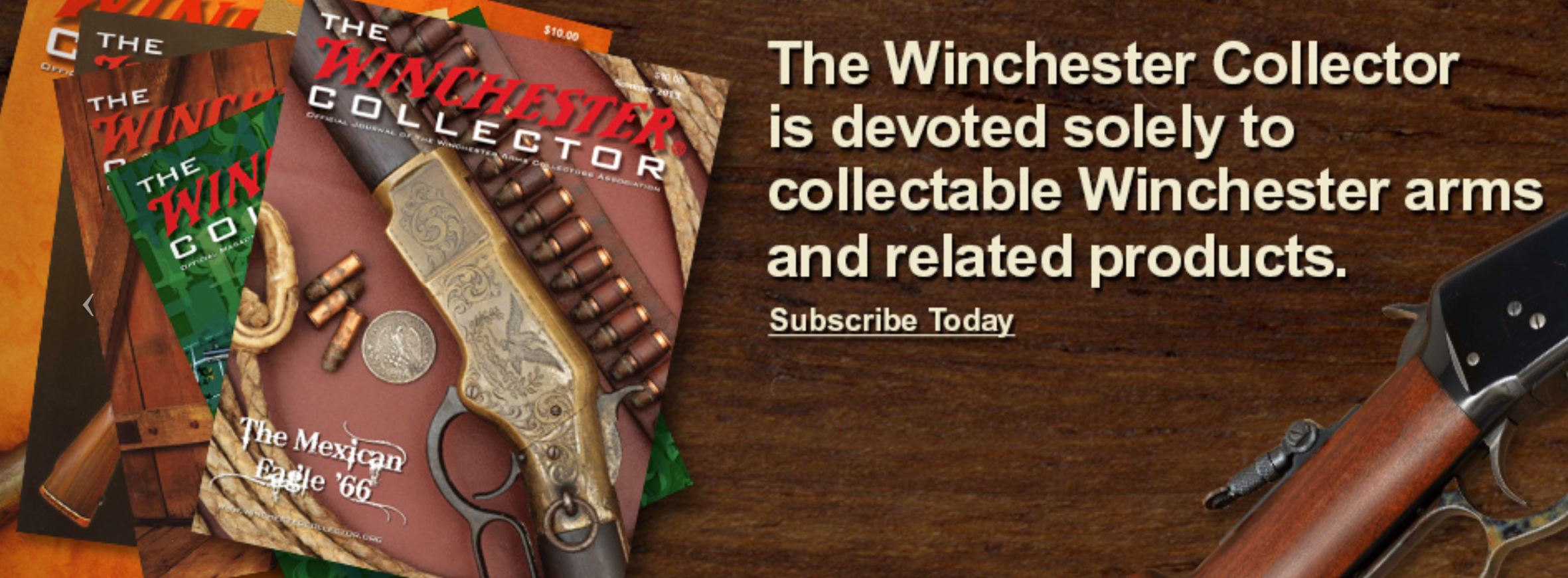
    The Winchester Arms Collectors Association has released the Fall 2026 issue of The Winchester Collector.

    The quarterly magazine focuses on Winchester firearms, company history, related products, and collector research. WACA publishes four issues each year for its worldwide membership of more than 3,000 collectors.

    The new issue contains four feature articles covering subjects well beyond firearm identification and values.

    Jennifer and Gary Gole examine Winchester Sportsman’s Headquarters clothing. Their article explores another side of the Winchester brand that collectors sometimes overlook. Winchester sold much more than firearms and ammunition during its long history.

    Bert Hartman turns to the Winchester Model 55 for another feature. Winchester introduced the lever-action Model 55 during the 1920s as a variation on the Model 1894 platform. Today, collectors often encounter far fewer Model 55s than their much more common Model 94 relatives.

    John Dunlap contributes “The Deerstalker’s Heirloom.” Pete Hynard rounds out the issue with an article on rifling and rate of twist.

    That range of subjects reflects one of the strongest functions of specialized collector organizations.

    waca fall 26

    Major reference books can provide broad histories and identification information. Collector associations often go much deeper. Their members study production variations, markings, accessories, advertising, factory records, and obscure models that may never justify a standalone book. WACA has followed that model for decades.

    The magazine also gives researchers a continuing archive of specialized Winchester information.

    Earlier 2026 issues covered subjects ranging from Model 1873 rimfire rifles to pre-1964 Model 70 “Gopher Specials.” The Summer issue included research on the Model 75, Winchester recognition pins, Model 1300 manufacture dates, and the Model 1886 in .33 WCF.

    WACA makes selected articles available publicly through its website. Members receive access to the complete current issue and the organization’s archive. The association also sells individual hard copies of the Fall 2026 issue for $7 to members and $10 to non-members.

    The organization’s work extends beyond publishing. WACA sponsors collector shows, educational displays, research resources, and an online forum. Its annual Cody Show draws hundreds of trade and display tables. The 2026 show sold out before opening in July.

    For Winchester collectors, publications like The Winchester Collector serve another important purpose. They preserve research that might otherwise remain in private notes, collections, or conversations between longtime collectors.

    That accumulated knowledge becomes more valuable as original records disappear and experienced collectors leave the hobby.

    The Fall 2026 issue continues that work with subjects ranging from lever actions to clothing. It also demonstrates how much Winchester history exists beyond the guns themselves.

  • Savannah Museum Puts 17 Revolutionary War Cannons on Display

    Savannah Museum Puts 17 Revolutionary War Cannons on Display

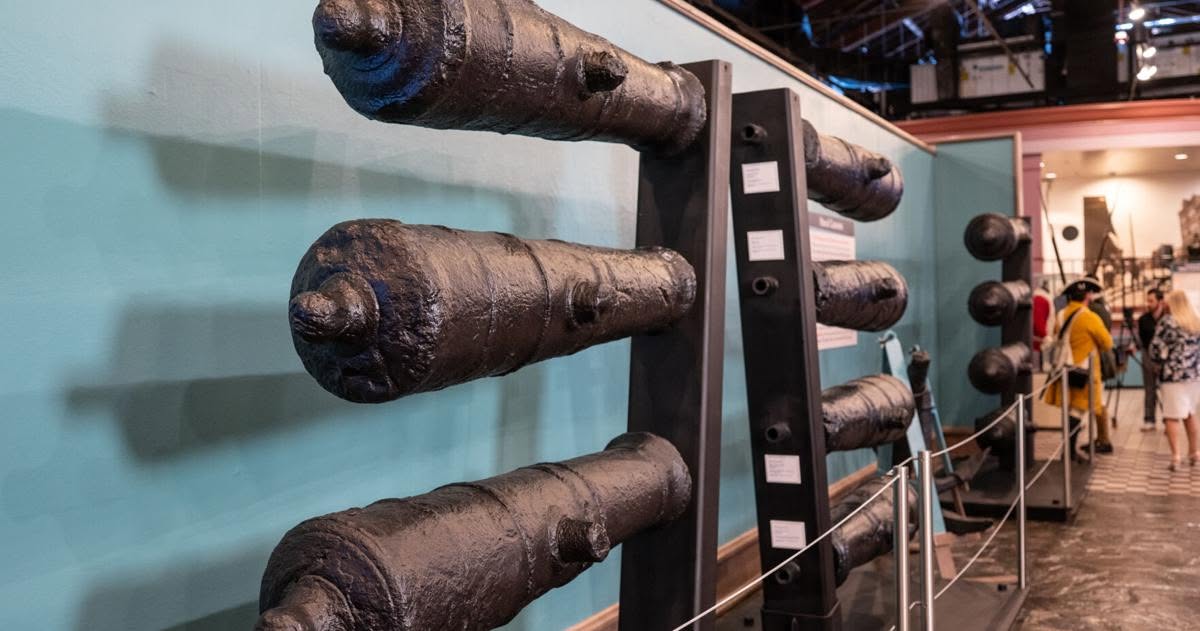
    Seventeen Revolutionary War-era cannons have returned to the surface in Savannah after spending nearly 250 years beneath the Savannah River.

    The Savannah History Museum placed the conserved guns on public display this summer in its new exhibition, Loyalists & Liberty: Savannah in the American Revolution. The exhibit opened as part of Savannah’s America 250 commemorations.

    Workers discovered the first cannon during dredging for the Savannah Harbor Expansion Project in 2021. Another dredge pass quickly uncovered two more. The U.S. Army Corps of Engineers then stopped work and brought archaeologists and divers into the area. The investigation eventually recovered complete and partial cannons along with other maritime artifacts.

    Researchers believe the weapons may have come from the HMS Savannah or HMS Venus. British forces scuttled ships in the river in 1779. They hoped to prevent French naval forces from reaching Savannah during the Revolutionary War.

    The September and October 1779 siege campaign ended with a disastrous Franco-American assault against British defenses. More than 800 men became casualties during the fighting around Savannah. The battle remains one of the Revolution’s bloodiest engagements.

    Conservators faced a different battle after recovering the artillery.

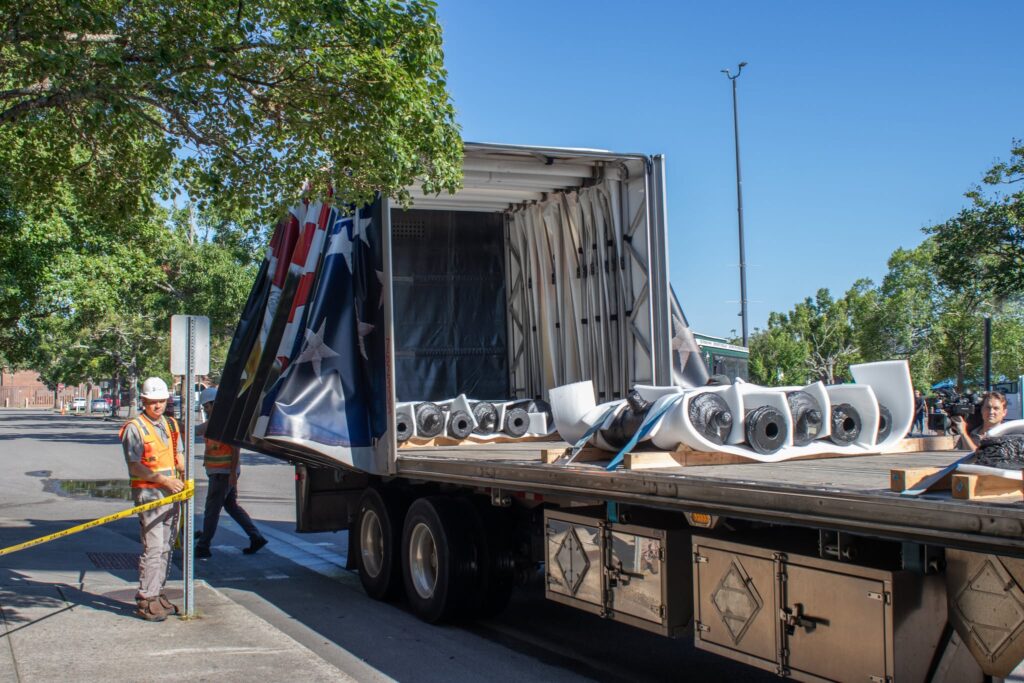
    Centuries underwater had saturated the iron with salts. Without extensive treatment, exposure to air could have caused rapid deterioration. Texas A&M University specialists conserved 17 of the guns before returning them to Georgia.

    cannons on truck

    The museum deliberately left two additional cannons in their recovered condition. Visitors can now compare conserved artifacts with guns that still show the effects of centuries underwater.

    The exhibition also includes three anchor fragments and other objects recovered from the river. The complete display covers approximately 3,000 square feet.

    Some of the cannons retained remarkable evidence from their final moments of use. Investigators found original wooden plugs in several pieces. Some also contained gunpowder and cannonballs when recovered. Those surviving materials give researchers unusually direct evidence about how the guns were stored before they entered the river.

    The precise identities of every cannon remain unsettled. Researchers have identified some as British-made pieces. Others follow French patterns that investigators have not yet tied to a specific vessel or military unit. That uncertainty leaves room for continued study.

    For collectors and arms historians, the discovery represents far more than a cache of old artillery.

    loyalists and liberty

    The guns survived together in an archaeological context connected to a specific Revolutionary War campaign. That context gives researchers something collectors rarely receive: physical objects, location, historical documentation, and associated artifacts preserved as parts of the same story.

    The Savannah History Museum currently displays the cannons as part of Loyalists & Liberty. The museum operates the exhibition seven days a week during normal hours.