Seventeen Revolutionary War-era cannons have returned to the surface in Savannah after spending nearly 250 years beneath the Savannah River.
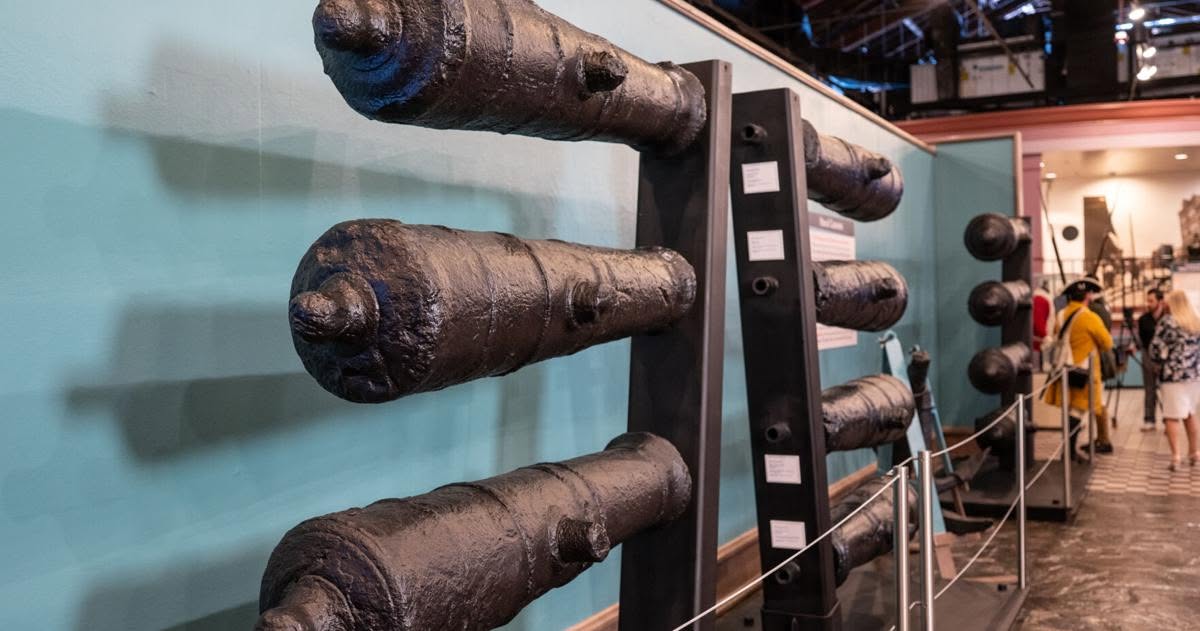
The Savannah History Museum placed the conserved guns on public display this summer in its new exhibition, Loyalists & Liberty: Savannah in the American Revolution. The exhibit opened as part of Savannah’s America 250 commemorations.
Workers discovered the first cannon during dredging for the Savannah Harbor Expansion Project in 2021. Another dredge pass quickly uncovered two more. The U.S. Army Corps of Engineers then stopped work and brought archaeologists and divers into the area. The investigation eventually recovered complete and partial cannons along with other maritime artifacts.
Researchers believe the weapons may have come from the HMS Savannah or HMS Venus. British forces scuttled ships in the river in 1779. They hoped to prevent French naval forces from reaching Savannah during the Revolutionary War.
The September and October 1779 siege campaign ended with a disastrous Franco-American assault against British defenses. More than 800 men became casualties during the fighting around Savannah. The battle remains one of the Revolution’s bloodiest engagements.
Conservators faced a different battle after recovering the artillery.
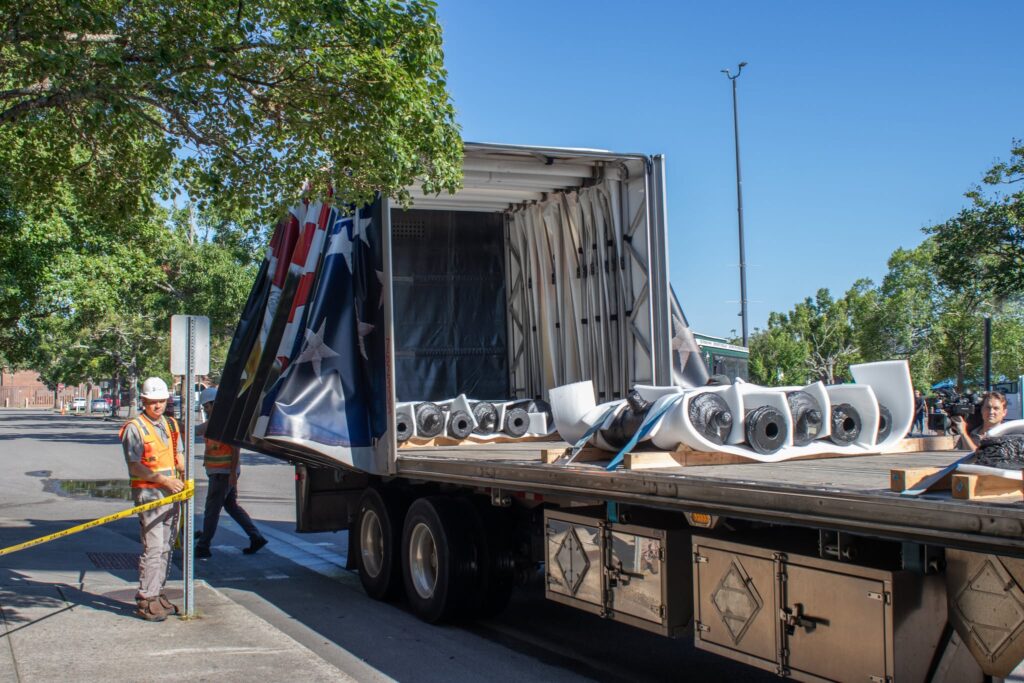
Centuries underwater had saturated the iron with salts. Without extensive treatment, exposure to air could have caused rapid deterioration. Texas A&M University specialists conserved 17 of the guns before returning them to Georgia.
The museum deliberately left two additional cannons in their recovered condition. Visitors can now compare conserved artifacts with guns that still show the effects of centuries underwater.
The exhibition also includes three anchor fragments and other objects recovered from the river. The complete display covers approximately 3,000 square feet.
Some of the cannons retained remarkable evidence from their final moments of use. Investigators found original wooden plugs in several pieces. Some also contained gunpowder and cannonballs when recovered. Those surviving materials give researchers unusually direct evidence about how the guns were stored before they entered the river.
The precise identities of every cannon remain unsettled. Researchers have identified some as British-made pieces. Others follow French patterns that investigators have not yet tied to a specific vessel or military unit. That uncertainty leaves room for continued study.
For collectors and arms historians, the discovery represents far more than a cache of old artillery.
The guns survived together in an archaeological context connected to a specific Revolutionary War campaign. That context gives researchers something collectors rarely receive: physical objects, location, historical documentation, and associated artifacts preserved as parts of the same story.
The Savannah History Museum currently displays the cannons as part of Loyalists & Liberty. The museum operates the exhibition seven days a week during normal hours.