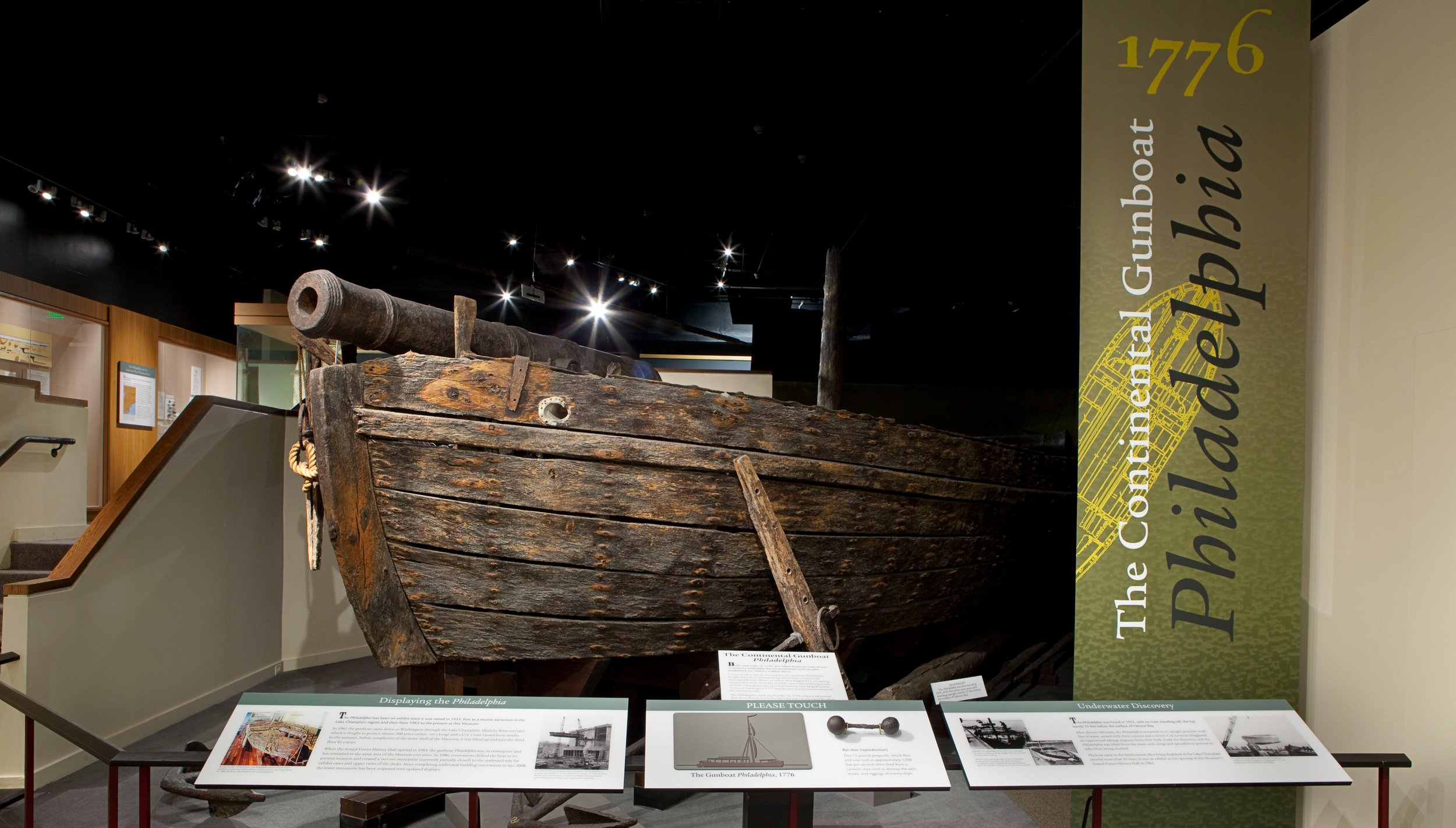
The Smithsonian is undertaking a major conservation project on one of its most significant Revolutionary War military artifacts.
The gunboat Philadelphia still carries physical evidence from the fighting that sank it on Lake Champlain in 1776. Its surviving cannon, iron fittings, hull, battle damage, and associated artifacts preserve an unusually complete record of an American warship in combat.
Now the National Museum of American History is working to preserve that record for future generations.
The Philadelphia fought at the Battle of Valcour Island on October 11, 1776. Brig. Gen. Benedict Arnold commanded the small American fleet against a larger British force advancing south from Canada.
The Americans ultimately lost the battle. However, their resistance delayed the British advance and bought the Continental cause valuable time.
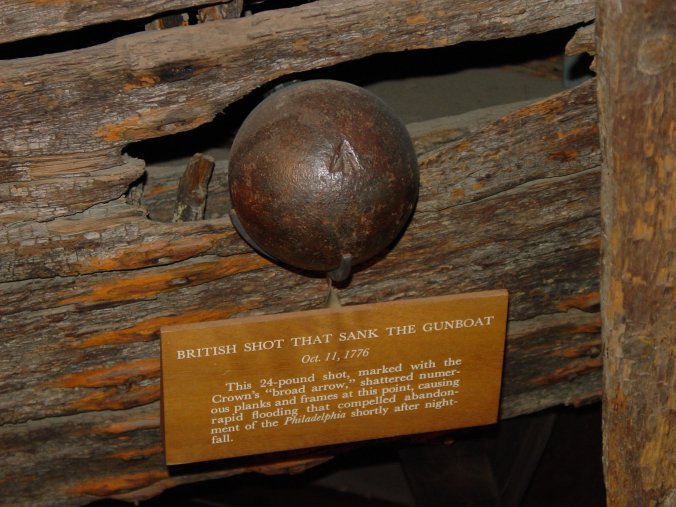
The Philadelphia did not survive the engagement. A British 24-pound cannonball struck the vessel near its bow. The shot shattered planks and frames and caused rapid flooding. The gunboat sank shortly after nightfall.
That projectile still survives with the vessel.
The Smithsonian also preserves much of the Philadelphia’s original armament and equipment. The collection includes a Swedish-made 12-pound bow gun and a British 3/4-pound swivel gun. Conservation photographs also document a surviving 9-pound cannon aboard the vessel.
Those guns make the Philadelphia especially important to arms historians. Collectors often encounter historic weapons after their original context has disappeared. A surviving firearm may lack documentation about where it served, who used it, or what happened around it.
The Philadelphia presents almost the opposite situation. The vessel, its weapons, fittings, battle damage, and the projectile that sank it all remain tied to one documented event. Researchers can study those objects as parts of a complete military system rather than as isolated artifacts.
The wreck remained underwater for nearly 160 years. Salvage engineer Lorenzo F. Hagglund recovered the Philadelphia from Lake Champlain in 1935. He displayed it around the region for more than two decades before the Smithsonian acquired the vessel.
The museum eventually placed the gunboat on permanent exhibition. Decades of display created new preservation problems.
The vessel’s wooden timbers continued to shrink after their long immersion. Its iron components also began to deteriorate. Conservators now monitor temperature, humidity, vibration, and other environmental factors that could affect the artifact.
The Smithsonian has partnered with specialists from Texas A&M University’s Nautical Archaeology Program on the project. Their work includes the Philadelphia’s surviving artillery.
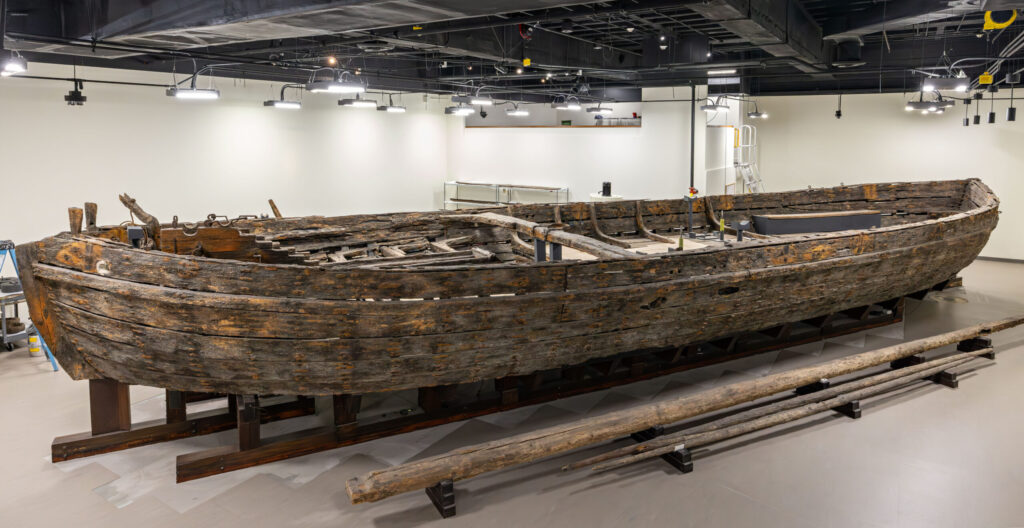
Conservators have removed old protective coatings from cannon, anchors, and other iron fittings. Earlier preservation efforts applied lacquer to slow corrosion. Modern specialists must remove those treatments before applying newer conservation materials.
That process illustrates an important reality of museum work. A treatment considered appropriate decades ago may eventually create new challenges. Conservators must preserve the original object while also addressing the effects of previous restoration work.
The project has produced less dramatic discoveries as well. Workers removed more than 150 pounds of sediment and accumulated debris from inside the vessel. They found rodent nests, trash, and coins dropped by museum visitors over the years.
The museum has also made the conservation process part of the exhibition. Visitors can watch specialists work through viewing windows surrounding the Philadelphia. That gives the public unusual access to a part of museum operations normally hidden behind laboratory doors.
The timing adds another layer of significance.
On October 8, the National Museum of American History will mark the 250th anniversary of the Philadelphia’s sinking. Museum staff and Texas A&M specialists will discuss the conservation project and new research surrounding the vessel.
The anniversary falls just three days before the actual 250th anniversary of the Battle of Valcour Island.
For firearms collectors, the Philadelphia offers far more than a Revolutionary War anniversary story. It demonstrates the value of preserving arms with their original context intact. It also shows how museums confront corrosion, aging wood, earlier conservation treatments, and long-term environmental damage.
A cannon standing alone can tell researchers a great deal, but a cannon preserved with its ship, associated equipment, battle damage, and the enemy projectile that sank it can tell them much more.
That makes the Philadelphia an unusually complete surviving Revolutionary War weapons system.
The Smithsonian is now working to make sure it remains that way for another generation.