Tag: Gunmakers

  • New Research Challenges Serial Number Identification on Rare British Firearms

    New Research Challenges Serial Number Identification on Rare British Firearms

    An examination of Isaac Riviere’s patented firearms reveals why collectors should reconsider familiar markings and production dates.

    Numbers stamped on antique firearms can reveal important information about their manufacture. However, new research suggests that markings on certain British firearms have frequently been misidentified as serial numbers.

    In February 2026, researcher Matthew Schneiderman published a study of firearms manufactured by London gunmaker Isaac Riviere. The report, available through the American Society of Arms Collectors (ASAC), examines Riviere’s unusual numbering practices.

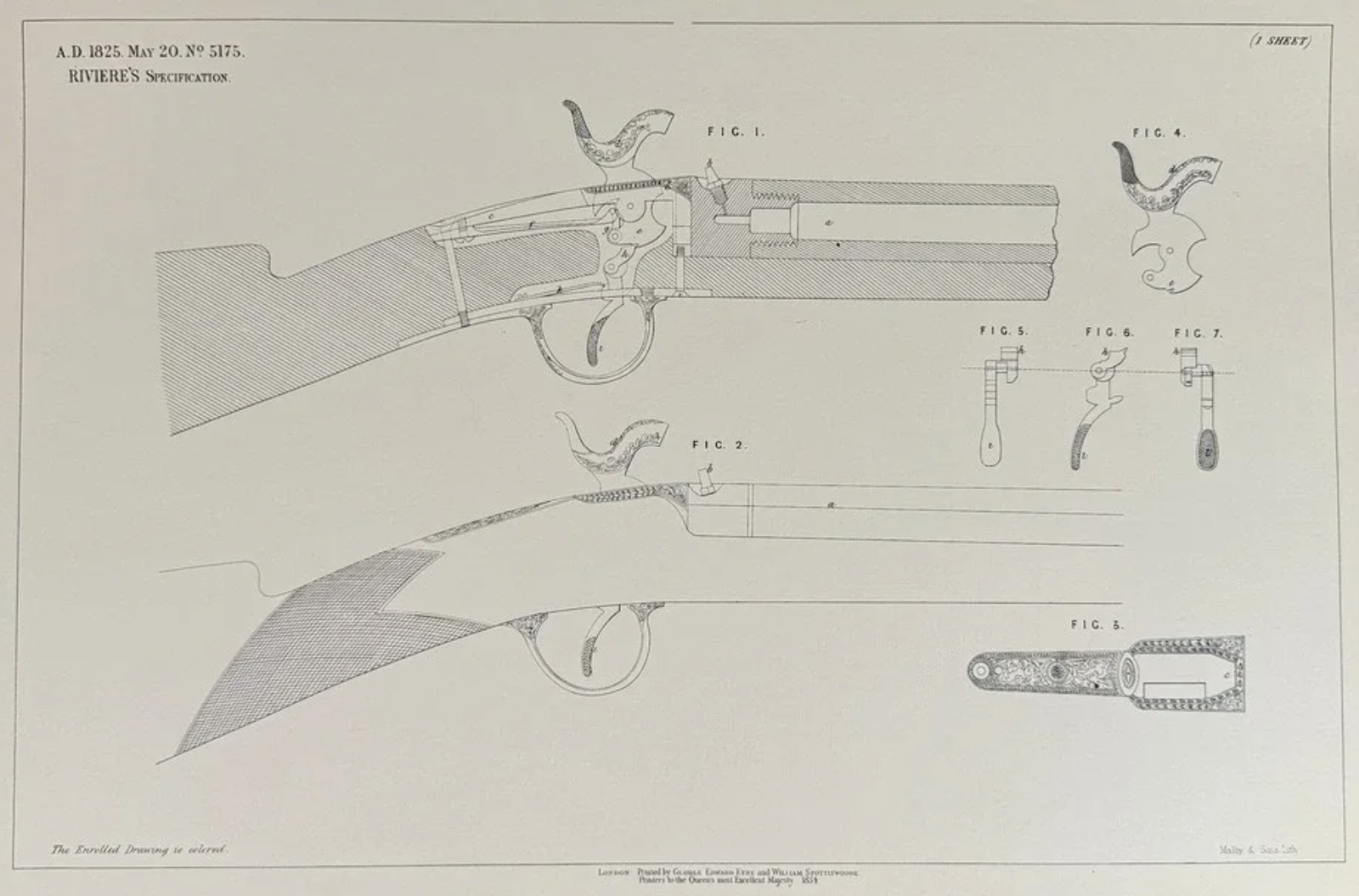
    Riviere received British patent No. 5175 on May 20, 1825, for an innovative box-lock firearm mechanism. He advertised the design as “the guns without locks,” referring to its unconventional construction.

    Surviving examples of these firearms sometimes bear markings consisting of Riviere’s name, the word “Patent,” and an individual number.
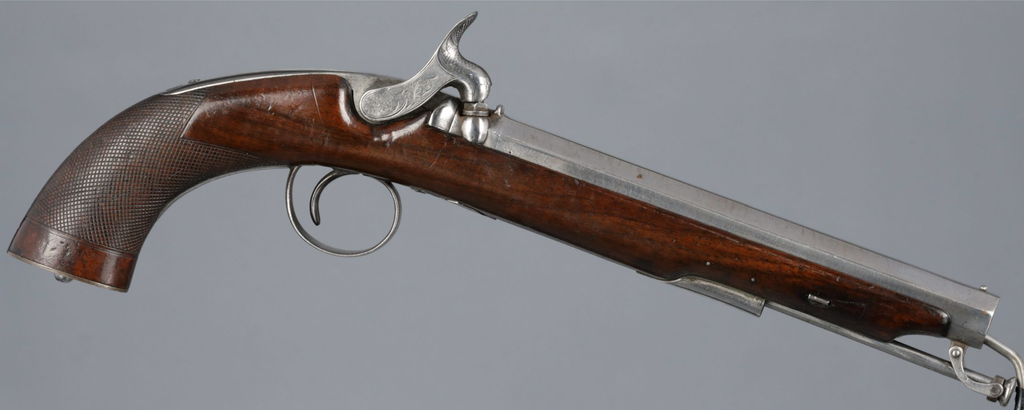
    Riviere Patent Percussion Pistol
    Riviere Patent Percussion Pistol (Rock Island Auction Company)

    Collectors and auction houses have often described these markings as serial numbers. Schneiderman argues that they served an entirely different purpose.

    His research indicates that Riviere numbered firearms incorporating his patented mechanism to track production under that patent. Other firearms bearing the Riviere name appear to lack comparable numbering.

    This distinction matters because serial numbers and patent-tracking numbers do not necessarily provide the same information.

    A manufacturer’s serial number can help establish production chronology and sometimes indicate how many firearms were manufactured. Patent-tracking numbers, however, may account for only those examples incorporating a particular patented feature.

    Schneiderman also notes that paired Riviere firearms received consecutive patent-tracking numbers rather than sharing one number.

    The study challenges another common assumption involving these firearms.

    Auction and dealer descriptions frequently date Riviere’s patented designs to approximately 1825 or 1825–1830. Schneiderman cautions that these dates often reflect the patent’s issuance rather than documented manufacturing dates.

    Without reliable production benchmarks, determining when individual examples were manufactured remains difficult.

    For collectors, these findings demonstrate the limitations of relying exclusively on markings and traditional catalogue descriptions. Similar identification challenges arise in archaeological collections, where researchers use reference materials to identify historic firearms components.

    A number stamped on an antique firearm may appear straightforward, but its original purpose can dramatically change how researchers interpret it.

    The same applies to assumptions about rarity. A numbered example cannot automatically establish total production figures when the manufacturer also produced unnumbered firearms.

    Schneiderman’s study identifies known examples and invites owners to contribute additional patent-tracking numbers.

    Those contributions could help researchers better understand surviving Riviere firearms and potentially establish more accurate production patterns.

    The complete report, Isaac Riviere Patent-Tracking Numbers (Sometimes Referred To Erroneously As “Serial Numbers”), Plus Background Information, is available through ASAC’s online research library.

    For collectors examining rare British firearms, the study offers a reminder that identification requires more than reading the numbers stamped into the metal.

  • Two Firearms History Books Coming in November

    Two Firearms History Books Coming in November

    Two new books arriving in November 2026 promise fresh perspectives on American firearms history. One examines Confederate gunpowder production during the Civil War. The other documents New Hampshire’s gunsmiths and firearms retailers across two centuries.

    Both titles offer collectors and historians opportunities to explore lesser-known aspects of American arms development.

    The Indispensable Man: George Washington Rains, the Confederate Powder Works, and the Civil War You Never Knew

    The Indispensable Man: George Washington Rains

    Historian Theodore P. Savas examines the extraordinary career of George Washington Rains, whose work helped sustain the Confederate war effort.

    A West Point graduate, Rains served as an engineer, inventor, educator, and military officer. His most significant contribution came through his efforts to secure gunpowder for the Confederacy.

    In 1861, Confederate leaders faced an enormous challenge. Their armies needed ammunition, but the South lacked the manufacturing infrastructure necessary to support a prolonged war.

    Rains helped address that shortage through industrial development, procurement, and the establishment of Confederate powder production capabilities.

    Savas also examines Rains’s lesser-known activities in the Western Theater during the war’s opening year. His research draws on nearly four decades of work with primary sources, including previously unpublished material.

    The 768-page volume includes 55 images, additional photographs, and 13 maps. The book promises to connect firearms manufacturing, military logistics, and broader Confederate strategy in a single narrative.

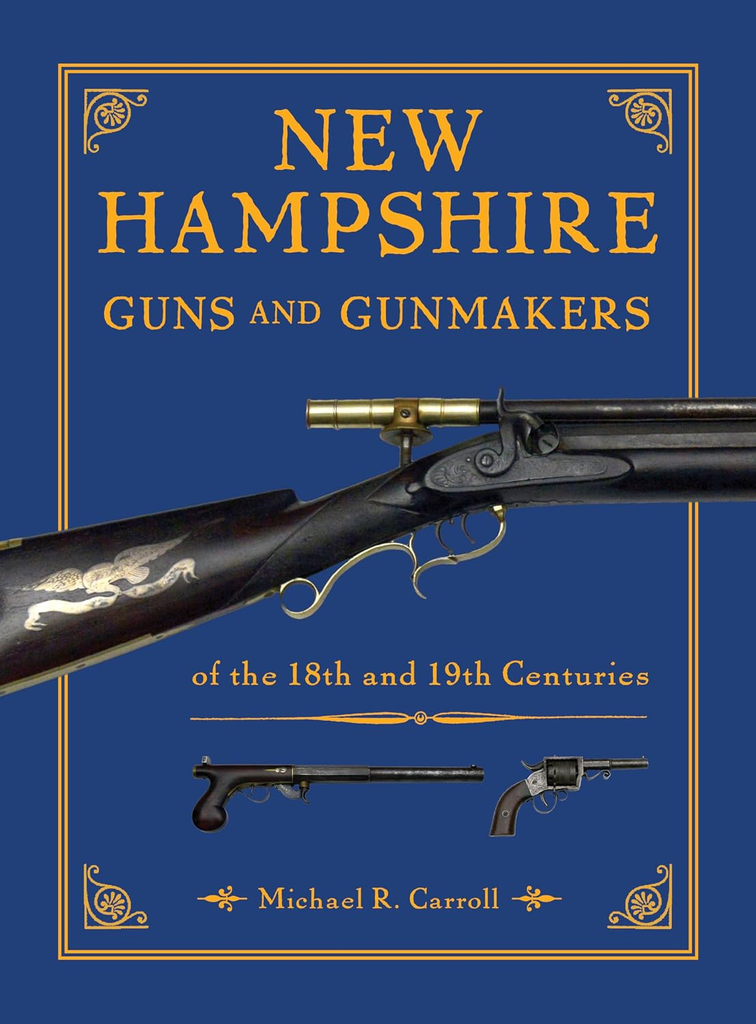
    New Hampshire Guns and Gunmakers: Of the 18th and 19th Centuries

    New Hampshire guns and gunmakers

    Author Michael R. Carroll explores the gunsmiths, manufacturers, and retailers who shaped New Hampshire’s firearms history.

    The book covers the period surrounding the American Revolution through the aftermath of the Civil War.

    Unlike larger manufacturers, many New Hampshire gunmakers operated small shops employing only a handful of workers. Their businesses often combined firearms production with unrelated trades and services.

    Among the craftsmen featured is David Hall Hilliard, who reportedly produced approximately 3,000 firearms over 35 years. Hilliard also manufactured cabinets and stoves, repaired carriages, and operated other businesses from his family farm.

    Carroll organizes his research alphabetically by gunsmith and retailer. Individual entries combine biographical information, historical context, and descriptions of surviving firearms.

    The 384-page reference features approximately 950 photographs, including detailed images of more than 100 antique pistols and long guns.

    Carroll brings more than 50 years of antique firearms collecting experience to the project. He has also contributed research to the journal of the American Society of Arms Collectors.

    For collectors specializing in regional American arms, the book promises an especially useful reference for identifying makers and researching surviving examples.

    New, well-written gun books are always a welcome addition to the library, even if the bookshelves are straining under the weight.

    The Indispensible Man and New Hampshire Guns and Gunmakers are currently available for preorder by clicking their titles above, with publication scheduled for November 26 and November 28, respectively.

  • Rigby Offers ‘Golden Ticket’ Experience to Five Lucky Winners

    Rigby Offers ‘Golden Ticket’ Experience to Five Lucky Winners

    Move over, Charlie Bucket! We’re not talking about golden tickets to Willy Wonka’s Chocolate Factory. Nope – this is infinitely better! It’s an opportunity to enter the historic world of John Rigby & Co.

    To celebrate their relocation to a new spot in London, the 251-year-old company has announced five Rigby Golden Tickets. Each entitles the winner and their guest to join a money-can’t-buy experience in May 2027.

    Winners will explore Rigby’s workshops, archives, museum, spend time with gunmakers and engravers, shoot Rigby rifles, and enjoy five nights at The Windmill.

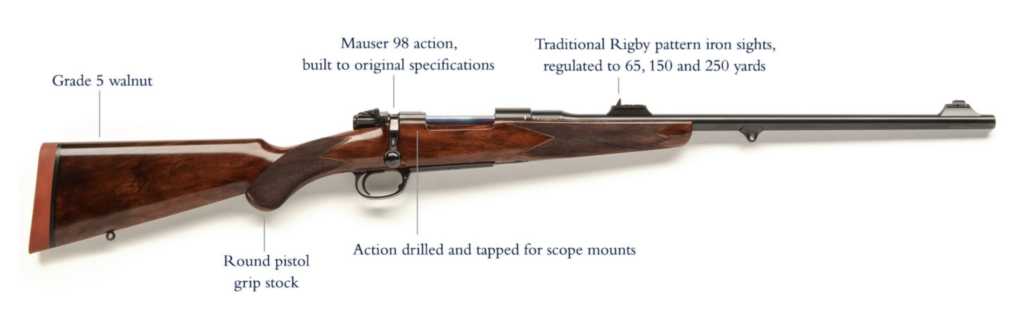
    rigby highland stalker
    Rigby Highland Stalker

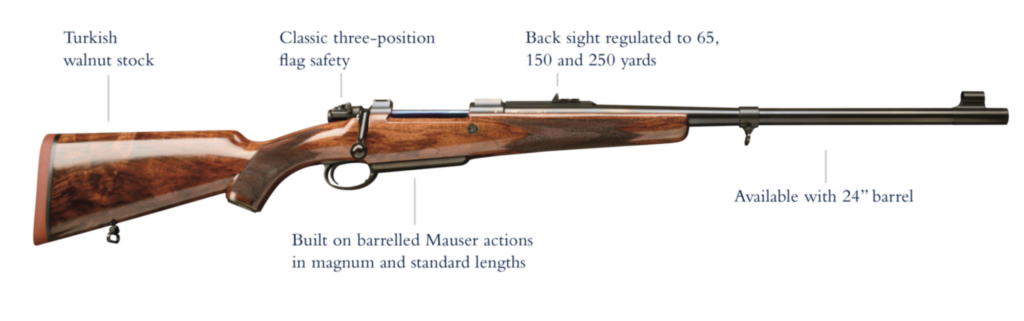
    You can get a chance at winning by purchasing a new Highland Stalker or Big Game rifle between now and March 31, 2027. You’ll receive one of 400 sealed promotional envelopes. Five contain Golden Tickets; all others contain a blue ticket and a 10% Rigby Shikar Store voucher.

    rigby big game
    Rigby Big Game

    Before opening your envelope, make sure you start recording. You must film the sealed envelope being opened and the Golden Ticket being revealed.

    Rigby celebrated their 250th anniversary last year in 2025. While young compared to 500-year-old Beretta, Rigby has spend two and a half centuries cementing its legacy as one of England’s finest gunmakers.

    Not many people are lucky enough to find a Golden Ticket, and fewer still are lucky enough to find a Rigby one.

    Could one be yours? There’s only one way to find out, so you know what to do.

    Oh, and if one of the winners happens to be a Collector’s Wire reader, please consider me for your guest spot!