Tag: Firearms History

  • The Met Adds Rare Russian Flintlock Revolvers

    The Met Adds Rare Russian Flintlock Revolvers

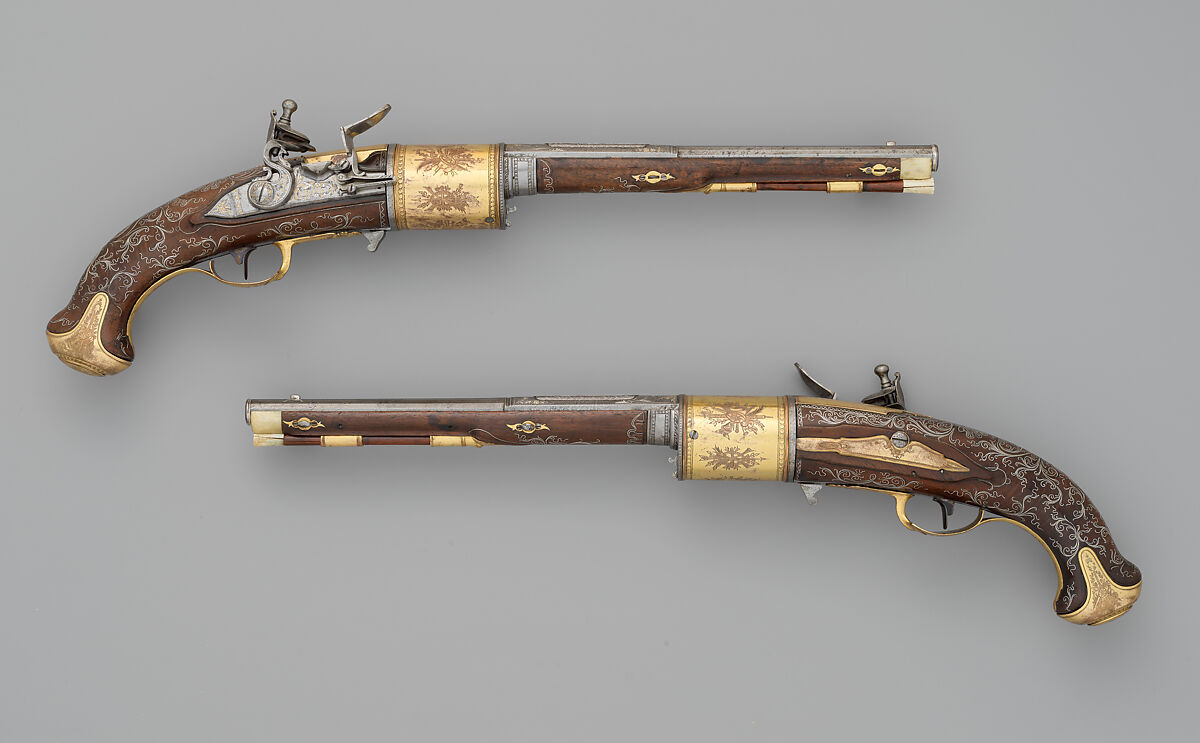
    A pair of Russian flintlock revolvers dating to about 1790 has joined the Metropolitan Museum of Art’s collection through a 2026 gift from Irene Roosevelt Aitken.

    Made at the Tula Arms Factory, the pistols offer a look at repeating firearms and luxury gunmaking decades before Colt’s revolvers. According to the museum’s collection record, they belonged to a matching set made for a member of the Russian imperial family during Catherine the Great’s reign between 1762 and 1796. A corresponding six-shot fowling piece survives at the State Hermitage Museum in St. Petersburg, Russia.

    The pair combines gilt copper-alloy cylinders and mounts with walnut stocks decorated in silver wire. Particularly interesting to collectors are the smoothbore barrels: the museum identifies their Damascus-like appearance as etched decoration imitating pattern-welded steel as opposed to being actual pattern-welded steel. That distinction illustrates why a surface pattern warrants closer examination when identifying a firearm’s construction.
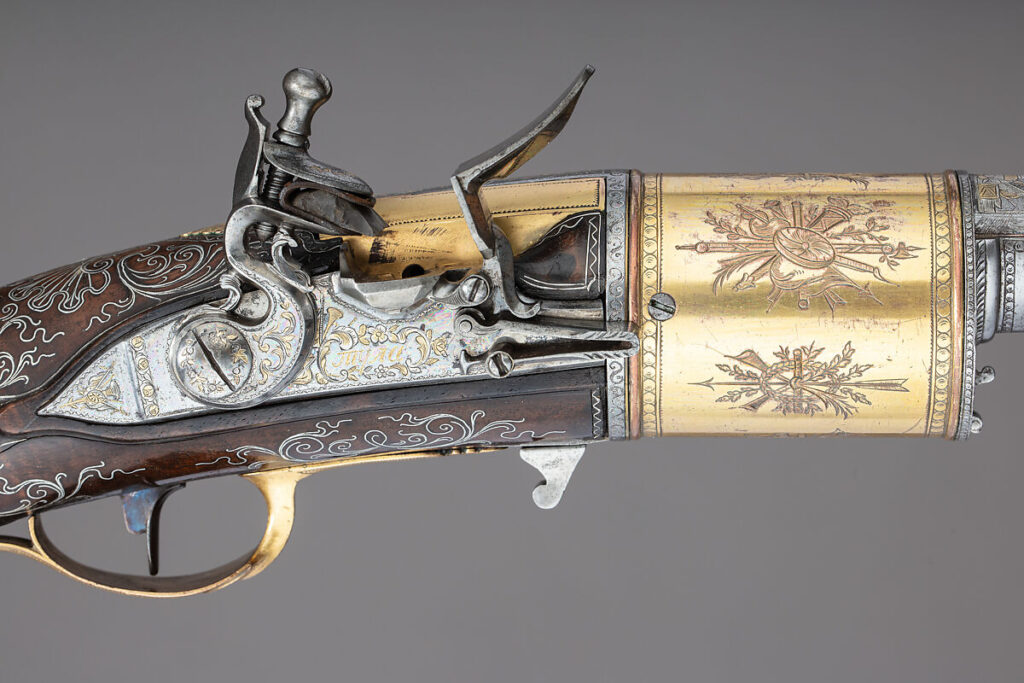
    tula flintlock revolver

    The acquisition expands an existing group of Tula arms at the Met. Its holdings also include pistols made for Grand Duke Constantine around 1801, part of a series made for Emperor Alexander I and his brothers to mark Alexander’s coronation. Each of the four brothers received five hunting arms, including a pair of pistols. The museum currently lists Constantine’s pair on view in Gallery 375 at its Fifth Avenue building.

    Together, the two pairs offer collectors an opportunity to compare the factory’s approach to ornament and imperial patronage across roughly a decade.

    The circa-1790 revolvers, accession numbers 2026.267.9a and b, are currently listed as not currently on view, but that could change with future exhibitions. In the meantime, their online record includes public-domain photographs for closer study.

    Collectors interested in studying early ignition systems can also explore Jim Gooding’s reconstructed gun lock catalog, which brings together photographs, markings and descriptions of historic mechanisms.
  • Researchers Reconstruct Arms Historian’s Gun Lock Catalog

    Researchers Reconstruct Arms Historian’s Gun Lock Catalog

    A significant collection of historic gun lock research has gained a new audience thanks to the efforts of three firearms historians. The American Society of Arms Collectors (ASAC) has published the reconstructed gun lock catalog of the late S. James “Jim” Gooding.

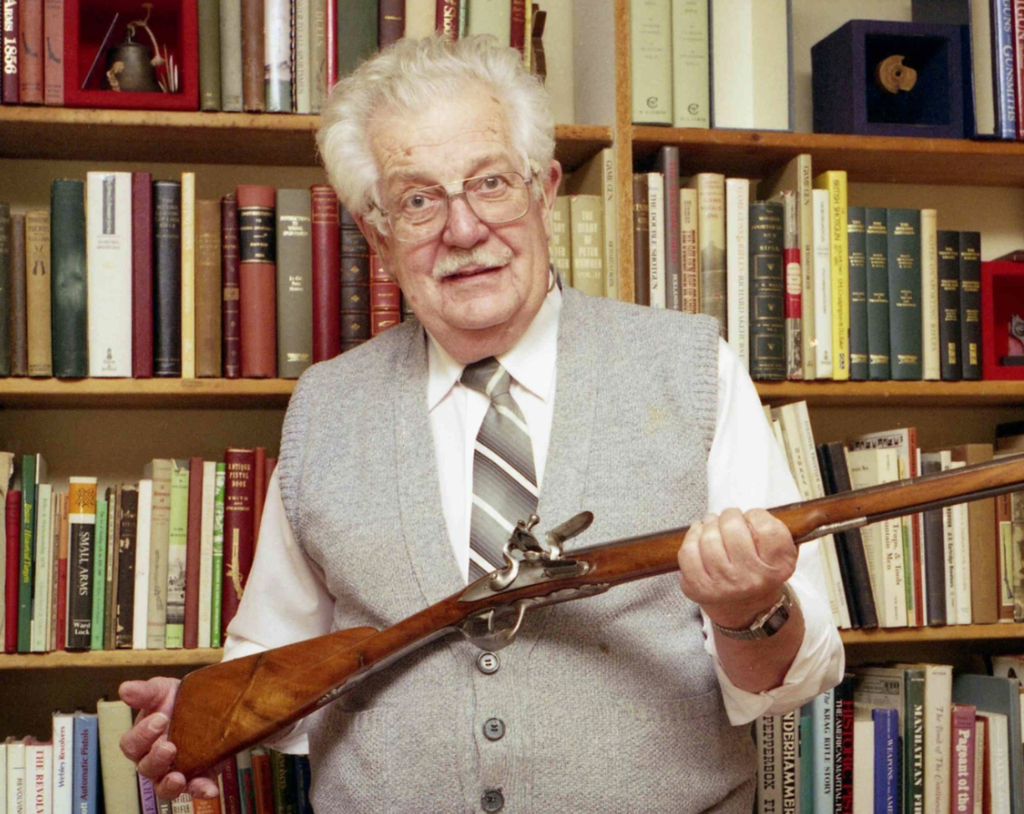
    Gooding, who died in 2012, spent decades studying antique firearms, particularly their ignition systems. His work as a researcher, author, publisher, and collector made him a respected authority in the field.

    Among his interests was an extensive collection of gun locks. These mechanisms provide important evidence about the development of firearms technology, manufacturing practices, and individual gunmakers.

    Gooding photographed nearly every lock in his collection and maintained a detailed catalog of their characteristics. He intended to incorporate the material into a comprehensive history of firearms ignition systems. The collection would have formed Chapter 14 of that unfinished work.

    However, Gooding died before completing the project.

    S. James Gooding
    S. James Gooding (1930-2012)

    Fortunately, the photographs included numbers corresponding to entries in his catalog. Researchers Will Adye-White, Brian Godwin, and Matthew Schneiderman used those numbers to reunite the photographs with their original descriptions.

    Their efforts resulted in the reconstructed Jim Gooding’s Gun Lock Collection and Catalogue, which ASAC published online in 2026.

    The catalog includes detailed information about individual locks, their makers, mechanical features, and historical context.

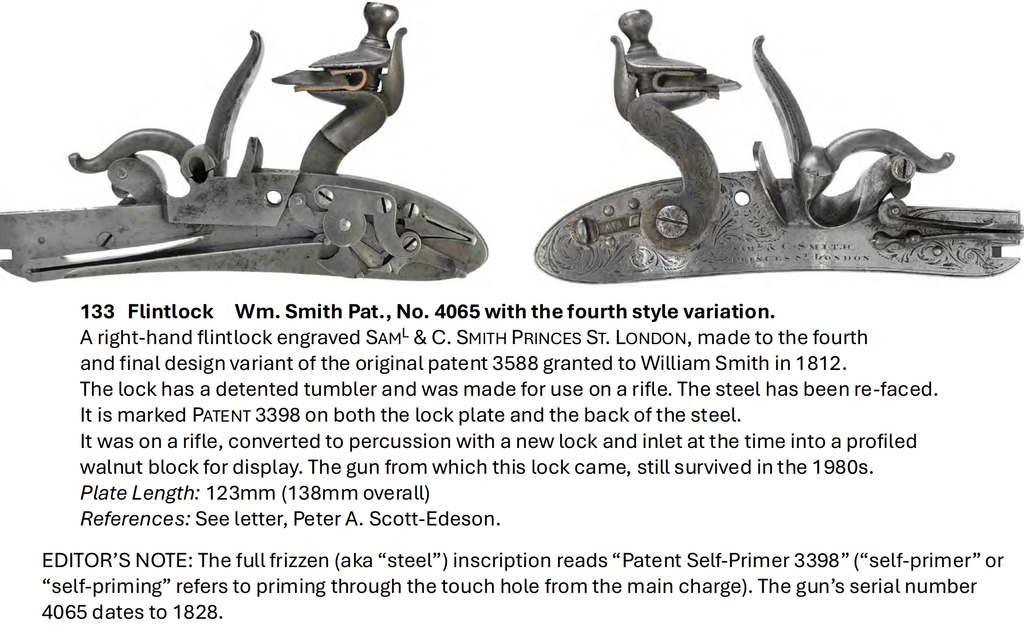
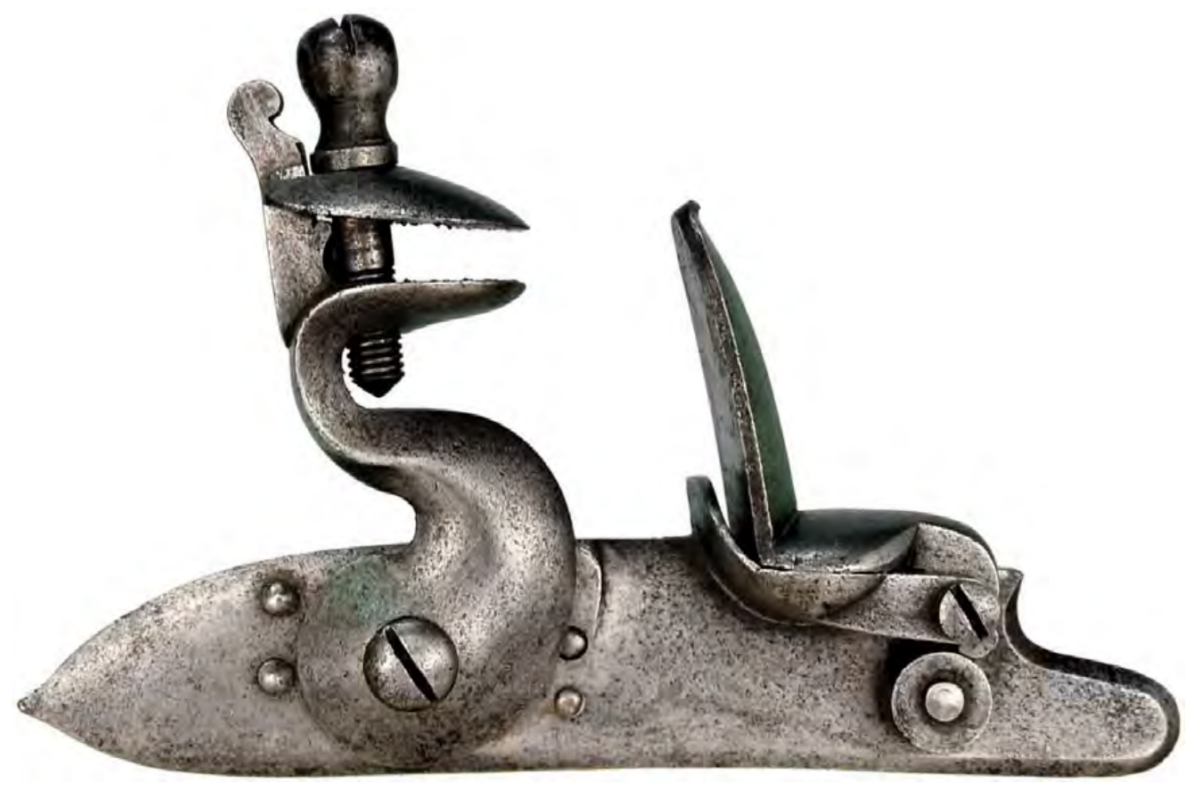
    One example is catalog number 133, a William Smith patent flintlock dating to 1828. The entry documents the lock’s markings, patent information, and the serial number of the rifle to which it was originally attached.

    flintlock excerpt
    Catalog number 133

    Such information can prove valuable when identifying detached locks or examining antique firearms whose original configurations are uncertain. Like other specialized firearms research, Gooding’s catalog demonstrates how original documentation can help collectors identify historical artifacts and better understand their significance.

    For collectors, the catalog provides an additional reference for comparing surviving examples against documented historical specimens. It also preserves information about a specialized collection that might otherwise have become difficult to reconstruct.

    The project illustrates the importance of maintaining detailed collection records. Photographs, identification numbers, and written descriptions allowed researchers to preserve Gooding’s work more than a decade after his death.

    Gooding’s research continues to benefit collectors through additional publications available from ASAC. These include his unfinished history of firearms ignition systems and his scarce reference work on early percussion primers.

    The reconstructed catalog is available to the public through ASAC’s online research library, providing collectors and historians with access to material that might otherwise have remained unpublished.

  • Beretta Marks 500 Years With 296-Pistol 92FS Ducato Limited Edition

    Beretta Marks 500 Years With 296-Pistol 92FS Ducato Limited Edition

    Beretta is tying one of its most recognizable pistols directly to the document that established the company’s place in firearms history.

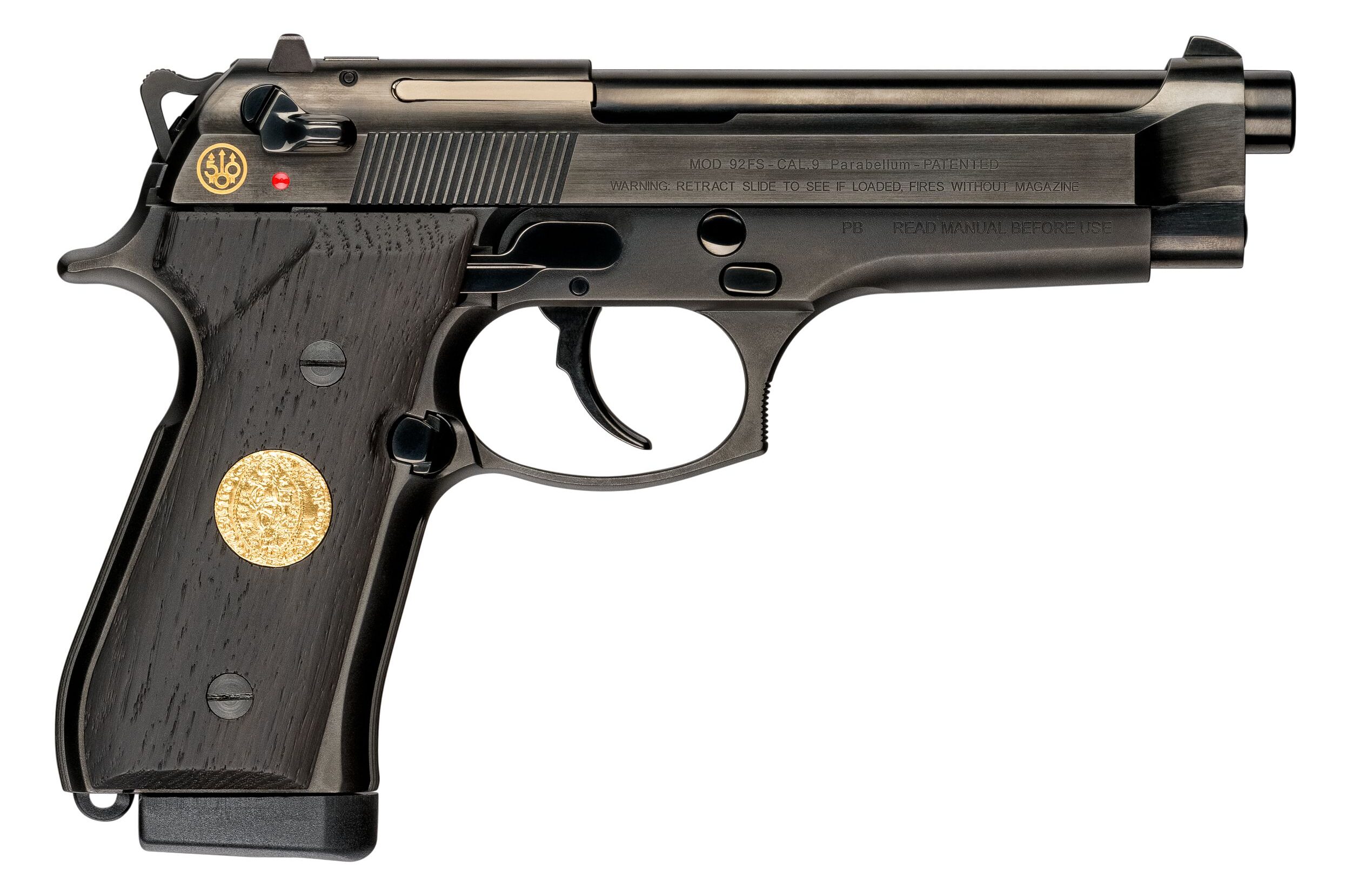
    To mark its 500th anniversary, Beretta introduced the 92FS Ducato, limited to just 296 examples worldwide. That number represents the 296 ducats paid to Bartolomeo Beretta in the company’s earliest documented transaction.

    On October 3, 1526, Bartolomeo Beretta of Gardone delivered 185 arquebus barrels to the Arsenal of Venice. The record of that payment, preserved in the State Archives of Venice, provides the documentary foundation for Beretta’s official 1526 founding date. The company has remained under Beretta-family stewardship through the centuries.

    Five centuries later, that transaction has become the organizing theme for the new pistol.

    The 92FS Ducato uses a steel frame with a DLC finish and grips made from fossilized Abonos oak. Gold anniversary details appear on the frame and slide; gold grip inserts reproduce the two faces of a Venetian ducat. Each pistol receives its own special serial number.

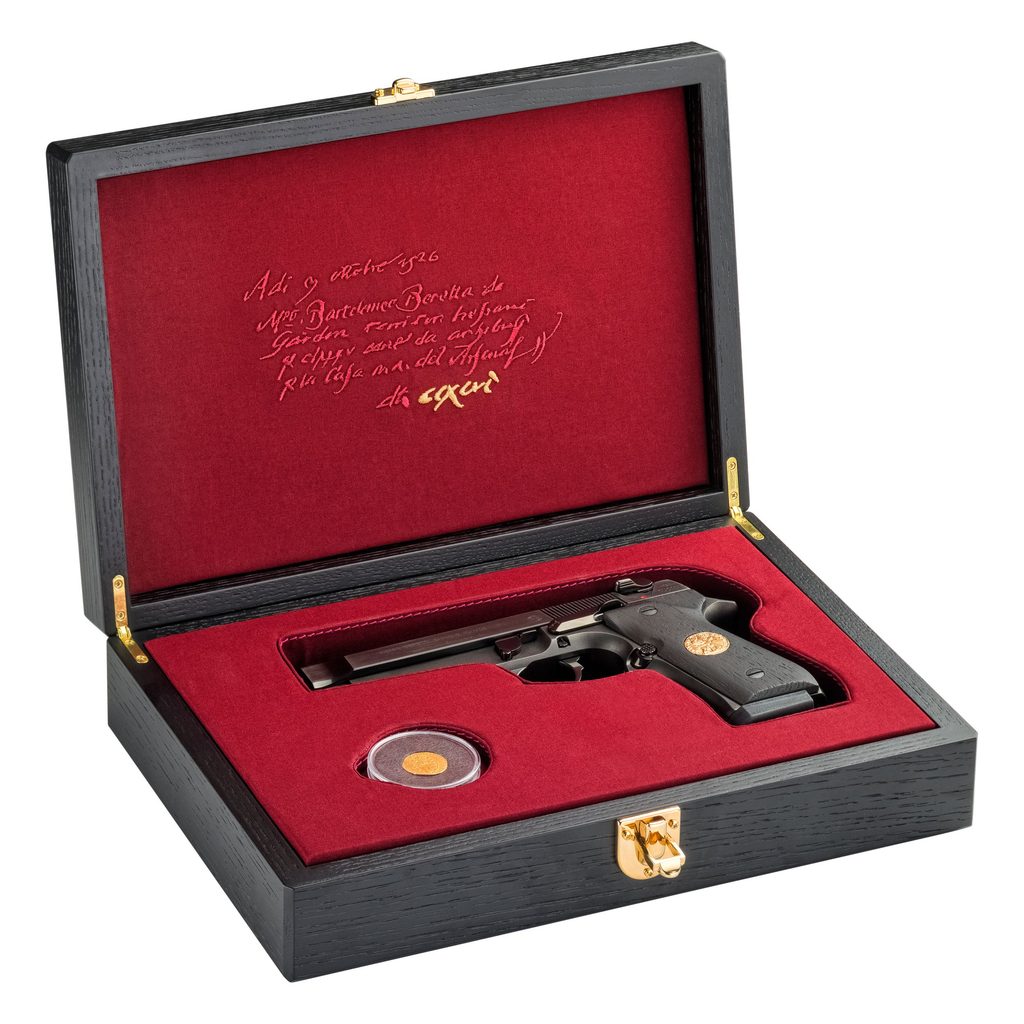
    Beretta is packaging it as a complete collector presentation. Each comes in a handcrafted case produced by the Pietro Beretta Selection Atelier. The case includes an authentic Venetian ducat, physically connecting the commemorative pistol to the currency used in the historic transaction.

    Beretta 92FS Ducato in case

    The Ducato is one of several projects Beretta has introduced around its 500th anniversary, but its production figure makes the historical reference unusually direct: 296 pistols for 296 ducats.

    If still in use today, one ducat would equal approximately $500 USD, making the original transaction worth approximately $148,000 USD.

    For collectors, it is a reminder that anniversaries are often built around dates, but Beretta’s 500th has something more substantial behind it: a surviving archival document capable of tying the modern company to a specific transaction on a specific day in 1526.

    The price for each pistol is $13,999.