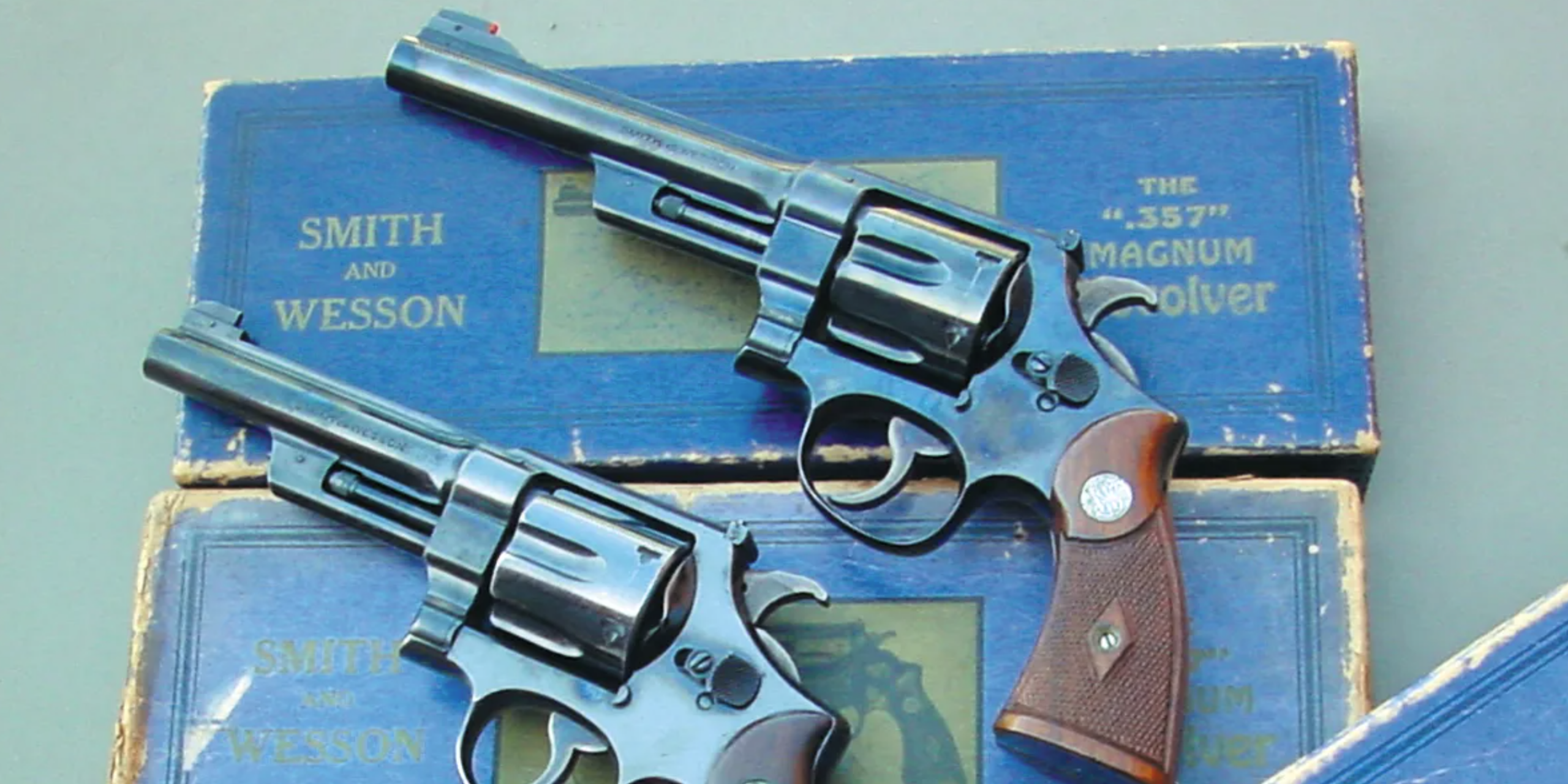
Collectors studying Smith & Wesson’s Registered Magnum have a new batch of factory data to examine. Researcher R. M. Vivas published his latest Magnum Opus update on October 7, 2026. It analyzes registration numbers RM1001 through RM1500, a block of 500 revolvers.
His database contains about 2,600 entries toward an anticipated total of roughly 5,500. The latest analysis focuses on each revolver’s configuration when it first left the factory.
Among these 500 guns, the 6½-inch barrel leads with 167 examples. Vivas also records 90 six-inch barrels and 76 measuring 8¾ inches. One revolver’s barrel length remains unknown. Those figures apply only to this sample. Later alterations can separate a surviving gun from its original specifications.
That distinction matters for a revolver built around individual preferences. Introduced in 1935, the Registered Magnum allowed buyers to specify features, including barrel length. Smith & Wesson supplied a registration card with each gun. Returning it brought a certificate recording the owner and details of the order.
Collector Nick Rukavina illustrated the documentation problem in a 2025 RevolverGuy article about his own Registered Magnum. Its paperwork specifies an 8¾-inch barrel, while the gun now wears a 3½-inch barrel. He also retains the removed original barrel. The gun and documents tell different parts of the same history.

The Smith & Wesson Historical Foundation notes that factory research can require reconciling several kinds of records. A shipping entry, an order form, and a later repair record may answer different questions.
For collectors, the practical lesson is to investigate an unusual feature before turning it into a rarity claim. Record what the gun has today, then compare that description with its earliest paperwork. Keep later service records with it, too.
In a collection catalog, dates and sources deserve space beside measurements and condition notes. A documented change can explain an apparent discrepancy. Without that paper trail, a plausible explanation remains an explanation waiting for evidence.
The project gives collectors new evidence to test against their own records. Many thanks to Mr. Vivas for doing the heavy lifting for Registered Magnum collectors everywhere.