Tag: revolver

  • A Classic, Reimagined: Snake Eyes Colt Python Set

    A Classic, Reimagined: Snake Eyes Colt Python Set

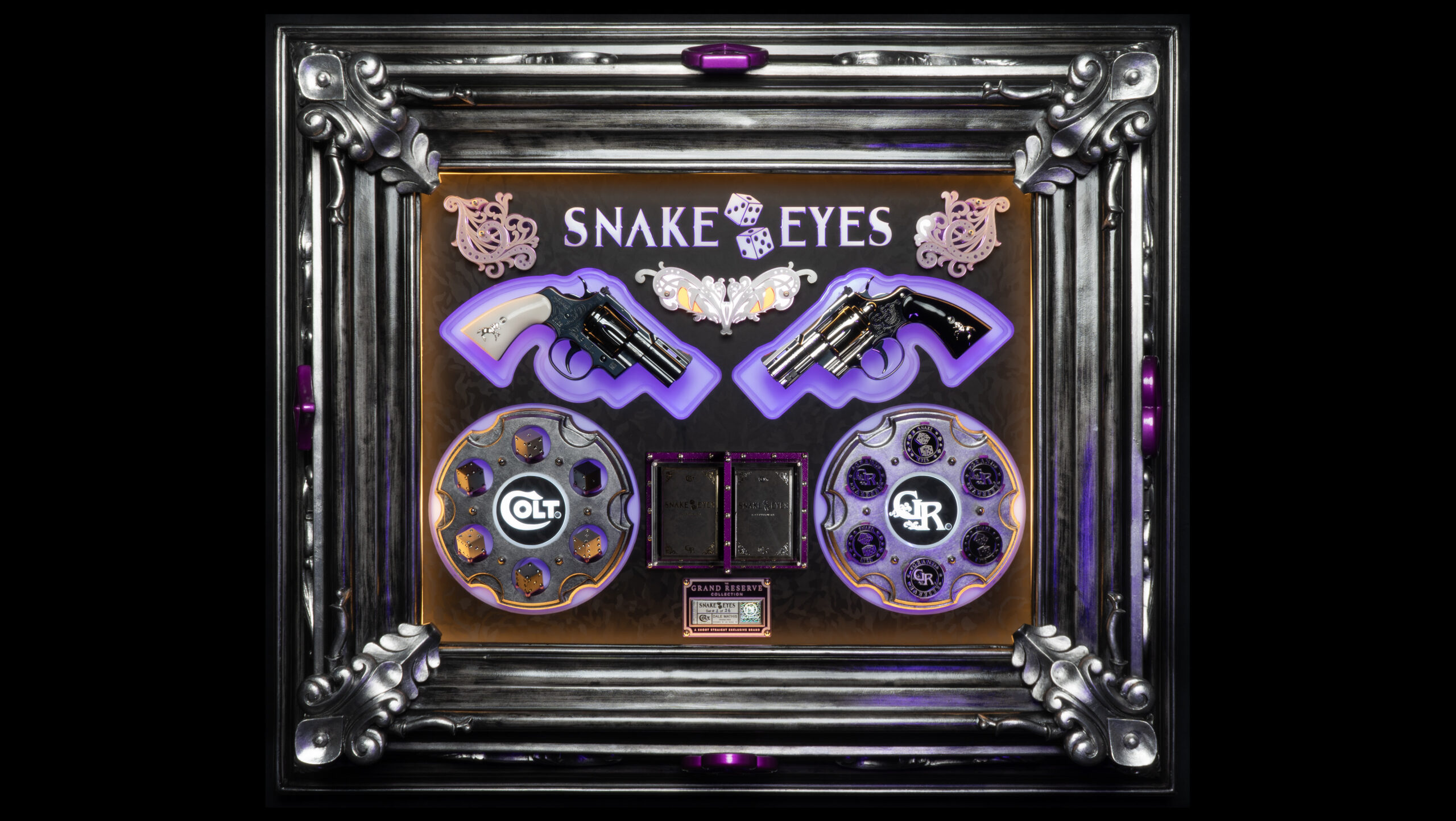
    In 1989, Colt released the original Snake Eyes set, a matched pair of 2.5-inch Pythons that became one of the most sought-after collector sets the company ever made. The Grand Reserve Collection, Shoot Straight’s custom firearm brand and a longtime Colt partner, has reimagined it for a new generation of collectors.

    In collaboration with internationally exhibited mechanical sculptor Dale Mathis and the engravers at Baron Engraving, the team created a collection worthy of its name. Two custom-engraved, polished 2.5-inch Colt Pythons, presented in a handmade display. Only 26 individually numbered sets will ever be produced.
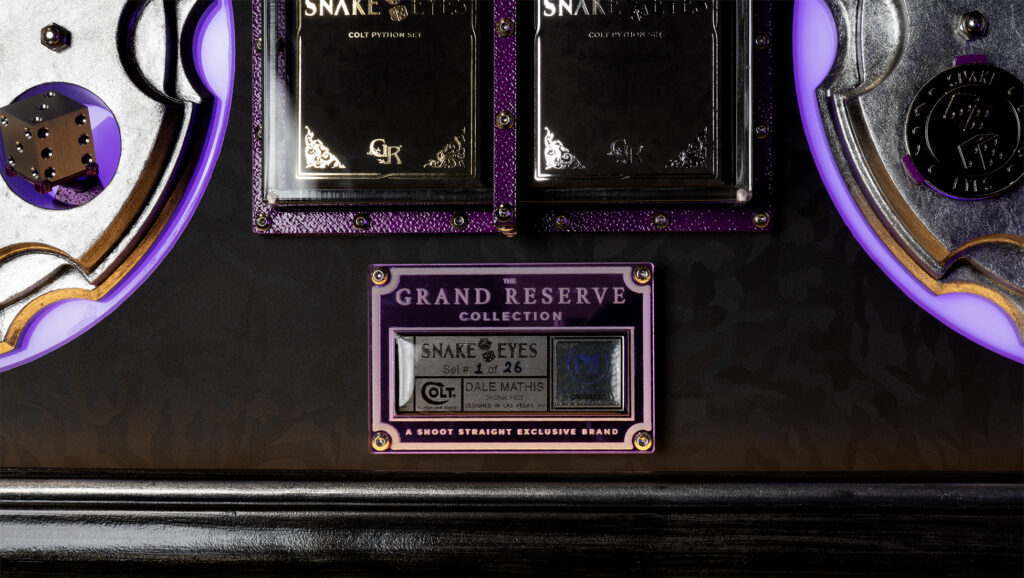
    snake eyes number
    Each set is individually numbered, 1-26.

    The price is set at $14,999 per set, and while that may initially seem steep, it isn’t necessarily unreasonable when viewed in the context of the original Snake Eyes sets and their performance on the collector market. Colt produced 500 sets in 1989, compared to just 26 for this new edition.

    Despite that larger production run, original Snake Eyes sets command considerably higher prices when they come to market. A sampling of seven sales over the past couple of years saw prices ranging from $29,000 to $55,580, with an average of $36,898. Even an empty lighted presentation case from the original edition sold for $6,282.

    Colt didn’t set an MSRP for the original set, allowing dealers to set the price. Most sold for $2,200 to $2,500. Adjusted for inflation, that’s $6,200 – which is what one of the empty cases sold for – and less than half of what one of the new sets costs.

    Each Python in the new sets is hand-engraved and polished by Baron Engraving. One reads SNAKE, the other EYES, a fresh turn on the original set, which numbered both guns the same.

    Matching numbers run across both Pythons, the Presentation Display, and the certificate of authenticity. No set is ever sold apart.
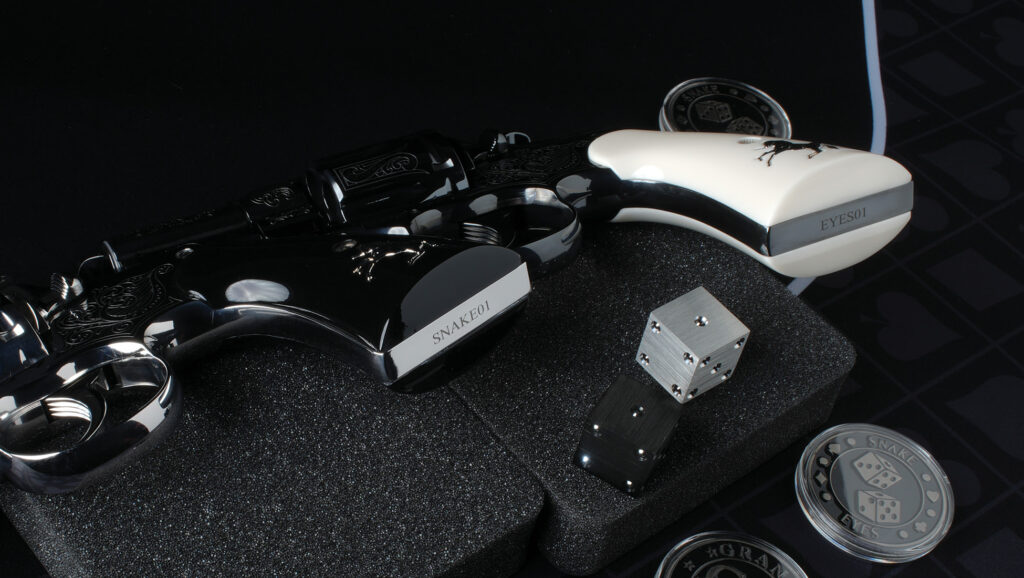
    snake eyes serial numbers
    One gun says SNAKE while the other says EYES

    A handmade Presentation Display with integrated LED lighting, built to hang as a work of art in any den, game room, or collection.

    The Presentation Display was designed by Dale Mathis, a mechanical sculptor whose work has been exhibited around the world. Every display ships with a numbered certificate of authenticity, a printed art booklet, a USB drive of digital content, a remote for the LED lighting, a wall mount bracket, and an instruction manual. The playing card decks inside are removable.

    Of course, the market for the original sets is well established, while the long-term collector demand for this new edition remains to be seen.
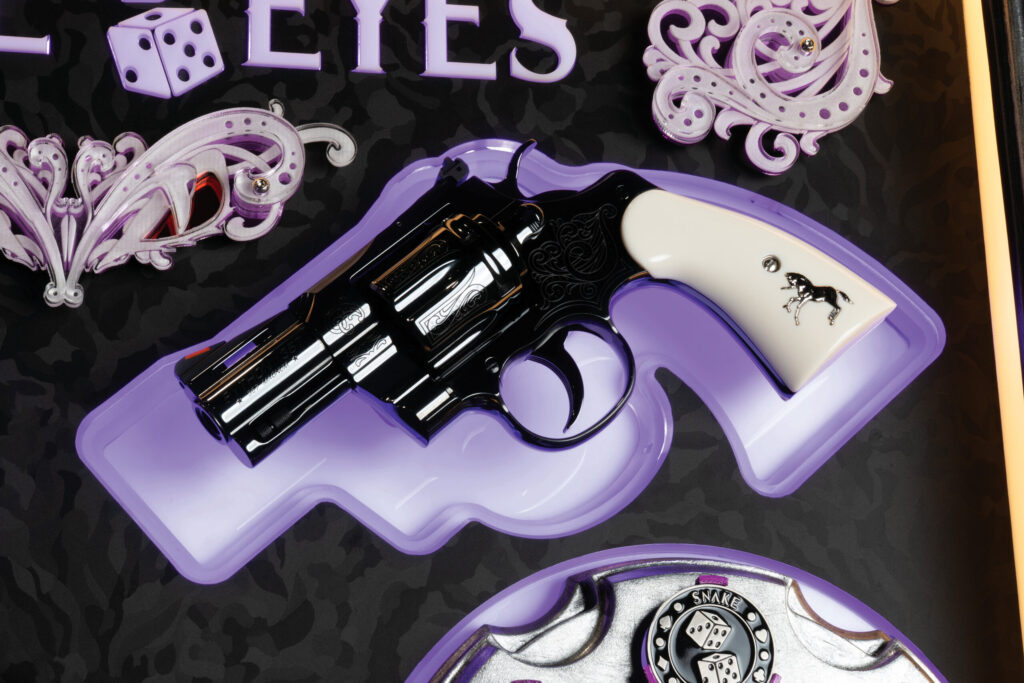
    snake eyes one

    If you’re willing to place your bets on the future value of one of the new Snake Eyes sets, you can find more details here.
  • Smith & Wesson Revives Historic .45 Revolvers

    Smith & Wesson Revives Historic .45 Revolvers

    The Model 1917 and Model 22 return with classic styling, modern manufacturing, and a few notable changes from their predecessors.

    Smith & Wesson is reaching into its past with the introduction of two new revolvers inspired by its historic .45 caliber N-frame handguns. The Model 1917 Classic and Model 22 Classic bring back familiar designs with several modern refinements.

    The announcement gives collectors an opportunity to revisit two revolvers with important places in American firearms history.

    From the Trenches of World War I

    When the United States entered World War I in 1917, the military faced a shortage of M1911 pistols. To supplement production, the government contracted with Smith & Wesson and Colt for revolvers chambered in .45 ACP.

    The rimless cartridge presented a challenge for revolver extraction. The solution was the half-moon clip, which held three cartridges together and allowed simultaneous extraction. The arrangement became an enduring feature of .45 ACP revolvers.

    Model 1917 Classic
    Model 1917 Classic

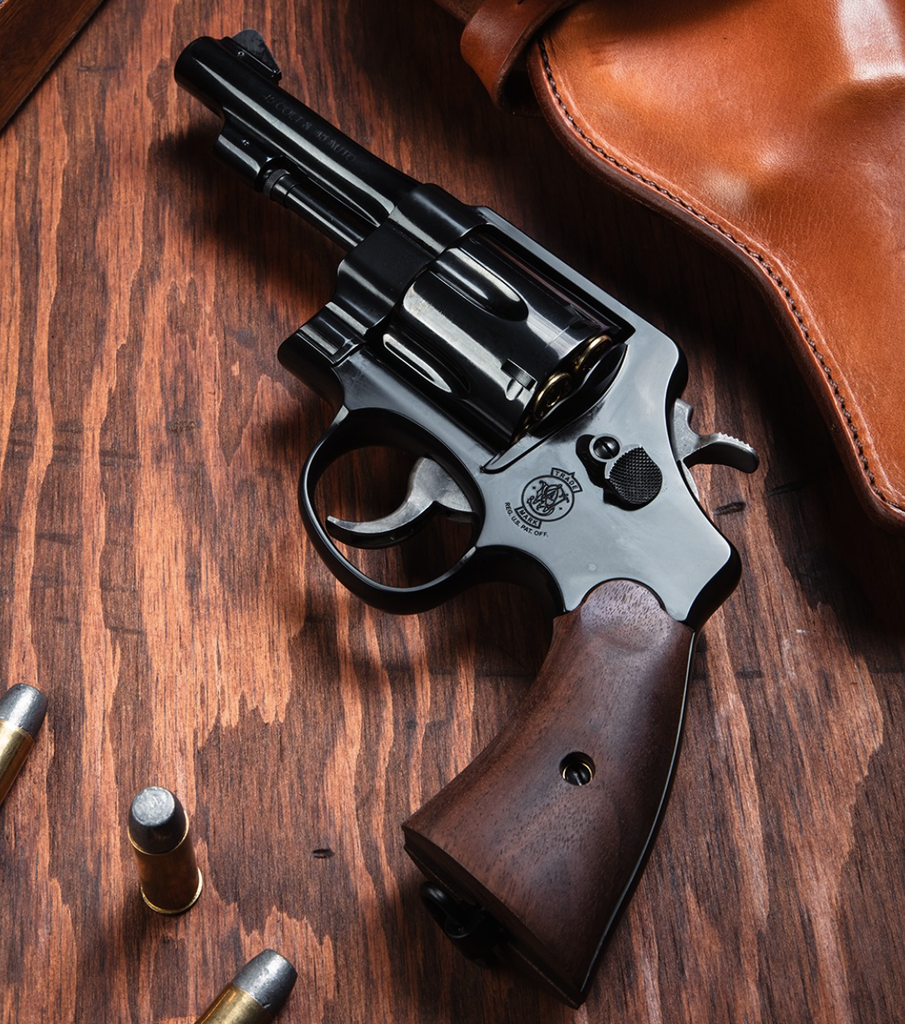
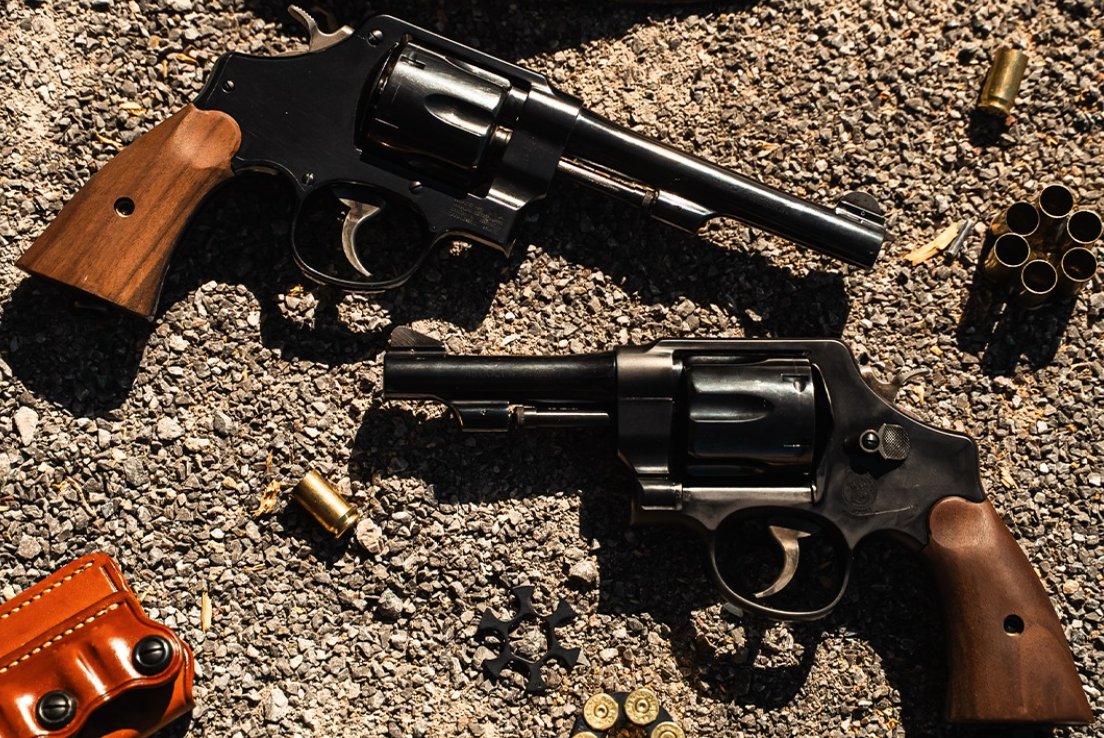
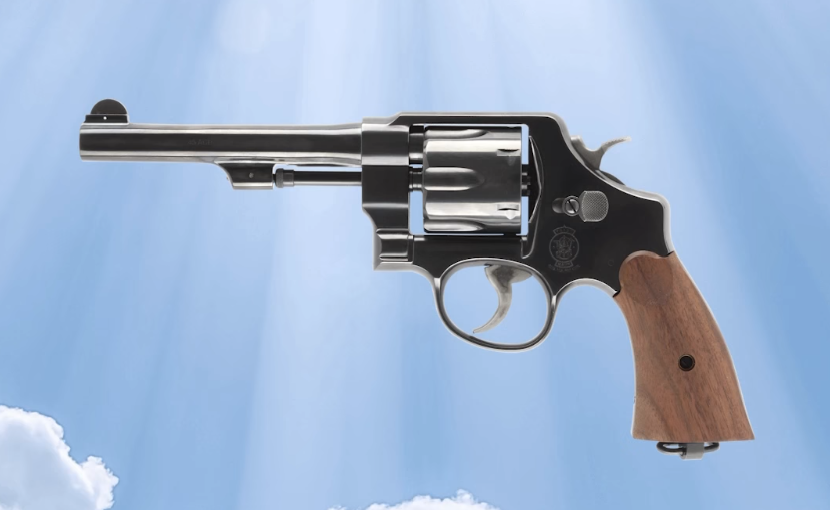
    The new Model 1917 Classic closely follows the original military configuration. It features a 5.5-inch barrel, half-moon front sight, smooth walnut stocks, and a lanyard ring. The blued carbon steel revolver holds six rounds and accommodates both half-moon and full-moon clips.

    Smith & Wesson has also omitted the internal lock, a feature many traditional revolver enthusiasts will appreciate.

    A Different Kind of Classic

    The second offering, the Model 22 Classic, takes a less historically rigid approach.

    The original Model 22 descended from the postwar .45 Hand Ejector Model of 1950 Army. Smith & Wesson introduced the numbered Model 22 designation in 1957.

    Model 22 Classic
    Model 22 Classic

    The new version uses a shorter 4-inch barrel and serrated ramp front sight. More significantly, it chambers both .45 Colt and .45 ACP. The former can be loaded directly, while the latter requires moon clips.

    Both revolvers feature double-action/single-action mechanisms and include five full-moon clips.

    What It Means for Collectors

    Although these revolvers reproduce historical designs, neither should be confused with an original military or midcentury production gun.

    For collectors, that distinction matters. Original Model 1917 revolvers possess military history, period-correct markings, and potential provenance that modern reproductions cannot replicate. Likewise, the comparatively limited production of the original postwar Model 22 gives surviving examples a different collecting appeal.

    As recent research into Smith & Wesson’s Registered Magnum demonstrates, original configurations, factory records, and subsequent alterations can substantially influence how collectors evaluate historic revolvers.

    However, reproductions offer something originals increasingly cannot: the opportunity to regularly shoot a historically inspired handgun without adding wear to a collectible example.

    The introductions also come as Smith & Wesson’s acquisition of Savage Arms has raised broader questions about how historic manufacturers approach discontinued designs and their collecting heritage.

    The new releases also raise an interesting question about Smith & Wesson’s Classic Series. As interest in traditional revolvers continues, could other discontinued designs eventually return?

    For now, the Model 1917 and Model 22 demonstrate that Smith & Wesson still sees commercial value in its extensive historical catalog.

    Both revolvers carry a suggested retail price of $1,299.

  • Smith & Wesson Buys Savage; What About 130 Years of Firearms History?

    Smith & Wesson Buys Savage; What About 130 Years of Firearms History?

    The $160 million acquisition unites two historic American gunmakers, raising questions about Savage’s legacy, collector records, and discontinued models.

    Smith & Wesson’s October 21 acquisition of Savage Arms made headlines throughout the firearms industry. The $160 million deal combines two of America’s oldest surviving gunmakers.

    Of the $160 million, only $37.5 million was cash; the rest was in stocks. This is important to note because Savage was owned by JDH Capital, a private investment firm. With approximately 9 million shares of Smith & Wesson, JDH Capital is now the single-largest shareholder in the company. They also gained a seat on the Smith & Wesson board of directors, which now has seven members.

    But beyond manufacturing capabilities and market share, the acquisition brings together more than 300 years of combined firearms history.

    For collectors, that history raises questions that extend well beyond the company’s current product offerings.

    Savage began manufacturing firearms in 1894 and introduced its Model 1899 lever-action rifle five years later. Renamed the Model 99, it became one of America’s most recognizable sporting rifles.

    The company also produced the Model 1907 automatic pistol, Stevens firearms, and military arms during both world wars.

    Savage acquired Stevens in 1920 and A.H. Fox Gun Company in 1930. These acquisitions brought additional historic names and manufacturing traditions into the Savage organization.

    Now Savage itself has changed hands.

    Smith & Wesson’s acquisition expands its presence in hunting and bolt-action rifles, particularly through Savage’s established Model 110 platform.

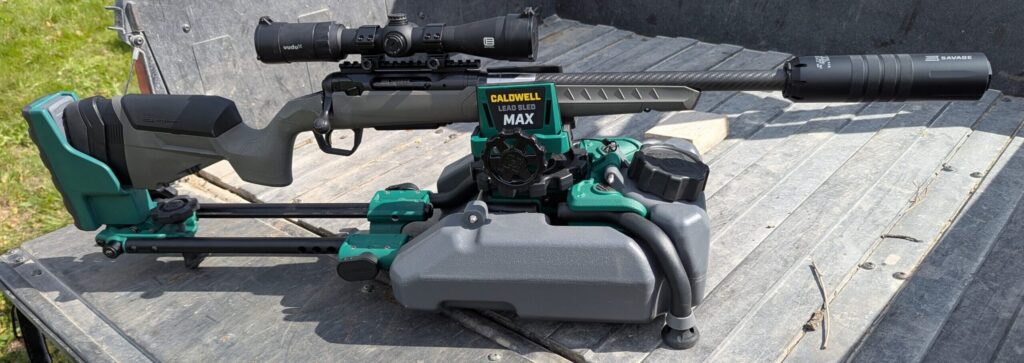
    Savage 110 rifle with a Savage AccuCan AC30 B.O.B. suppressor

    However, the company’s October 21 announcement offered no specific plans for reintroducing discontinued Savage models or expanding historical collector services.

    That distinction matters.

    Collectors may naturally wonder whether the acquisition could revive interest in classics like the Model 99. Yet a change in corporate ownership does not automatically make discontinued designs economically practical to manufacture.

    The Model 99, for example, last appeared in Savage’s production timeline in 1998. [Ed. note: When I interviewed Savage CEO Chris Bezzina in 2025, he said the Model 99 would never come back due to production costs.]

    Another important consideration involves the company’s historical records.

    In July 2020, Savage transferred its historical firearms records to the Cody Firearms Museum at the Buffalo Bill Center of the West.

    The museum assumed responsibility for preserving these materials and providing historical research services for collectors.

    Consequently, the acquisition does not mean Smith & Wesson has suddenly acquired direct control of Savage’s historical factory records. (Smith & Wesson doesn’t even have its own historical factory records. They are part of the Smith & Wesson Historical Foundation.)

    That separation is significant for collectors seeking factory documentation, original shipping information, or historical identification assistance.

    Smith & Wesson maintains its own extensive collecting tradition, supported by generations of research into the company’s revolvers, pistols, and long guns.

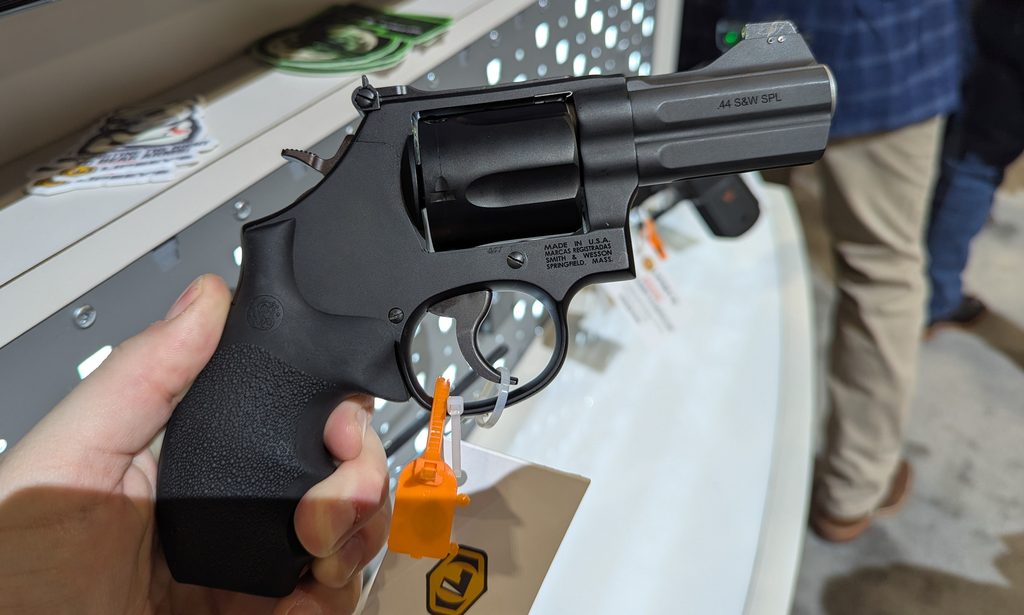
    Smith Wesson Night Guard
    Smith & Wesson Night Guard revolver at SHOT Show 2026

    Whether the acquisition eventually creates opportunities for expanded historical services remains unknown.

    The immediate transaction is primarily about combining manufacturing capabilities and strengthening Smith & Wesson’s position in the hunting market.

    But Savage’s history encompasses considerably more than its current product catalog.

    For collectors, the most important developments may involve how the new ownership approaches that heritage, preserves historical knowledge, and supports the firearms that established Savage’s reputation.

    Whatever happens, Savage’s place in American firearms history remains unchanged by the ownership of the company whose name they bear, and we can only hope that a private investment firm now being S&W’s largest shareholder of stock and a member of their board doesn’t spell problems for them later.