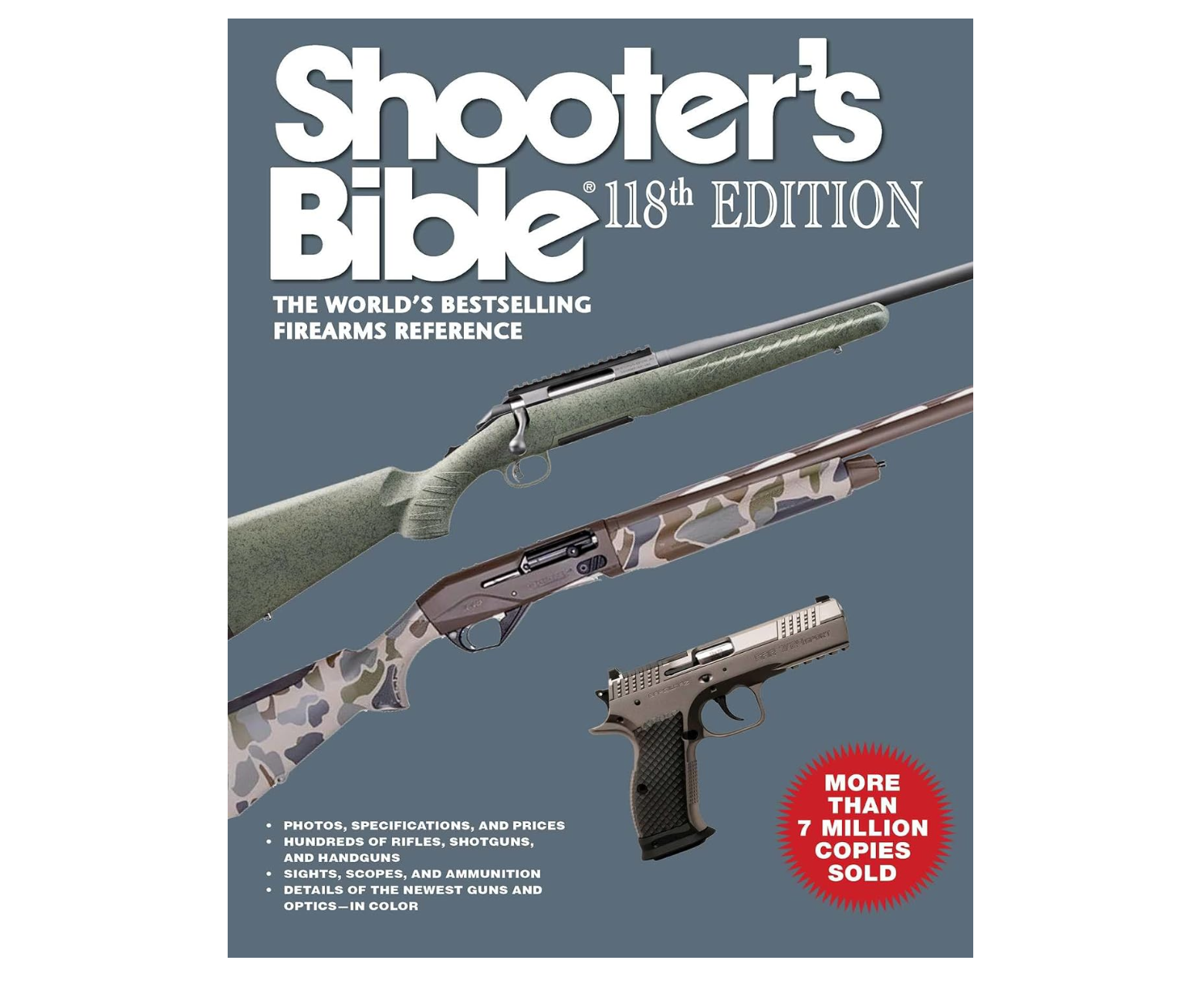
One of the firearms world’s longest-running reference books will return with a new edition later this month.
Skyhorse Publishing will release the 118th edition of Shooter’s Bible on October 27. The new volume runs 608 pages and carries a $29.99 list price.
The annual reference has appeared for more than 80 years. During that time, Shooter’s Bible has sold more than seven million copies. The publisher describes it as a reference guide to both current-production firearms and guns that remain on the commercial market.
The 118th edition continues that approach. It includes specifications and information on firearms from manufacturers around the world. The book also covers ammunition, optics, and accessories.
That scope separates Shooter’s Bible from a dedicated collector-price guide. Rather than concentrating primarily on values, the book serves as a broad snapshot of the firearms marketplace. Collectors can use older editions to track changes in manufacturers, models, specifications, and product lines over time.
That gives the series value beyond its original purpose. A current edition can help identify a firearm or compare factory specifications. An edition from decades earlier can reveal what companies offered when a particular gun was new.
For researchers, that historical trail can become especially useful. Catalog descriptions change. Companies disappear. Model names evolve. Specifications sometimes shift during a production run. Annual reference books can preserve those changes in ways that modern manufacturer websites do not.
The new edition comes from editor Jay Cassell, a longtime outdoor writer and publishing veteran. His work has appeared in Field & Stream, Outdoor Life, Sports Afield, and other publications.
Collectors should not expect Shooter’s Bible to replace specialized reference works. A Winchester researcher will still need Winchester books. A Colt collector will still need factory records and model-specific sources.
But broad references serve another purpose. They help researchers establish context before moving into the details. They also document what the firearms industry looked like at a particular moment.
That may prove particularly valuable decades from now. Today’s ordinary catalog entry can become tomorrow’s production-history evidence.
After 118 editions, Shooter’s Bible has accumulated plenty of that evidence already.