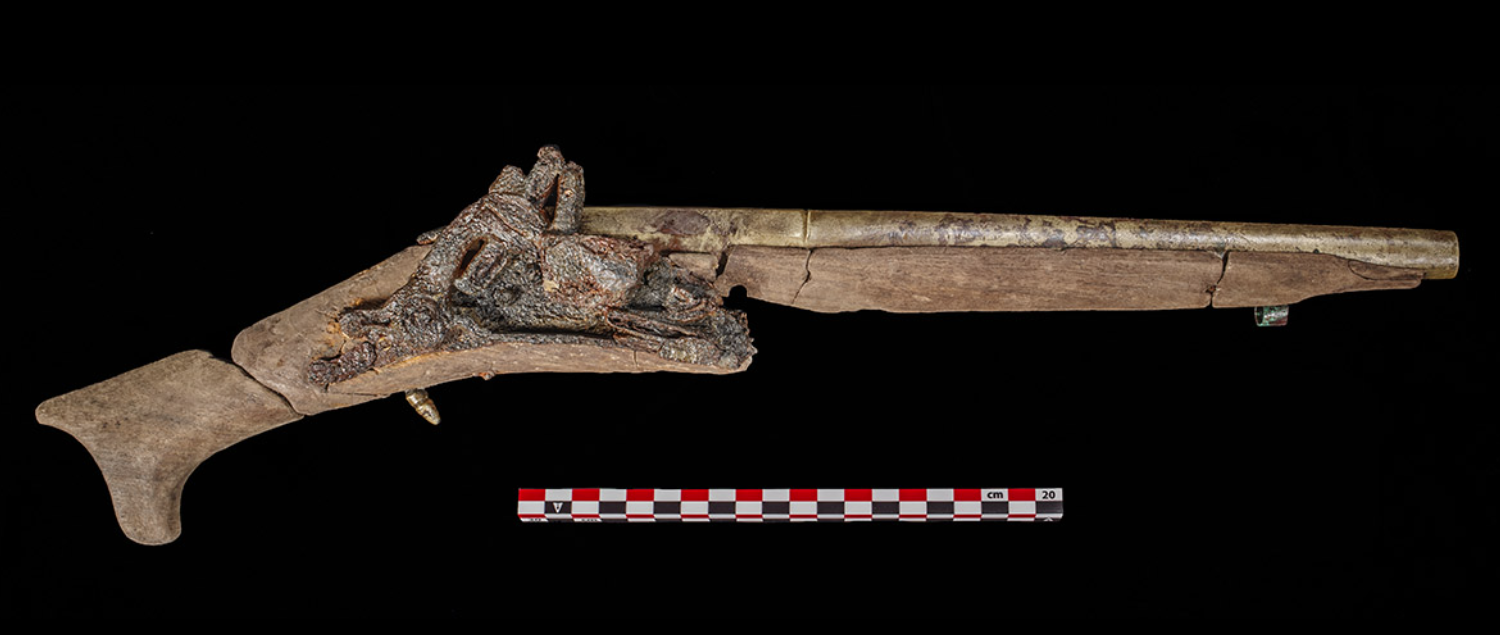
Jamestown Rediscovery is building reference collections that help researchers identify the surviving fragments of early firearms and their accessories.
A September 22, 2026, update highlights curator Janene Johnston’s research into material from seventeenth-century James Fort. Her recent presentations covered matchlocks, musket rests, and musketeer accessories. She shared that work at the Arsenals of History symposium in Cody, Wyoming, and the Fields of Conflict conference in Glasgow. [Ed. note: Arsenals of History is an exceptional symposium; I have presented there multiple times.]
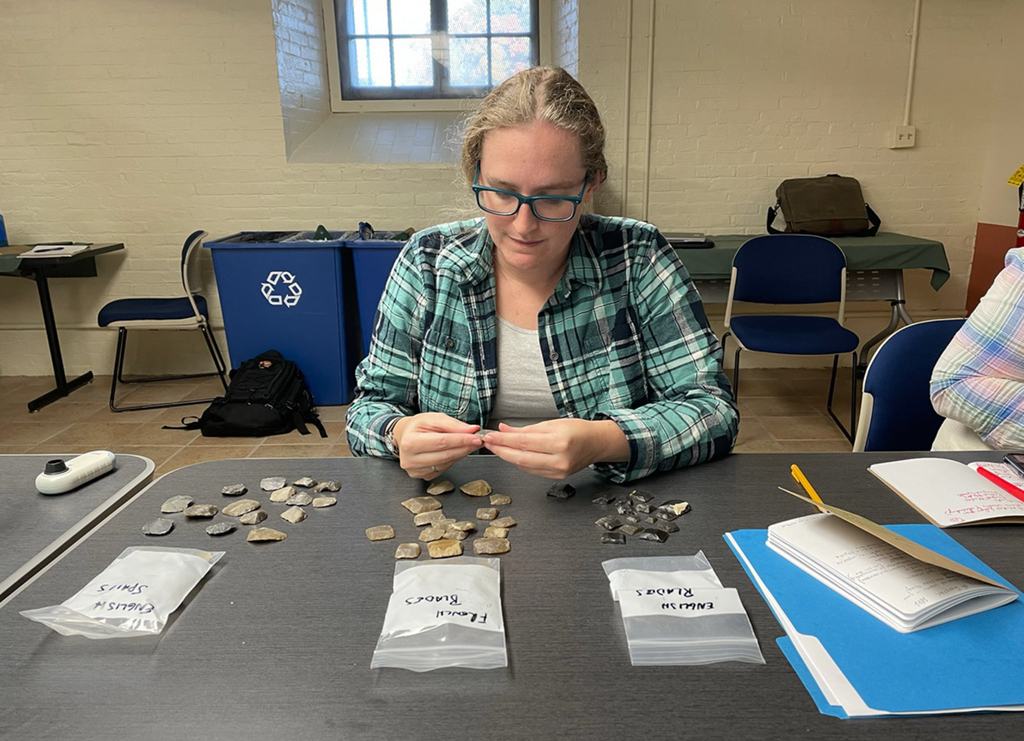
Reference collections bring representative and unusual examples together for comparison. Jamestown organizes these physical study collections for staff and outside researchers. They provide a way to compare incomplete objects with examples that retain more recognizable features.
The project’s July update offers a glimpse of that selection process. Johnston chose bullet-mold examples based on caliber, completeness, and head shape. Conservators also treated bandolier chargers she selected for their reference collection.
Musket rests offer another useful example. Jamestown holds approximately 50 components of these supports for heavy muskets. Surviving pieces include U-shaped iron yokes with curled ends, sockets, and fittings from the bases of wooden staffs. Some sockets even preserve mineralized traces of the vanished wood.
These distinctive features provide evidence for identification when much of an object has disappeared. Period illustrations offer another comparison. Jamestown’s published description points to musket rests depicted in Jacob de Gheyn II’s early-seventeenth-century military manual.
Earlier Jamestown research also demonstrates why old identifications deserve review. A 1902 excavation report described one object as a small lead or pewter candlestick or sconce. In a 2018 update, researchers identified that same object as a bandolier cap dating to approximately 1615. The cap belonged to a container for a measured powder charge.
Excavation records provide another essential check. The September update explains how plowing and twentieth-century utility work mixed material from different periods. An artifact found near an early feature may have moved from elsewhere. Proximity alone cannot establish its original association.
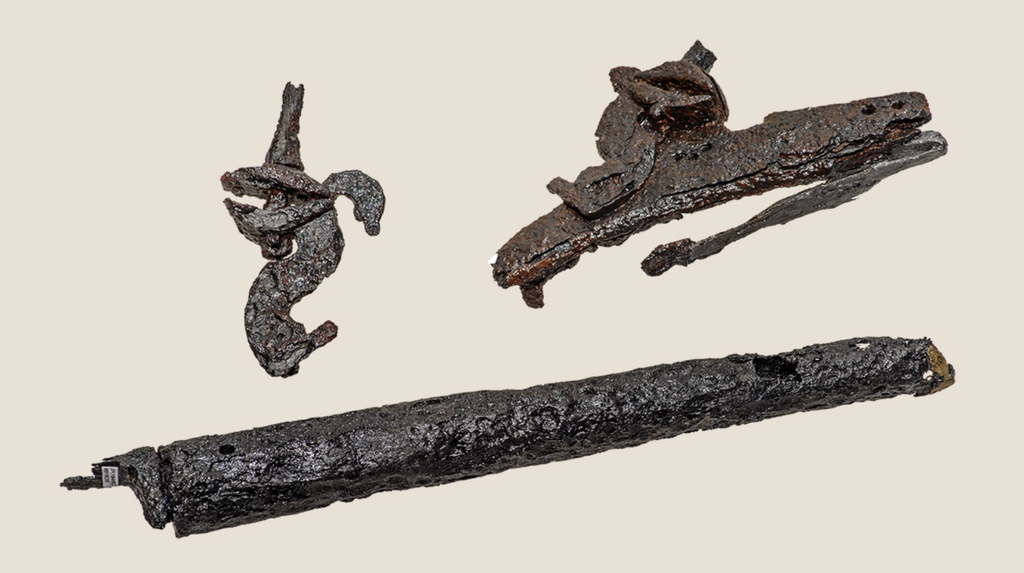
For collectors studying early arms and excavated material, these examples suggest a practical standard for evaluating an attribution. Look for distinctive physical features, documented recovery information, and convincing comparisons. Record uncertainty when the evidence leaves several possibilities open.
Johnston’s reference collections give researchers a stronger foundation for making those comparisons – and revisiting conclusions as new evidence emerges.
[Ed. note: A few years ago, I interviewed Janene Johnston, as well as Director of Collections and Conservation Michael Lavin, and Conservator Dr. Chris Wilkins. You can check it out below.]