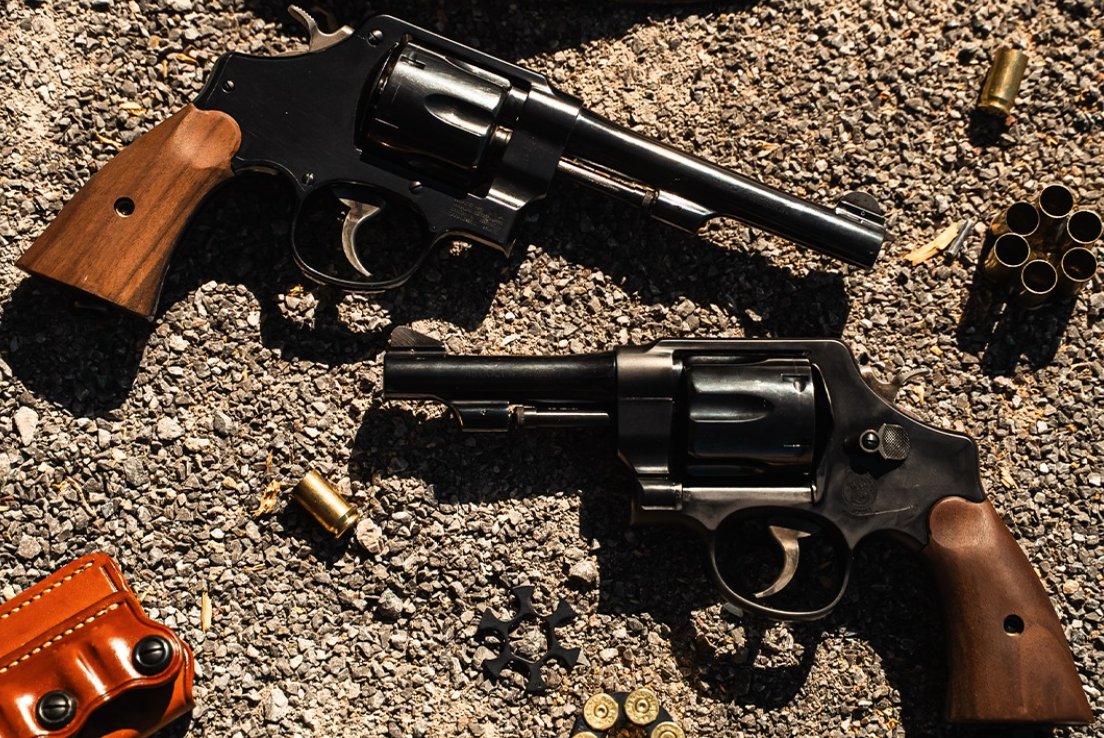
The Model 1917 and Model 22 return with classic styling, modern manufacturing, and a few notable changes from their predecessors.
Smith & Wesson is reaching into its past with the introduction of two new revolvers inspired by its historic .45 caliber N-frame handguns. The Model 1917 Classic and Model 22 Classic bring back familiar designs with several modern refinements.
The announcement gives collectors an opportunity to revisit two revolvers with important places in American firearms history.
From the Trenches of World War I
When the United States entered World War I in 1917, the military faced a shortage of M1911 pistols. To supplement production, the government contracted with Smith & Wesson and Colt for revolvers chambered in .45 ACP.
The rimless cartridge presented a challenge for revolver extraction. The solution was the half-moon clip, which held three cartridges together and allowed simultaneous extraction. The arrangement became an enduring feature of .45 ACP revolvers.
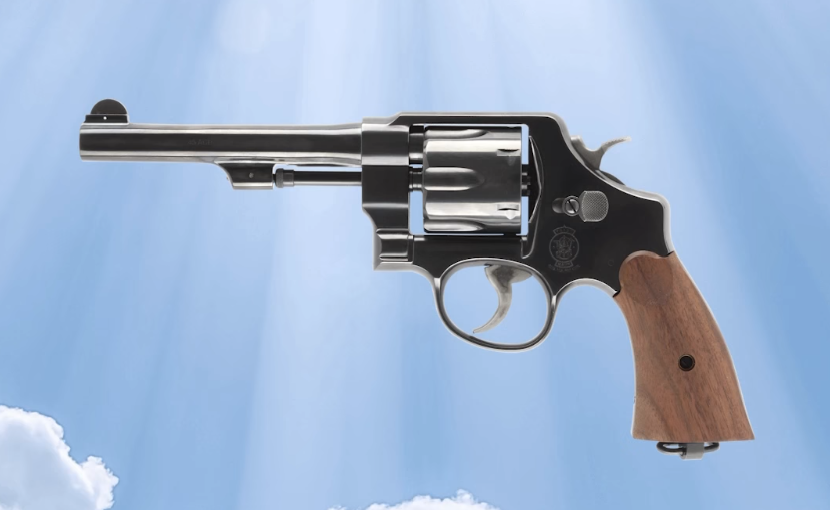
The new Model 1917 Classic closely follows the original military configuration. It features a 5.5-inch barrel, half-moon front sight, smooth walnut stocks, and a lanyard ring. The blued carbon steel revolver holds six rounds and accommodates both half-moon and full-moon clips.
Smith & Wesson has also omitted the internal lock, a feature many traditional revolver enthusiasts will appreciate.
A Different Kind of Classic
The second offering, the Model 22 Classic, takes a less historically rigid approach.
The original Model 22 descended from the postwar .45 Hand Ejector Model of 1950 Army. Smith & Wesson introduced the numbered Model 22 designation in 1957.
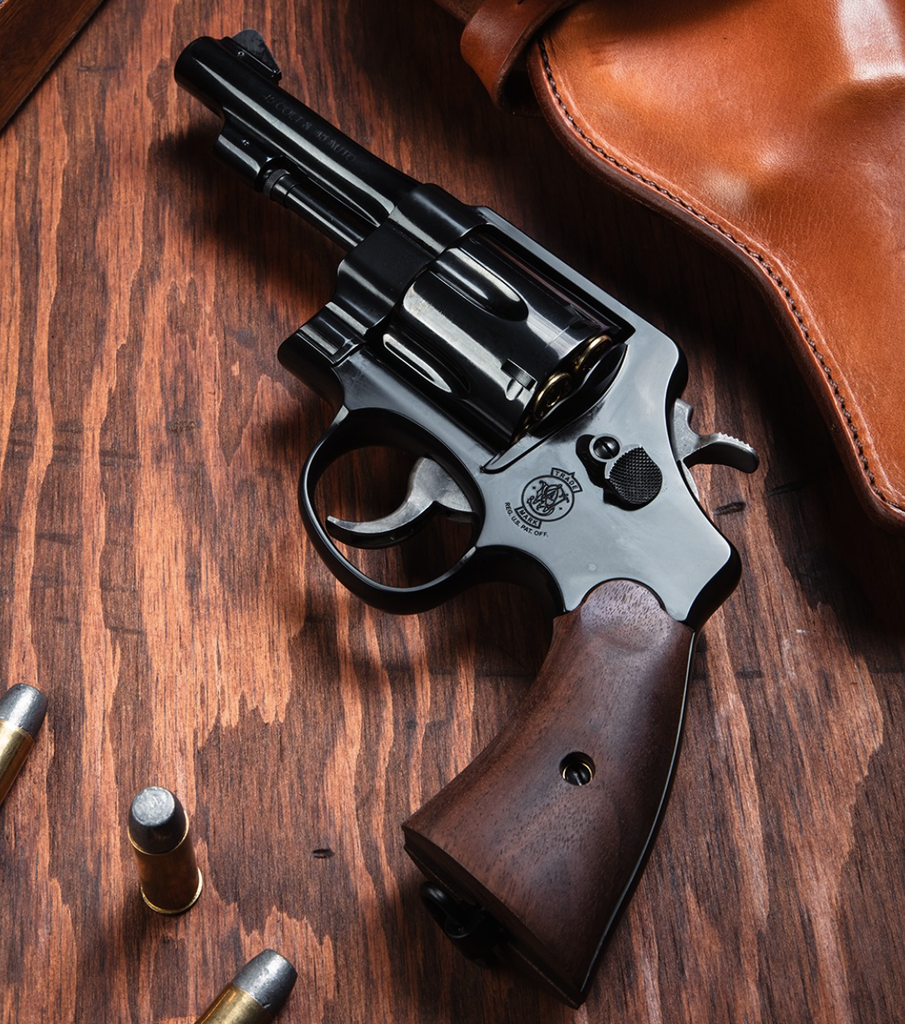
The new version uses a shorter 4-inch barrel and serrated ramp front sight. More significantly, it chambers both .45 Colt and .45 ACP. The former can be loaded directly, while the latter requires moon clips.
Both revolvers feature double-action/single-action mechanisms and include five full-moon clips.
What It Means for Collectors
Although these revolvers reproduce historical designs, neither should be confused with an original military or midcentury production gun.
For collectors, that distinction matters. Original Model 1917 revolvers possess military history, period-correct markings, and potential provenance that modern reproductions cannot replicate. Likewise, the comparatively limited production of the original postwar Model 22 gives surviving examples a different collecting appeal.
As recent research into Smith & Wesson’s Registered Magnum demonstrates, original configurations, factory records, and subsequent alterations can substantially influence how collectors evaluate historic revolvers.
However, reproductions offer something originals increasingly cannot: the opportunity to regularly shoot a historically inspired handgun without adding wear to a collectible example.
The introductions also come as Smith & Wesson’s acquisition of Savage Arms has raised broader questions about how historic manufacturers approach discontinued designs and their collecting heritage.
The new releases also raise an interesting question about Smith & Wesson’s Classic Series. As interest in traditional revolvers continues, could other discontinued designs eventually return?
For now, the Model 1917 and Model 22 demonstrate that Smith & Wesson still sees commercial value in its extensive historical catalog.
Both revolvers carry a suggested retail price of $1,299.