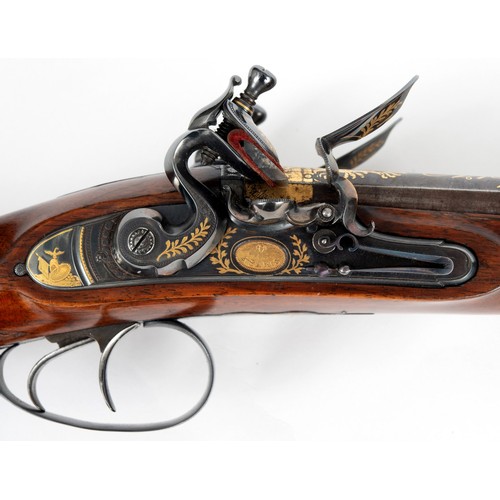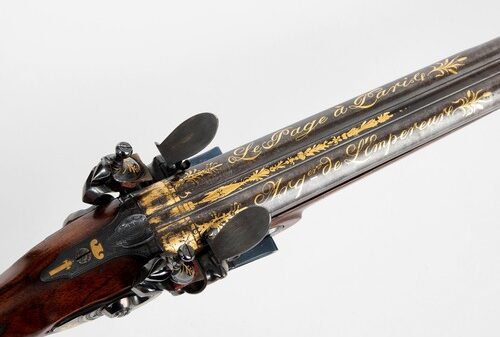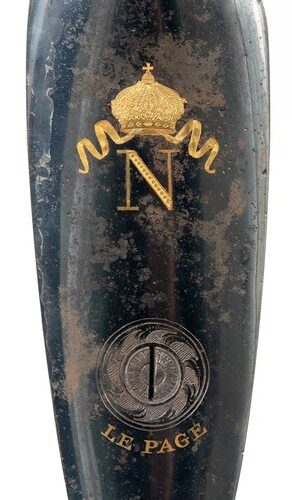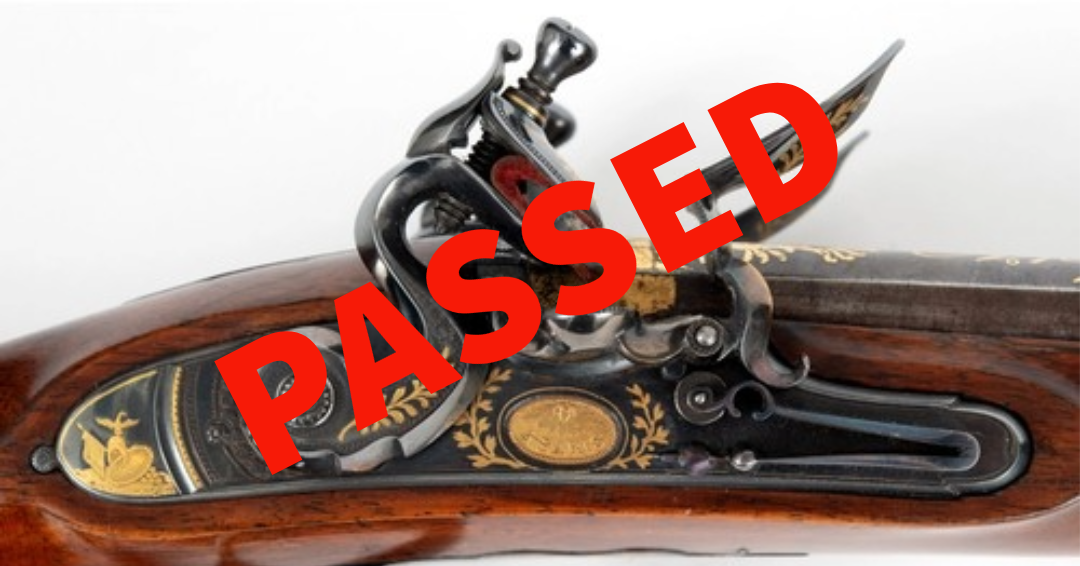
The gold-decorated Le Page sporting gun with a claimed connection to Napoleon Bonaparte received no bids at Charterhouse’s November 11, 2026 auction in Sherborne, England. The lot was passed, leaving its ownership history—and the price buyers might accept—unresolved.
As noted in TCW’s preview, the double-barrel flintlock carried an estimate of £75,000–£100,000 before fees. The auction catalog described it as having been presented to Napoleon, but also acknowledged: “There is no written provenance for this gun and flask.”
That disclosure may have complicated the valuation. The Le Page name, elaborate gold decoration and imperial symbols give collectors features to assess, but they do not independently establish Napoleon’s personal ownership. If prospective bidders understood the estimate to include a premium for that association, the absence of documentation could have made the price difficult to justify.
Provenance and price are closely connected here. A buyer might accept an uncertain attribution at a figure supported by the firearm’s other qualities, while declining to pay an additional premium for a famous owner whose connection remains unverified. A lower estimate might have made that uncertainty more palatable.
The lack of bids does not disprove the Napoleon connection or establish the gun’s market value. Nor does the published estimate reveal the reserve or opening bid. Without feedback from prospective buyers, the combination of uncertain provenance and a substantial estimate remains a plausible explanation for the outcome, rather than a demonstrated cause.