Category: Industry News

  • The Collector’s Wire is Heading to Gun Talk Radio

    The Collector’s Wire is Heading to Gun Talk Radio

    I’m looking forward to joining Tom Gresham on Gun Talk Radio this Sunday, October 11, at 4:05 p.m. Eastern to talk about The Collector’s Wire!

    I’ve known Tom and his son Ryan for years, and our paths have crossed a number of times through the firearms industry. I’ve been a guest on Gun Talk Radio before, and I also had the chance to interview both of them for an episode of No Lowballers, the award-winning podcast I previously hosted.

    It’s always good to catch up with Tom, and I’m glad we’ll have an opportunity to talk about what’s happening in the firearms collecting community.

    The Collector’s Wire is still very new, but the idea behind it is pretty straightforward. There’s a lot happening in the world of gun collecting, from club activities and collector shows to auctions, museum exhibits, books, and new historical research. Unfortunately, much of that information doesn’t get the attention it deserves.

    My hope is that The Collector’s Wire can help bring more of those stories together in one place and make it easier for collectors to stay informed about what’s happening in their hobby.

    I’m looking forward to discussing the project with Tom and hopefully introducing a few more people to what we’re doing.

    If you’d like to listen, you can stream Gun Talk Radio online or find a local radio station carrying the show.

    Sunday, October 11, at 4:05 p.m. Eastern.

    And, of course, you can visit www.thecollectorswire.com anytime to see the latest stories.

  • The Collector’s Wire Is Live

    The Collector’s Wire Is Live

    Firearms collectors have never lacked information.

    The problem is finding it.

    For example, auction houses announce important consignments on their own websites. Museums reveal new acquisitions through press releases and newsletters. Collector organizations publish research for their members. New books appear with little fanfare. Events get announced months in advance and then disappear into social feeds.

    All of that information matters to collectors, but no single place consistently brings it together.

    That is why I created The Collector’s Wire.

    The Collector’s Wire is a new publication devoted to news, auctions, research, events, and intelligence for firearms collectors.

    The goal is simple: make it easier to stay informed.

    Coverage will include major auction consignments and results, museum acquisitions and exhibitions, collector organizations, new books and research, military surplus arrivals, important industry developments, upcoming events, and other information that affects the collecting community.

    Some stories will be substantial. Others may only need a few hundred words. The important thing is that they are worth knowing.

    The site launches with coverage ranging from a $270,600 MKb.42(H) auction result to Beretta’s 500th anniversary. Other stories examine Revolutionary War arms conservation at the Smithsonian, newly available military-surplus Walther P38 pistols, collector organizations, upcoming shows, and new firearms reference books.

    That mix is intentional.

    The Collector’s Wire is not meant to become another general firearms website. Its focus is narrower: the people, objects, institutions, markets, and research that shape firearms collecting.

    It will also depend on the collecting community.

    Auction houses, museums, authors, researchers, collector clubs, dealers, and individual collectors can submit news and announcements directly through the site. Not every submission will become a story, but I want The Collector’s Wire to become a place where worthwhile collector news has somewhere to go.

    Subscribers will also receive regular email roundups through The Collector’s Wire newsletter. The publication is produced by High Caliber History LLC, but it has its own editorial mission and identity.

    There are a lot of stories in the firearms collecting world.

    Now they have a wire.

    Subscribe here to stay up to date.

    Thanks,

    Logan Metesh
    Publisher, The Collector’s Wire
    High Caliber History LLC

  • Postwar Walther P38 Surplus Pistols Return to Market

    Postwar Walther P38 Surplus Pistols Return to Market

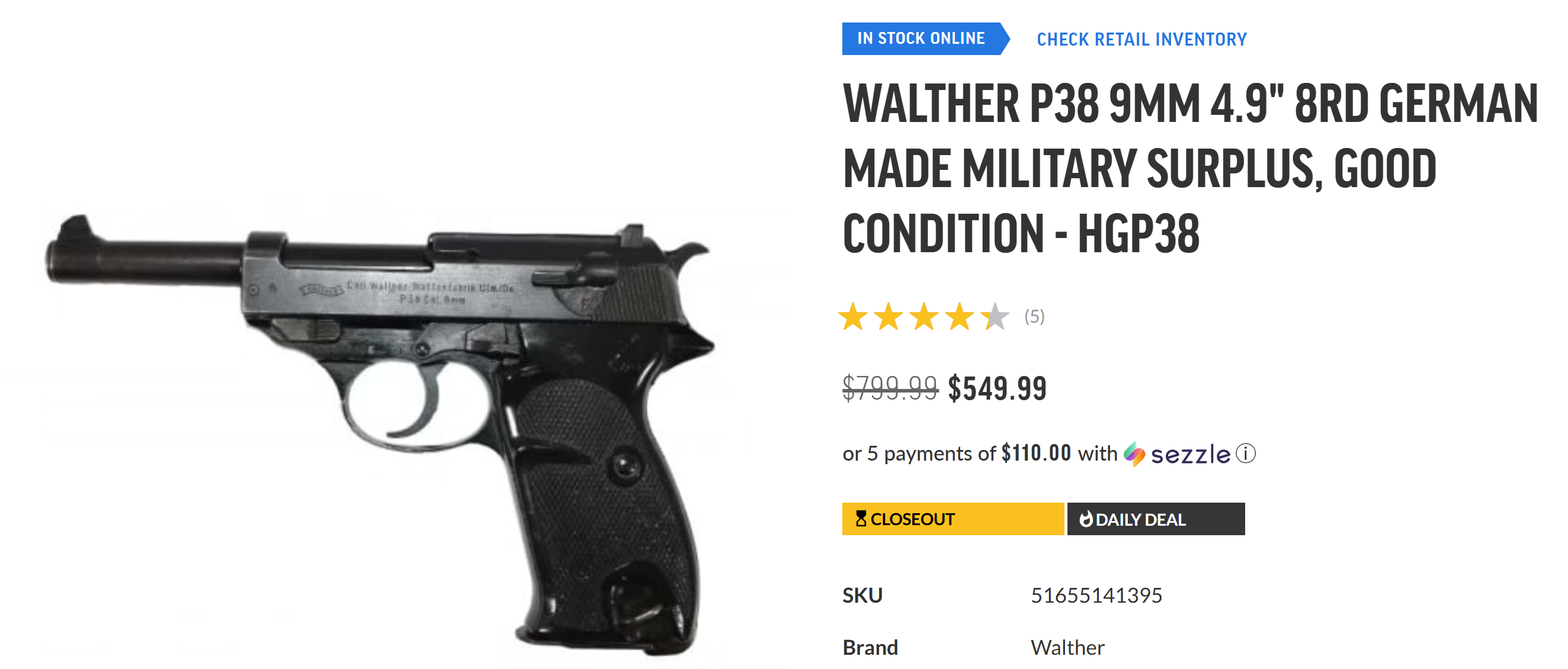
    A fresh batch of German-made Walther P38 pistols has surfaced on the U.S. surplus market.

    Palmetto State Armory currently lists the postwar 9mm pistols for $549.99. The retailer marks them as a closeout and daily deal. They remain listed as in stock online at the time of this posting.

    Get yours by clicking this link.

    The pistols qualify as Curio & Relic firearms and carry an importer grade of NRA surplus “good” condition. PSA says many examples may actually reach very-good condition.

    Collectors should note one important distinction:

    These are not World War II-production steel-frame P38s.

    Walther resumed P38-family production in West Germany after the war. The company began supplying the newly created Bundeswehr in 1957. Unlike their wartime predecessors, the new pistols used lightweight aluminum frames. Walther later used the P1 designation for the German military version.

    PSA says most pistols in this batch date from the early 1960s. Some examples reportedly carry dates from the early 1970s. The retailer describes them as aluminum-frame P38s produced at Walther’s Ulm facility.

    That date range could create considerable variation within the shipment.

    Walther continued modifying the postwar design during its service life. Later aluminum frames received additional reinforcement, most visibly through a transverse hexagonal steel bolt above the trigger guard beginning in the mid-1970s. Earlier examples lack that feature.

    That means collectors should not assume every pistol in the shipment represents exactly the same variation.

    PSA lists each pistol with a 4.9-inch barrel and one eight-round magazine. The guns retain the familiar 9mm chambering and double-action/single-action operating system associated with the P38 family.

    The retailer tells buyers to expect normal finish wear and light scratches. However, PSA says it has not observed rust among the examples examined. It also describes the bores as generally good.

    The P38 occupies an important place in military handgun development.

    Germany adopted the original design before World War II as a replacement for the Luger P08. Walther gave it a double-action/single-action trigger system, an eight-round magazine, and a locking-block action. Mauser and Spreewerk eventually joined Walther in wartime production. More than a million examples were produced during the war.

    West Germany then gave the basic design a second military career.

    That history makes these newly available pistols interesting even without a wartime connection. They represent the Cold War continuation of one of Germany’s most important military handgun designs.

    Their appearance also highlights a larger collecting trend.

    Large quantities of inexpensive military surplus have largely disappeared from the American market. When sizeable groups of C&R-eligible firearms surface today, they increasingly qualify as collector news in their own right.

    At $549.99, these postwar Walthers offer a useful snapshot of that changing surplus market.

    Get yours by clicking this link.

  • Beretta Moves to Raise Its Stake in Ruger to 25 Percent

    Beretta Moves to Raise Its Stake in Ruger to 25 Percent

    Beretta Holding is moving to significantly increase its investment in Sturm, Ruger & Company.

    The Italian firearms group launched a cash tender offer on September 17 for up to 2,400,184 Ruger shares. Beretta is offering $44.80 per share. If fully subscribed, the deal would raise Beretta’s ownership from about 9.9 percent to approximately 25 percent.

    The offer remains open until October 15, unless Beretta extends it.

    This is not an acquisition of Ruger. The Connecticut-based manufacturer will remain an independent, publicly traded company after the transaction.

    Beretta already owned 1,587,000 Ruger shares when it launched the offer. The additional purchase could push its total investment to roughly one-quarter of the company.

    The move follows a strategic cooperation agreement announced in May. Under that agreement, Ruger agreed to allow Beretta to increase its ownership to as much as 25 percent. The original deal also gave Beretta the right to nominate up to two independent directors to Ruger’s board.

    Federal regulators later placed limits on that board arrangement. The Federal Trade Commission said the proposed structure raised concerns about interlocking directorates between competing firearms manufacturers. The FTC accepted a proposed consent order designed to keep the two companies operationally independent.

    Under that order, Beretta may nominate Ruger directors only if those nominees remain independent of Beretta. The company must also give the FTC advance notice before making those nominations. The FTC did not block the stock purchase itself.

    Ruger announced on September 16 that the regulatory conditions surrounding the cooperation agreement had been satisfied. Its board then terminated a shareholder rights plan that had restricted Beretta’s ability to increase its stake.

    Beretta launched the tender offer the following day.

    The $44.80 offer represented about a 21 percent premium over Ruger’s closing share price on September 16. Beretta said the investment forms part of its strategy to strengthen its position in the American firearms market.

    Beretta Holding already controls a broad portfolio of firearms companies. Its brands include Beretta, Benelli, Franchi, Sako, Tikka, Chapuis, Holland & Holland, and several others. Ruger would remain outside that corporate structure even if Beretta reaches the 25 percent threshold.

    That distinction matters. Collectors should not interpret the investment as a Beretta takeover of Ruger or Marlin. Nothing in the tender offer transfers control of Ruger’s brands, factories, intellectual property, or product lines to Beretta.

    It does, however, create a much closer financial relationship between two of the firearms industry’s largest companies. Ruger also owns Marlin Firearms, which it acquired from Remington’s bankruptcy assets in 2020. That gives the situation added interest for collectors who follow historic American brands.

    Both companies also maintain strong positions in traditional sporting firearms. Beretta traces its documented history to 1526. Ruger began operations in 1949 and grew into one of America’s largest firearms manufacturers.

    The tender offer therefore links two companies with very different histories and ownership structures.

    For now, the most important date is October 15. After the offer closes, investors and collectors will have a clearer picture of how much Ruger stock Beretta ultimately acquired. That result will determine how close the Italian group comes to its 25 percent ceiling.


  • Beretta Marks 500 Years With 296-Pistol 92FS Ducato Limited Edition

    Beretta Marks 500 Years With 296-Pistol 92FS Ducato Limited Edition

    Beretta is tying one of its most recognizable pistols directly to the document that established the company’s place in firearms history.

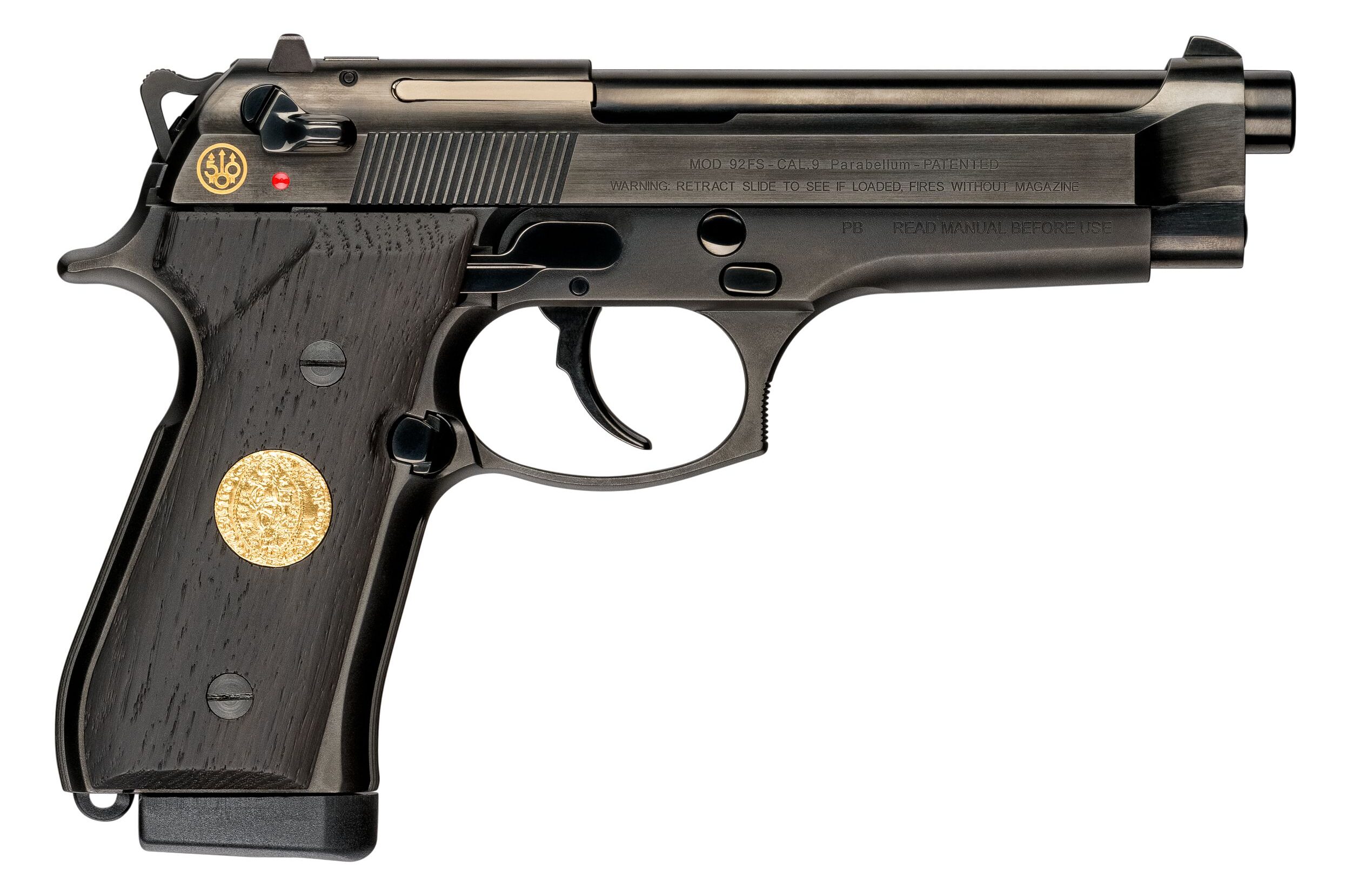
    To mark its 500th anniversary, Beretta introduced the 92FS Ducato, limited to just 296 examples worldwide. That number represents the 296 ducats paid to Bartolomeo Beretta in the company’s earliest documented transaction.

    On October 3, 1526, Bartolomeo Beretta of Gardone delivered 185 arquebus barrels to the Arsenal of Venice. The record of that payment, preserved in the State Archives of Venice, provides the documentary foundation for Beretta’s official 1526 founding date. The company has remained under Beretta-family stewardship through the centuries.

    Five centuries later, that transaction has become the organizing theme for the new pistol.

    The 92FS Ducato uses a steel frame with a DLC finish and grips made from fossilized Abonos oak. Gold anniversary details appear on the frame and slide; gold grip inserts reproduce the two faces of a Venetian ducat. Each pistol receives its own special serial number.

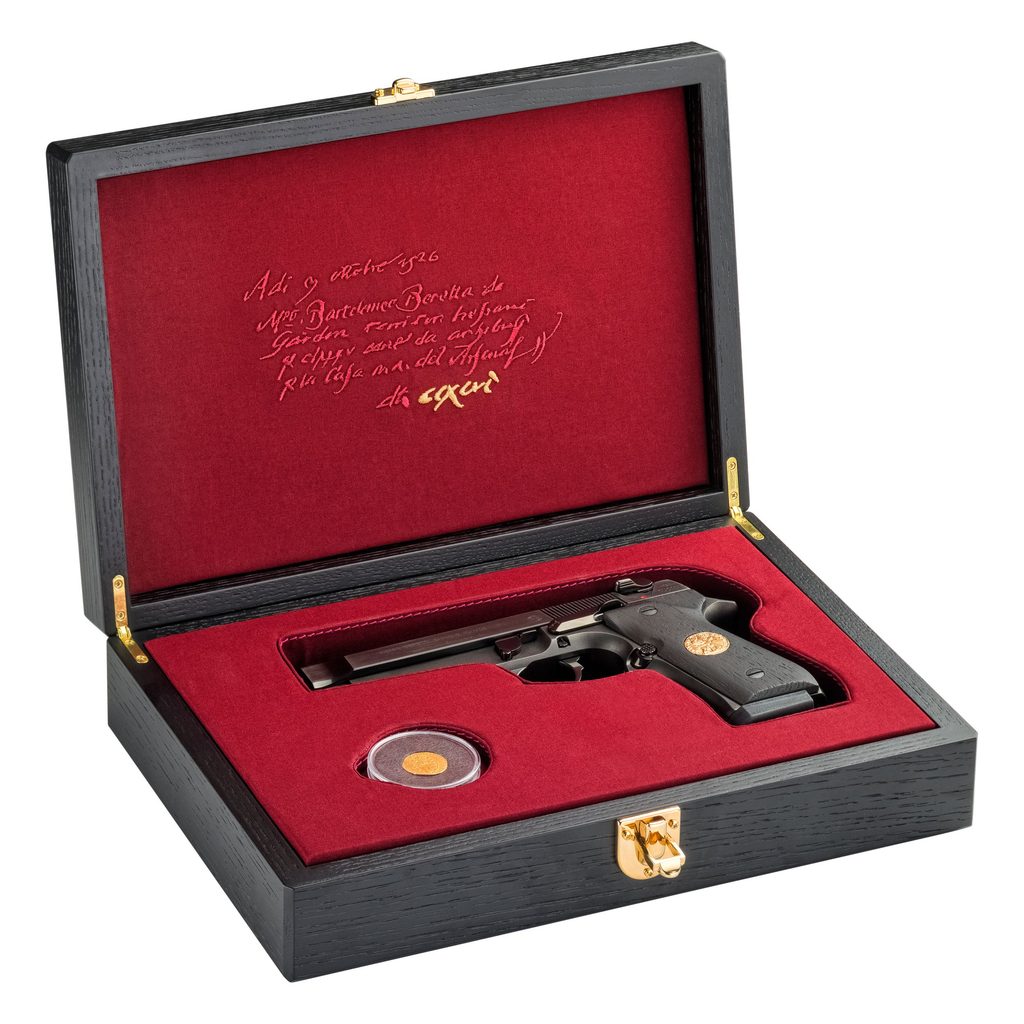
    Beretta is packaging it as a complete collector presentation. Each comes in a handcrafted case produced by the Pietro Beretta Selection Atelier. The case includes an authentic Venetian ducat, physically connecting the commemorative pistol to the currency used in the historic transaction.

    Beretta 92FS Ducato in case

    The Ducato is one of several projects Beretta has introduced around its 500th anniversary, but its production figure makes the historical reference unusually direct: 296 pistols for 296 ducats.

    If still in use today, one ducat would equal approximately $500 USD, making the original transaction worth approximately $148,000 USD.

    For collectors, it is a reminder that anniversaries are often built around dates, but Beretta’s 500th has something more substantial behind it: a surviving archival document capable of tying the modern company to a specific transaction on a specific day in 1526.

    The price for each pistol is $13,999.